About this artwork
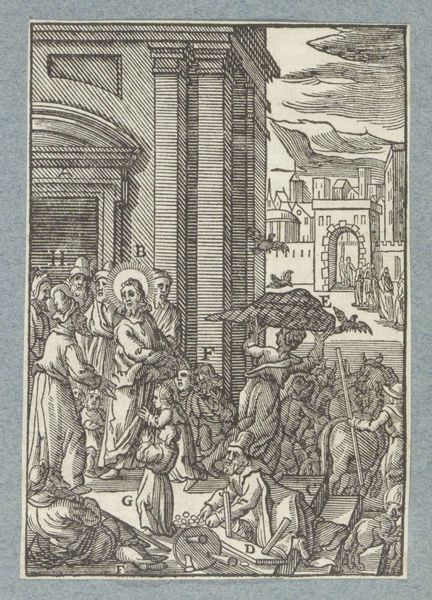
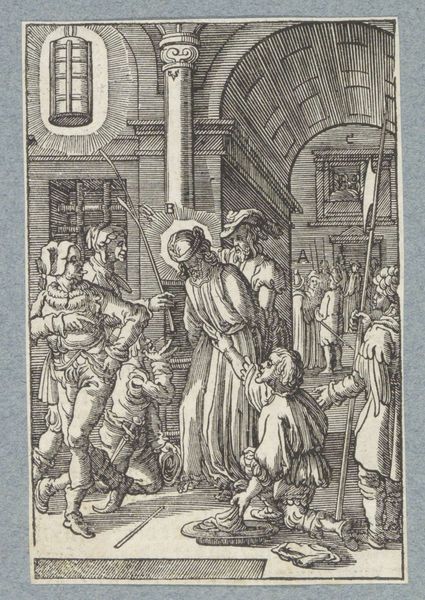
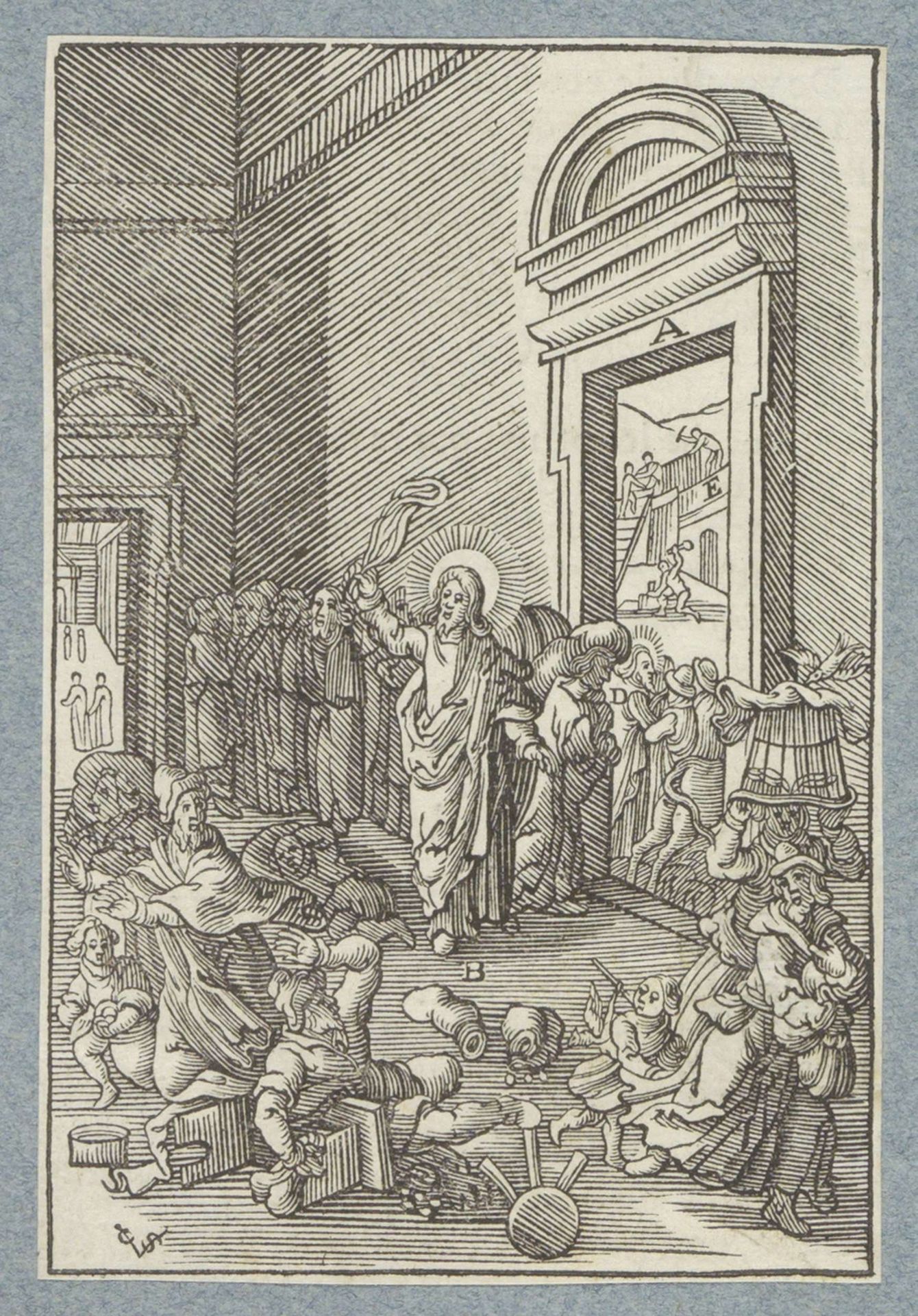
Christoffel van Sichem II created this woodcut print, "Expulsion of the Money Changers from the Temple", sometime in the early 17th century. Van Sichem, active during the Counter-Reformation, presents us with an enraged Christ. He's expelling merchants and money lenders from the temple, overturning tables, and driving out the guilty with a whip. It’s an iconic scene representing the fight against corruption. Notice how the artist uses the chaos to convey a sense of moral outrage. At the time, the Bible was becoming more accessible to the masses. Van Sichem's prints helped to visualize and spread its teachings. This work invites us to reflect on the role of religious spaces, and how they sometimes become entangled with commerce and power. It remains a potent reminder of the need to question and challenge the status quo, in both religious and secular contexts.
Verdrijving van de wisselaars uit de tempel
1629

Christoffel van (II) Sichem
1581 - 1658Location
RijksmuseumArtwork details
- Medium
- print, engraving
- Dimensions
- height 113 mm, width 75 mm
- Location
- Rijksmuseum
- Copyright
- Rijks Museum: Open Domain
Tags
Comments
Share your thoughts
About this artwork
Christoffel van Sichem II created this woodcut print, "Expulsion of the Money Changers from the Temple", sometime in the early 17th century. Van Sichem, active during the Counter-Reformation, presents us with an enraged Christ. He's expelling merchants and money lenders from the temple, overturning tables, and driving out the guilty with a whip. It’s an iconic scene representing the fight against corruption. Notice how the artist uses the chaos to convey a sense of moral outrage. At the time, the Bible was becoming more accessible to the masses. Van Sichem's prints helped to visualize and spread its teachings. This work invites us to reflect on the role of religious spaces, and how they sometimes become entangled with commerce and power. It remains a potent reminder of the need to question and challenge the status quo, in both religious and secular contexts.
Comments
Share your thoughts