1650s
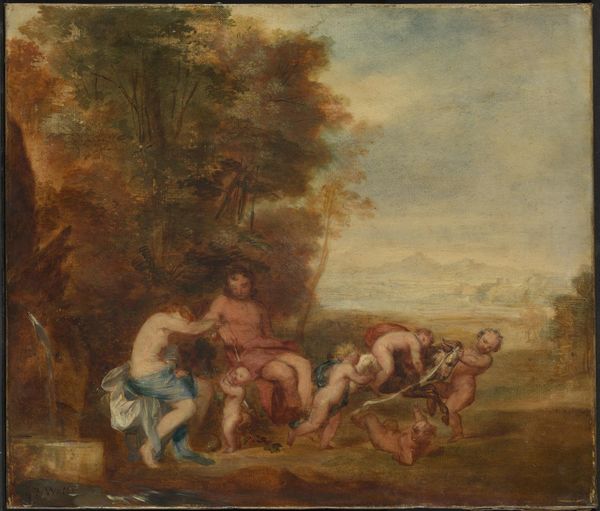
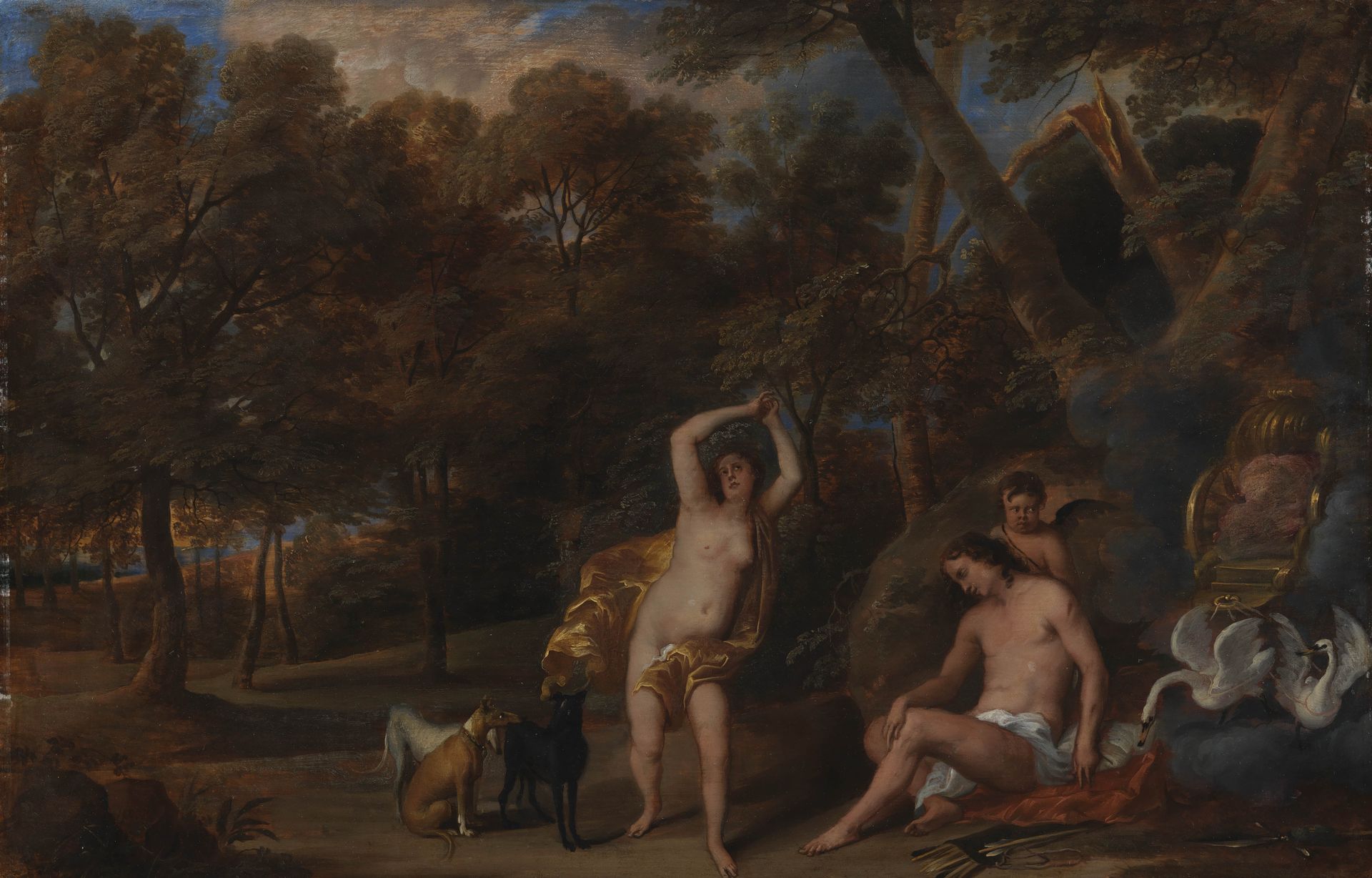
Venus Bewailing the Slain Adonis


Listen to curator's interpretation
Curatorial notes
Editor: This is Frans Wouters's "Venus Bewailing the Slain Adonis," painted in the 1650s, using oil paints. The atmosphere feels so heavy and mournful, emphasized by the darkness of the forest. What strikes you about this piece? Curator: The Baroque era loved drama, and this painting is no exception. But it goes beyond mere theatrics. Think about the social position of women during this period. Venus, a goddess, is depicted in intense grief, mourning Adonis. How might this be a subtle commentary on the limited avenues available for women to express their emotions, forcing even goddesses into prescribed roles of mourning? Editor: So, you're saying even a powerful figure like Venus is constrained by societal expectations in how she expresses grief? Curator: Precisely. The classical myths often provided a framework to explore contemporary social issues. Note also the contrast between Venus's active pose and the lifeless body of Adonis. Could this symbolize the active role women played within the household contrasting against their position in broader society? The very act of creating and displaying this image normalizes a perspective on traditionally accepted gender dynamics. What is normalized, after all? Editor: That's a powerful reading. I was focusing on the personal tragedy, but I see how it could also represent wider constraints placed on women. Curator: It's about expanding our understanding of visual expression as culturally relevant and insightful regarding the nuances of daily living and historical circumstance. Considering the relationship between myth, gender and social structures can unlock deeper layers of meaning in these paintings. The death of Adonis is tragic, but perhaps Wouters also uses this scene to mourn a larger societal loss: that of female agency. Editor: This makes me see the painting in an entirely different light, it's so much more layered than I initially thought. Curator: It’s in these layers we locate how the art relates directly to the artist, subject, audience and the societies in which they are enmeshed.