1669
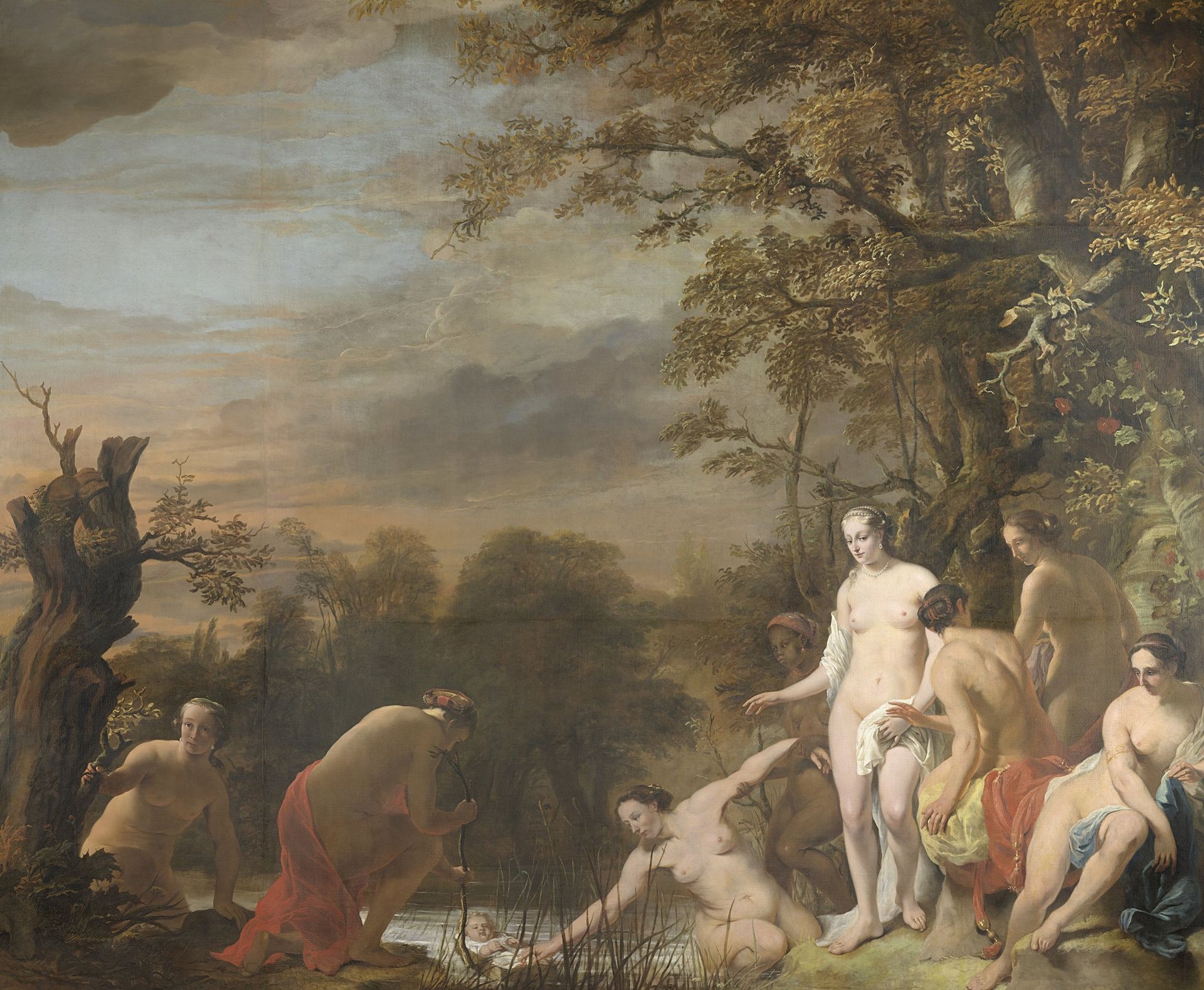
Farao's Dochter Vindt Mozes in Het Biezen Mandje.

Ferdinand Bol
1616 - 1680Location
Rijksmuseum, Amsterdam, NetherlandsListen to curator's interpretation
Curatorial notes
Ferdinand Bol captured the moment Pharaoh’s daughter discovers Moses in the bulrushes in this painting. The act of finding a child adrift in water carries profound symbolism. We see echoes of this motif throughout history, from the myth of Romulus and Remus, suckled by a wolf after being abandoned on the river Tiber, to countless other stories of foundlings destined for greatness. It speaks to a universal narrative: the perilous journey, the hope for salvation, and the intervention of fate. The water becomes a symbol of both danger and purification. Consider how the emotional weight of abandonment and rescue resonates across cultures. The image of a vulnerable infant elicits a deep, subconscious response, triggering our innate sense of compassion and protection. This is how art engages us, not just visually, but on a primal, emotional level. The non-linear, cyclical progression of these symbols constantly resurfaces, evolves, and takes on new meanings in different historical contexts.