engraving
#
portrait
#
allegory
#
baroque
#
figuration
#
line
#
history-painting
#
academic-art
#
engraving
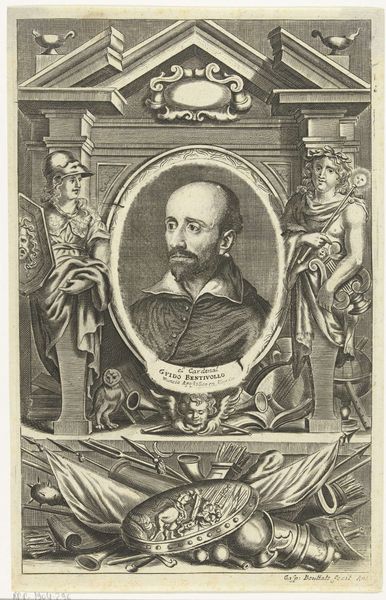
Dimensions: height 274 mm, width 180 mm, height 116 mm, width 87 mm
Copyright: Rijks Museum: Open Domain
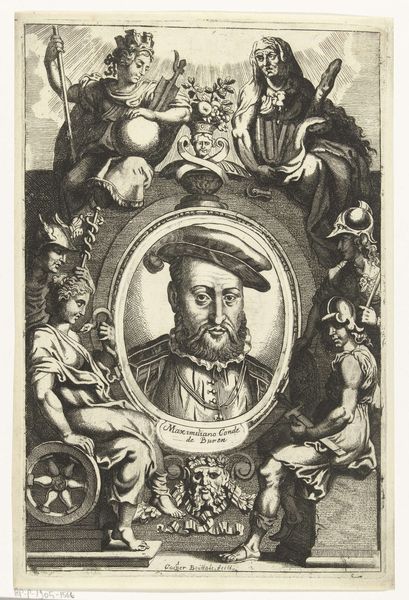
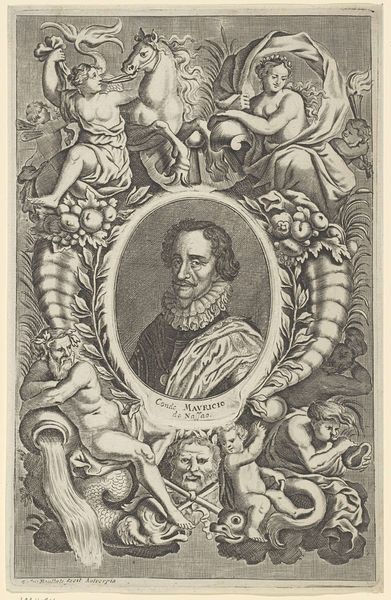
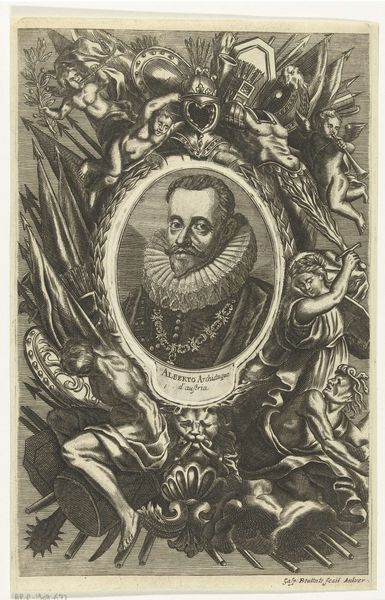
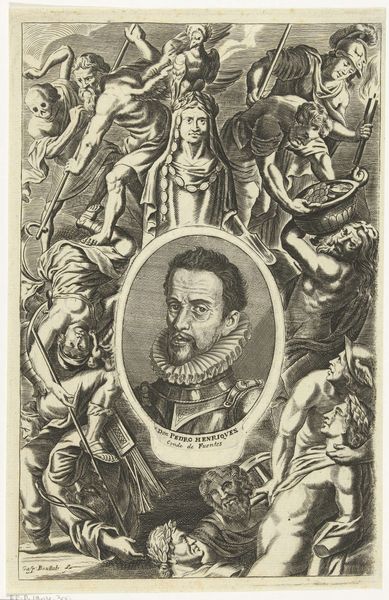
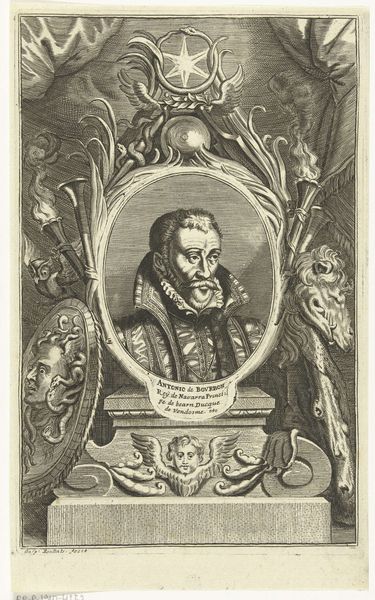
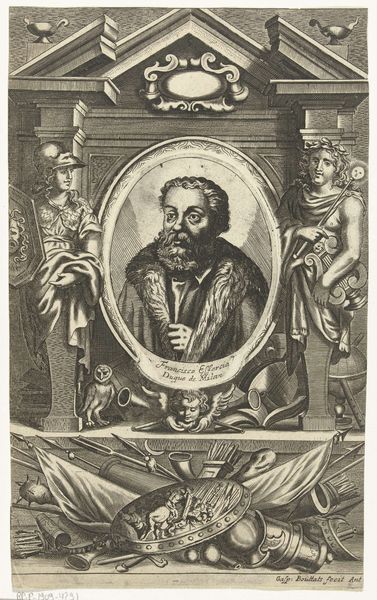
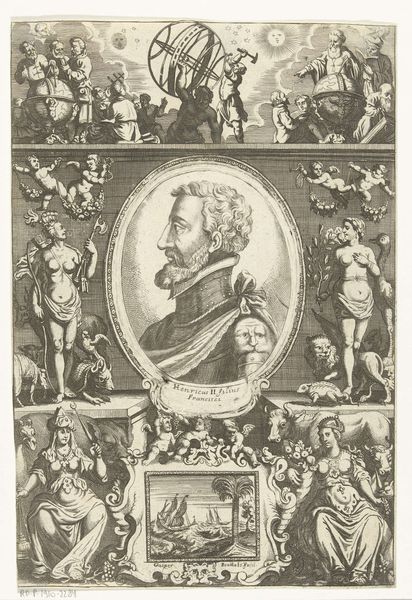
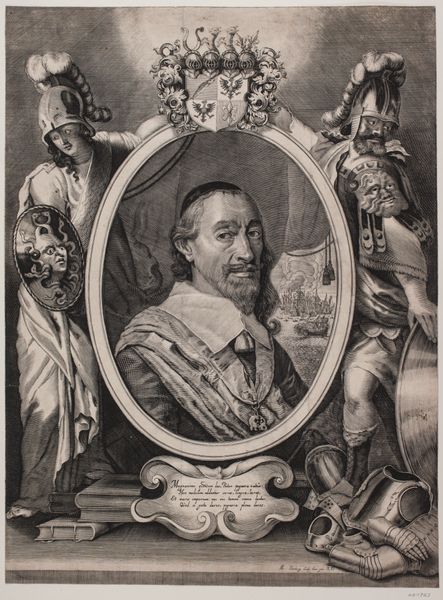
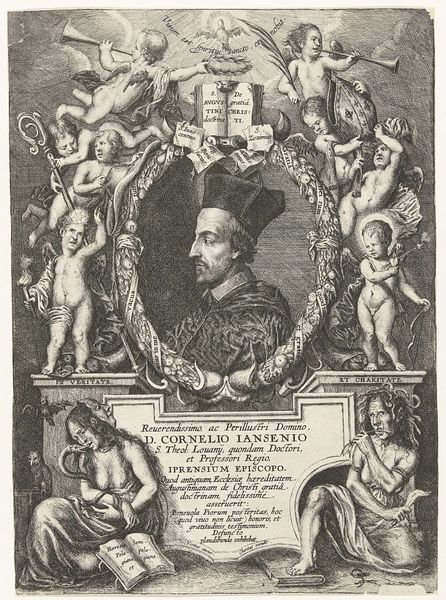
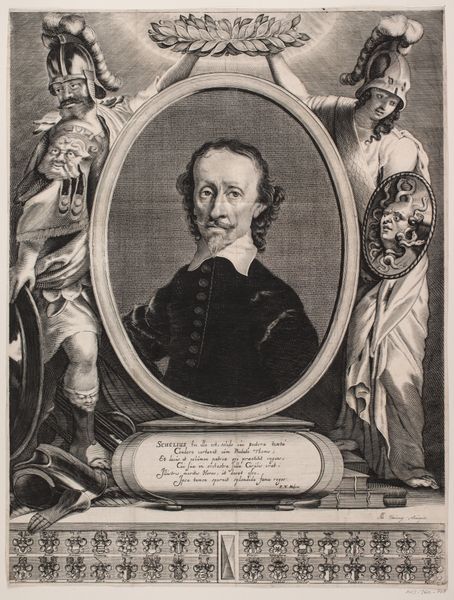
Editor: This is Gaspar Bouttats’s “Portret van Charles de Gontaut,” an engraving made sometime between 1650 and 1695, currently housed at the Rijksmuseum. It's fascinating how the portrait is framed with all these figures. How would you interpret the layers of symbolism in this work? Curator: The entire image reads as a carefully constructed monument to status and legacy. Observe how Charles de Gontaut is not simply presented, but *enthroned* within a symbolic architecture. Do you notice the figures surrounding the central portrait? Editor: Yes, there are allegorical figures, like those at the bottom with the wheel and the sword. Curator: Precisely. These are not mere decoration; each contributes to a complex statement about identity and power. Consider the attributes they carry: the wheel, often associated with Fortune, and the sword, emblematic of Justice and military might. And the head right below Gontaut’s portrait. Doesn’t that call classical antiquity to mind? It creates a layered connection to tradition, power, and enduring fame. What emotional resonances do you find in that combination? Editor: I see. It’s less about immediate likeness and more about creating an idealized image through established symbols. It’s powerful but also a little…distant. Curator: Exactly. It speaks volumes about how identity was performed and memorialized in that era. Did this method of “immortalization” work, would you say? Editor: It’s amazing to think about how symbols continue to shape our understanding of history. It encourages one to dig a little deeper into historical context. Curator: And appreciate how artists weave those historical narratives with established symbols, for sure!
Comments
No comments
Be the first to comment and join the conversation on the ultimate creative platform.
 Collect
 React
React Comment
More like this