About this artwork
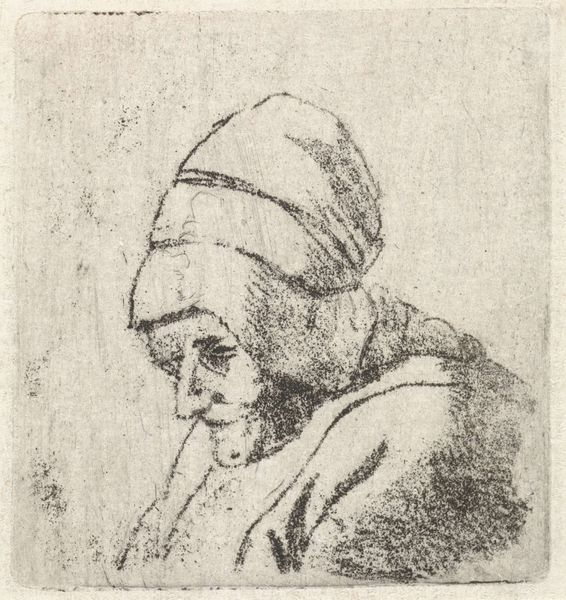
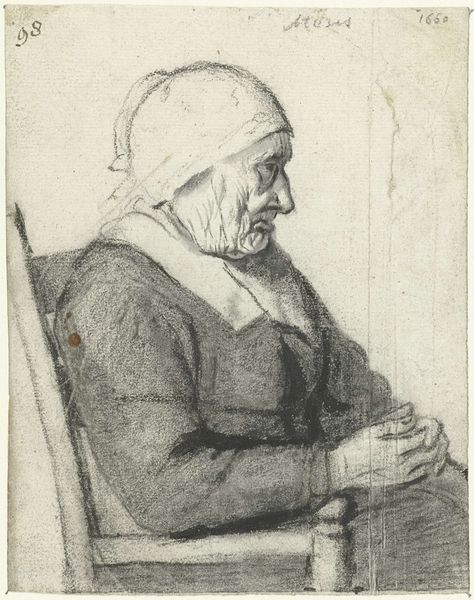
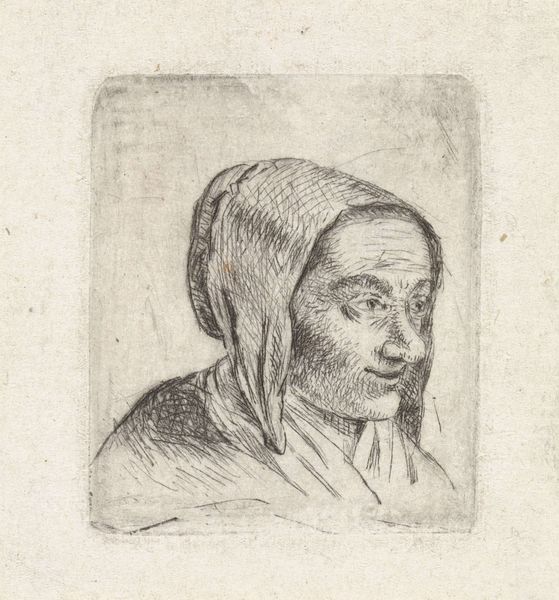
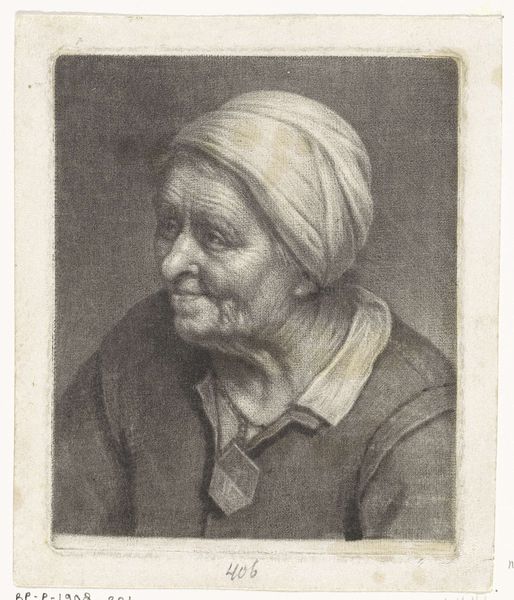
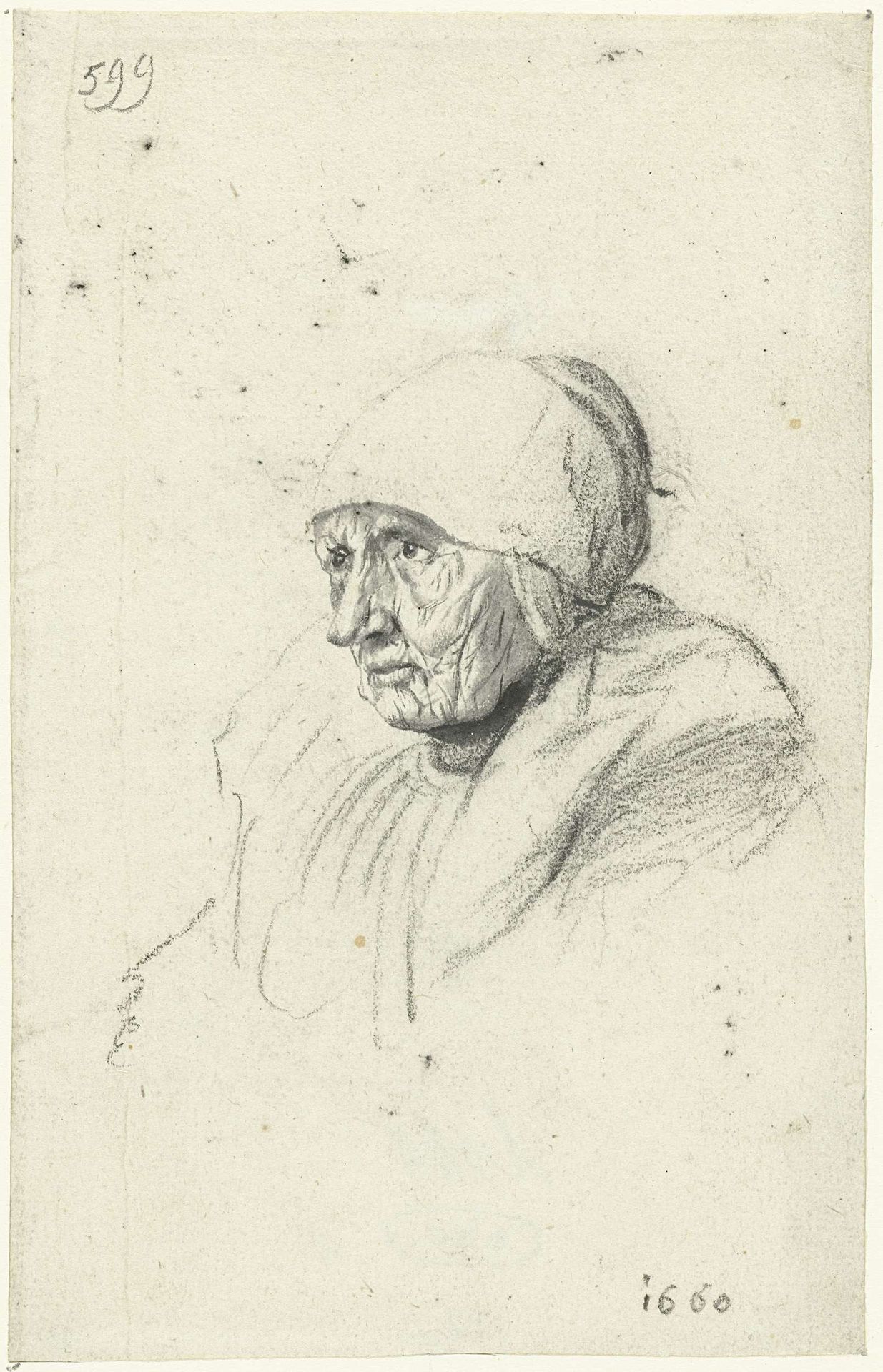
Moses ter Borch made this drawing of an old woman, in the Netherlands, around 1660. He used graphite on paper to capture her likeness, with a focus on the play of light and shadow on her wrinkled face. During the Dutch Golden Age, artists like ter Borch often depicted everyday people, reflecting a broader cultural interest in the lives of ordinary citizens. This drawing, however, goes beyond mere representation. The woman’s weathered face and downcast gaze hint at a life marked by hardship and resilience. Ter Borch may have been commenting on the social inequalities of his time, where poverty and old age often meant a life of struggle. It challenges the viewer to look beyond the surface and consider the human cost of economic progress. To truly understand this drawing, we need to delve into the social and economic history of the 17th-century Netherlands, examining documents and archives that shed light on the lives of the poor and elderly. The meaning of art always depends on its social and institutional context.
Hoofd en schouders van een oude vrouw, naar links
1660

Moses ter Borch
1645 - 1667Location
RijksmuseumArtwork details
- Medium
- drawing, pencil
- Dimensions
- height 162 mm, width 103 mm
- Location
- Rijksmuseum
- Copyright
- Rijks Museum: Open Domain
Tags
Comments
Share your thoughts
About this artwork
Moses ter Borch made this drawing of an old woman, in the Netherlands, around 1660. He used graphite on paper to capture her likeness, with a focus on the play of light and shadow on her wrinkled face. During the Dutch Golden Age, artists like ter Borch often depicted everyday people, reflecting a broader cultural interest in the lives of ordinary citizens. This drawing, however, goes beyond mere representation. The woman’s weathered face and downcast gaze hint at a life marked by hardship and resilience. Ter Borch may have been commenting on the social inequalities of his time, where poverty and old age often meant a life of struggle. It challenges the viewer to look beyond the surface and consider the human cost of economic progress. To truly understand this drawing, we need to delve into the social and economic history of the 17th-century Netherlands, examining documents and archives that shed light on the lives of the poor and elderly. The meaning of art always depends on its social and institutional context.
Comments
Share your thoughts