print, engraving
portrait
baroque
figuration
portrait reference
portrait drawing
history-painting
nude
engraving
Dimensions: height 260 mm, width 190 mm
Copyright: Rijks Museum: Open Domain
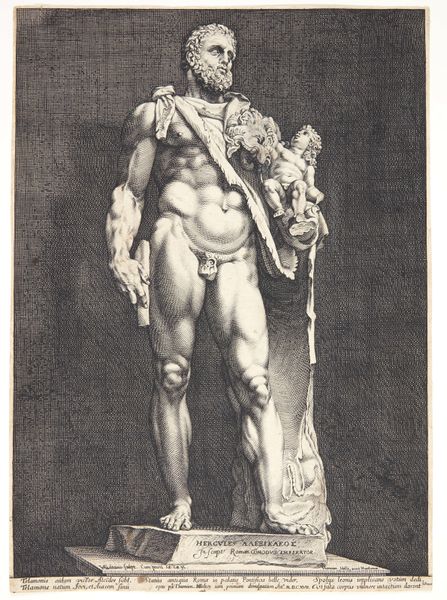
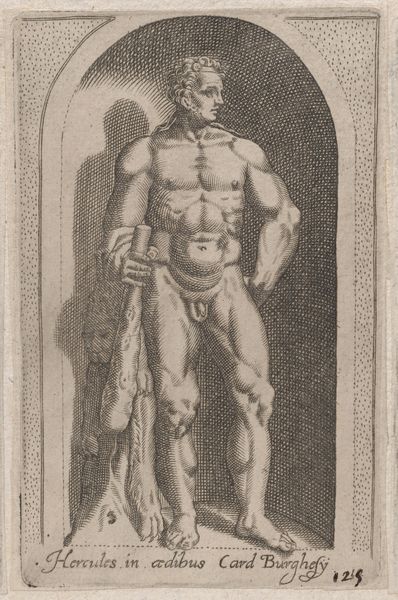
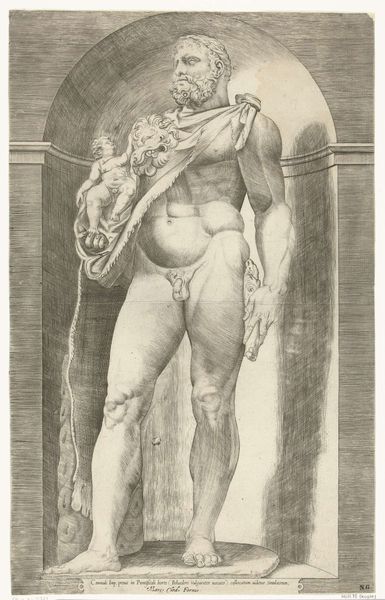
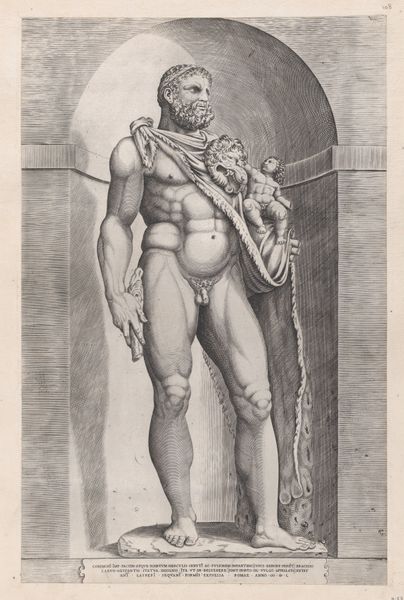
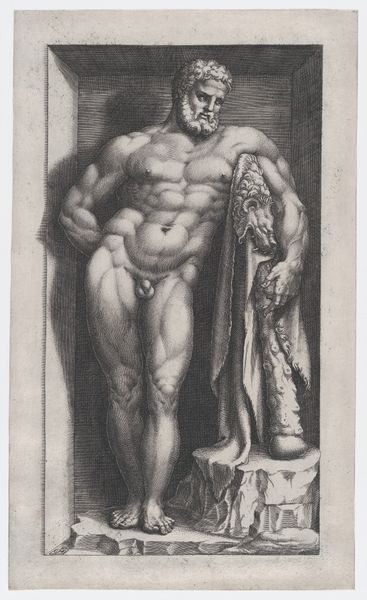
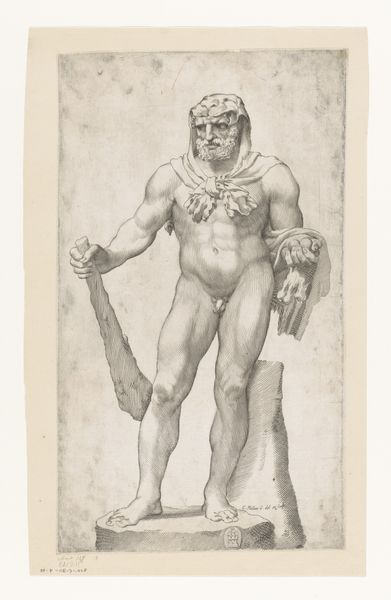
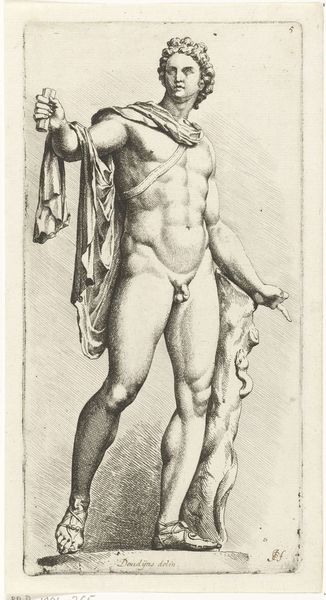
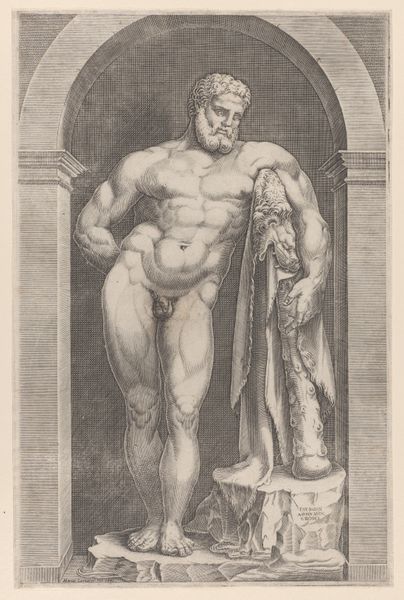
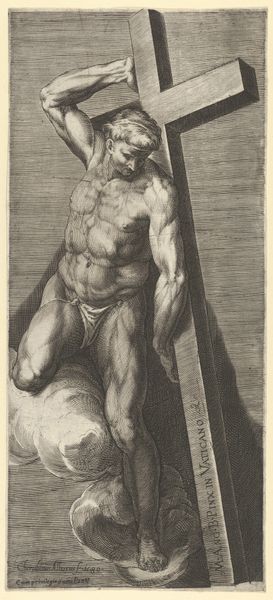
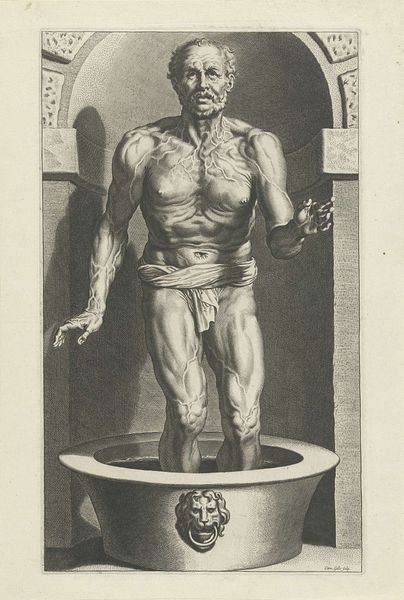
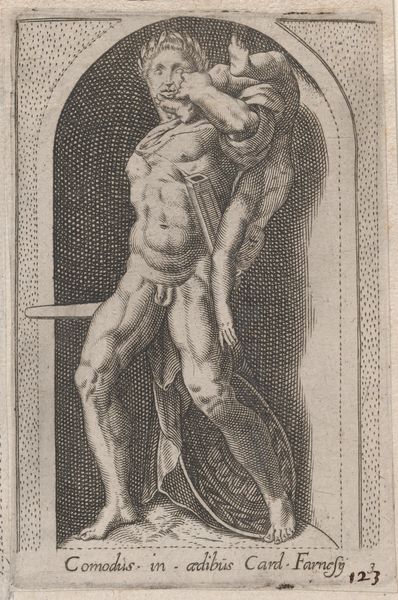
Nicolaes de Bruyn created this print, Hercules and Telephos, using an engraving technique. Think of it as the opposite of relief printing: instead of cutting away the background to leave a raised image, the artist uses a tool called a burin to incise lines directly into a metal plate, in this case, copper. The incised lines hold the ink, and when the plate is pressed against paper, the image is transferred. The fineness of the lines, and the control of the burin, give engravings their distinctive character. Look closely, and you’ll see how de Bruyn varied the depth and density of the lines to create a tonal range, suggesting the play of light and shadow on Hercules’s muscular form. Prints such as these were luxury multiples, made possible by skilled labor, and catering to an expanding market for art. They remind us that even seemingly unique works of art have a relationship to industry. By focusing on the making, we see how social and economic forces shape artistic expression.
Comments
No comments
Be the first to comment and join the conversation on the ultimate creative platform.
 React
React Comment