About this artwork
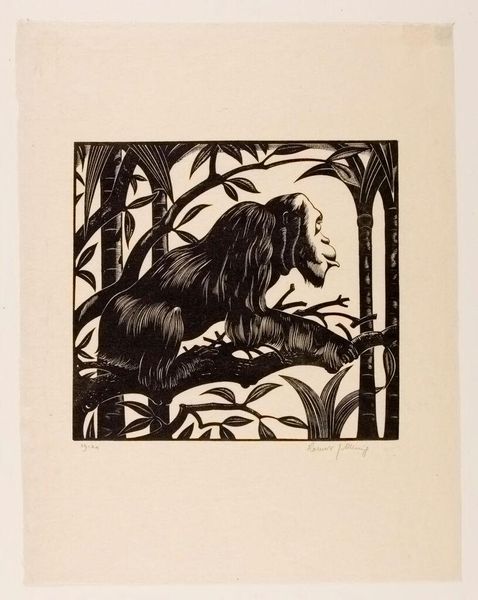
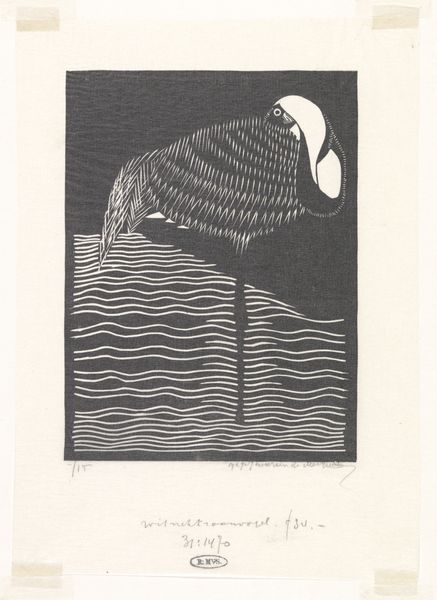
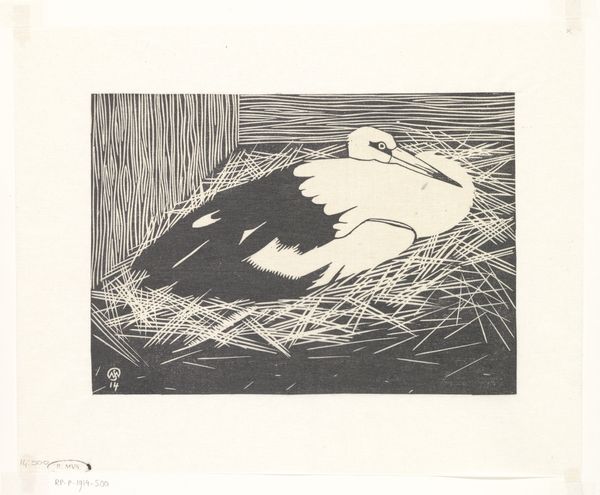
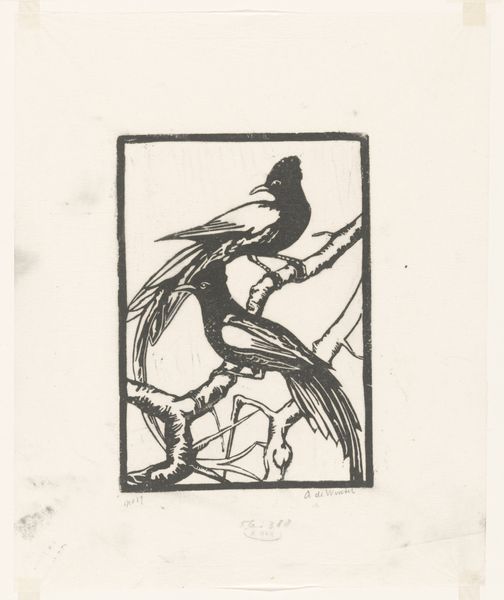
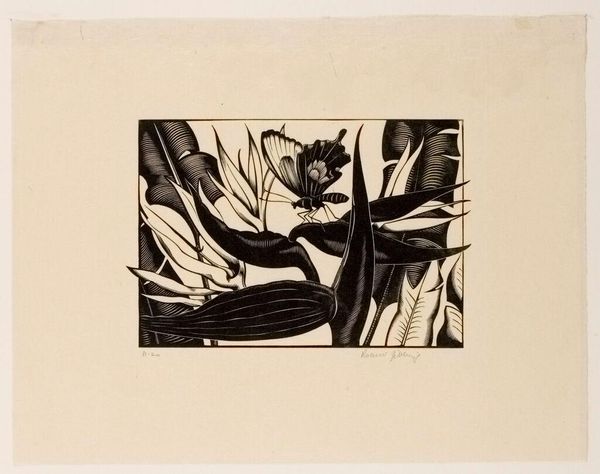
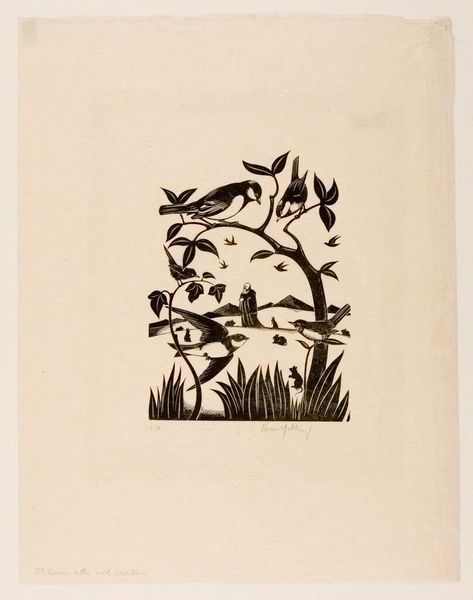
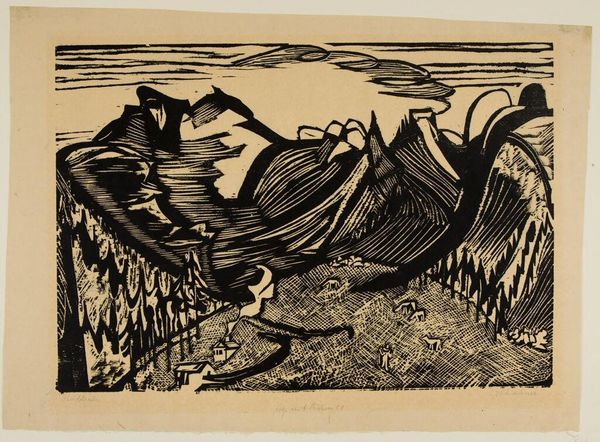
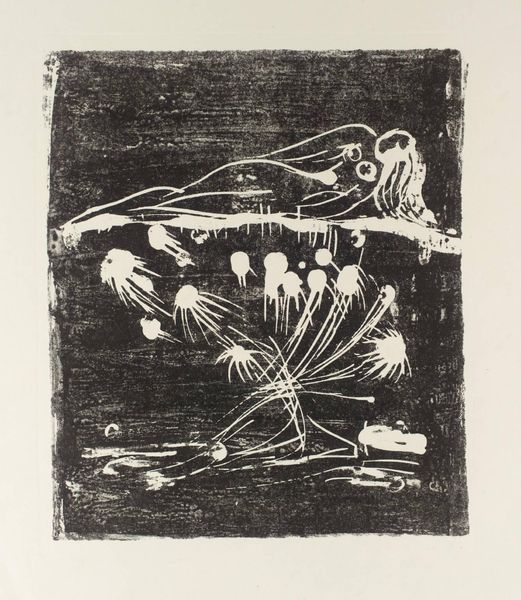
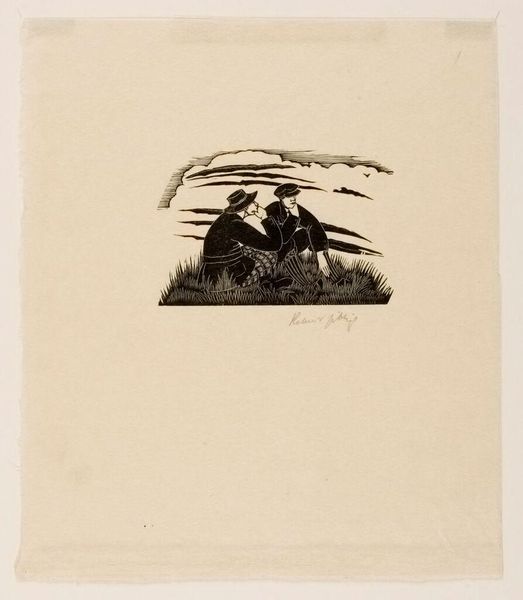
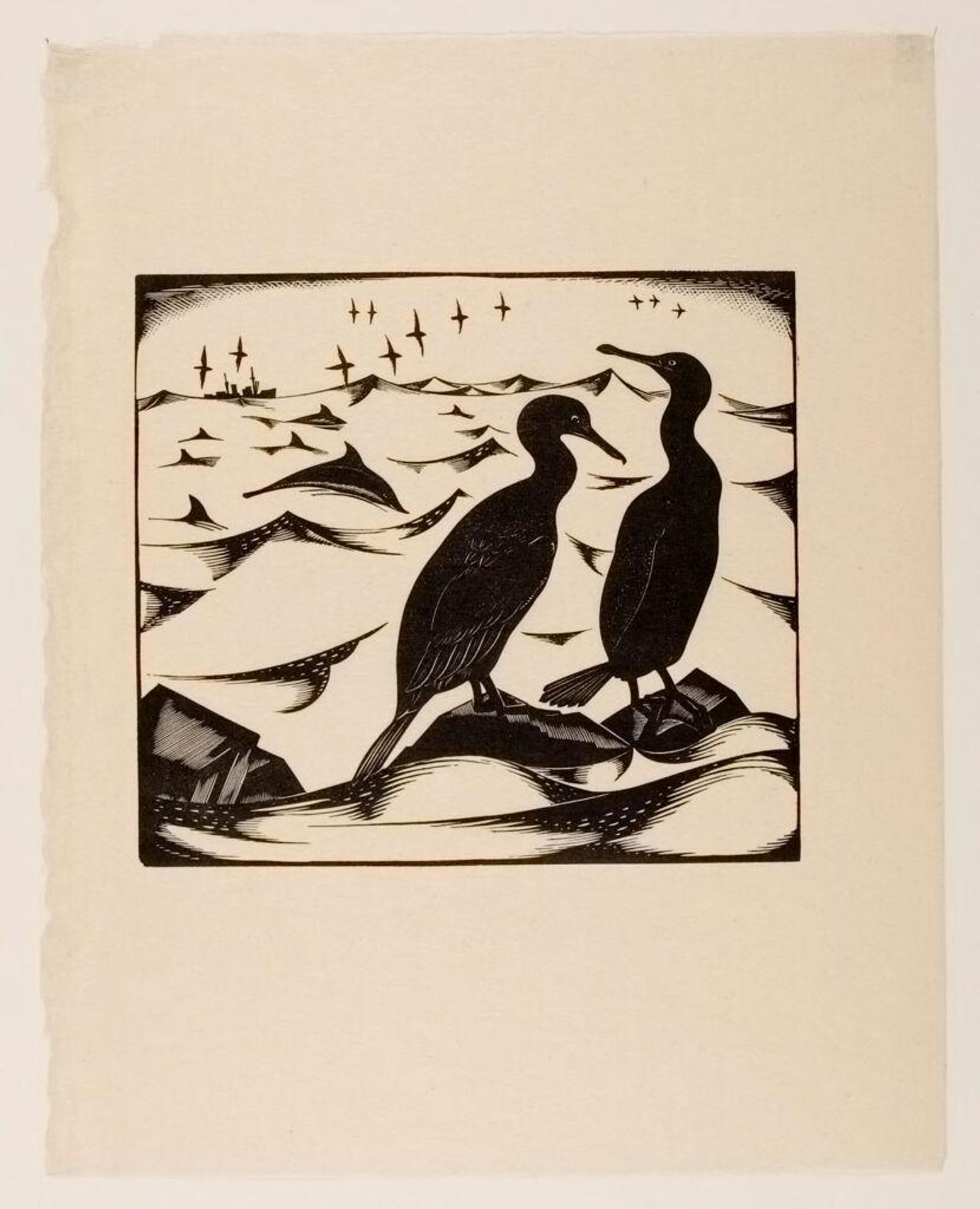
Editor: So, here we have Robert John Gibbings' wood engraving, "Cormorants." I'm struck by how stark the contrast is between the black ink and the paper. What stands out to you? Curator: It’s a powerful image, isn't it? I see a reflection of colonial attitudes towards nature. Cormorants, often seen as symbols of resilience and adaptability, are here rendered in a simplified, almost flattened manner. It reminds me of how indigenous knowledge of the natural world was often disregarded during the colonial era, favoring instead a detached, almost clinical observation. Does that resonate with you? Editor: That’s interesting. I hadn't considered the colonial aspect before, but it does make me rethink the image's simplicity. Curator: Precisely. It prompts us to consider the power dynamics inherent in how we perceive and represent the natural world, and whose perspectives are valued.
Cormorants
c. 20th century

Artwork details
- Location
- Harvard Art Museums
- Copyright
- CC0 1.0
Comments
Share your thoughts
About this artwork
Editor: So, here we have Robert John Gibbings' wood engraving, "Cormorants." I'm struck by how stark the contrast is between the black ink and the paper. What stands out to you? Curator: It’s a powerful image, isn't it? I see a reflection of colonial attitudes towards nature. Cormorants, often seen as symbols of resilience and adaptability, are here rendered in a simplified, almost flattened manner. It reminds me of how indigenous knowledge of the natural world was often disregarded during the colonial era, favoring instead a detached, almost clinical observation. Does that resonate with you? Editor: That’s interesting. I hadn't considered the colonial aspect before, but it does make me rethink the image's simplicity. Curator: Precisely. It prompts us to consider the power dynamics inherent in how we perceive and represent the natural world, and whose perspectives are valued.
Comments
Share your thoughts