About this artwork
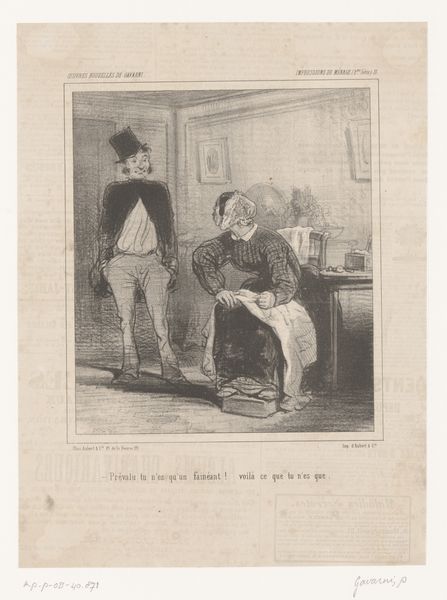
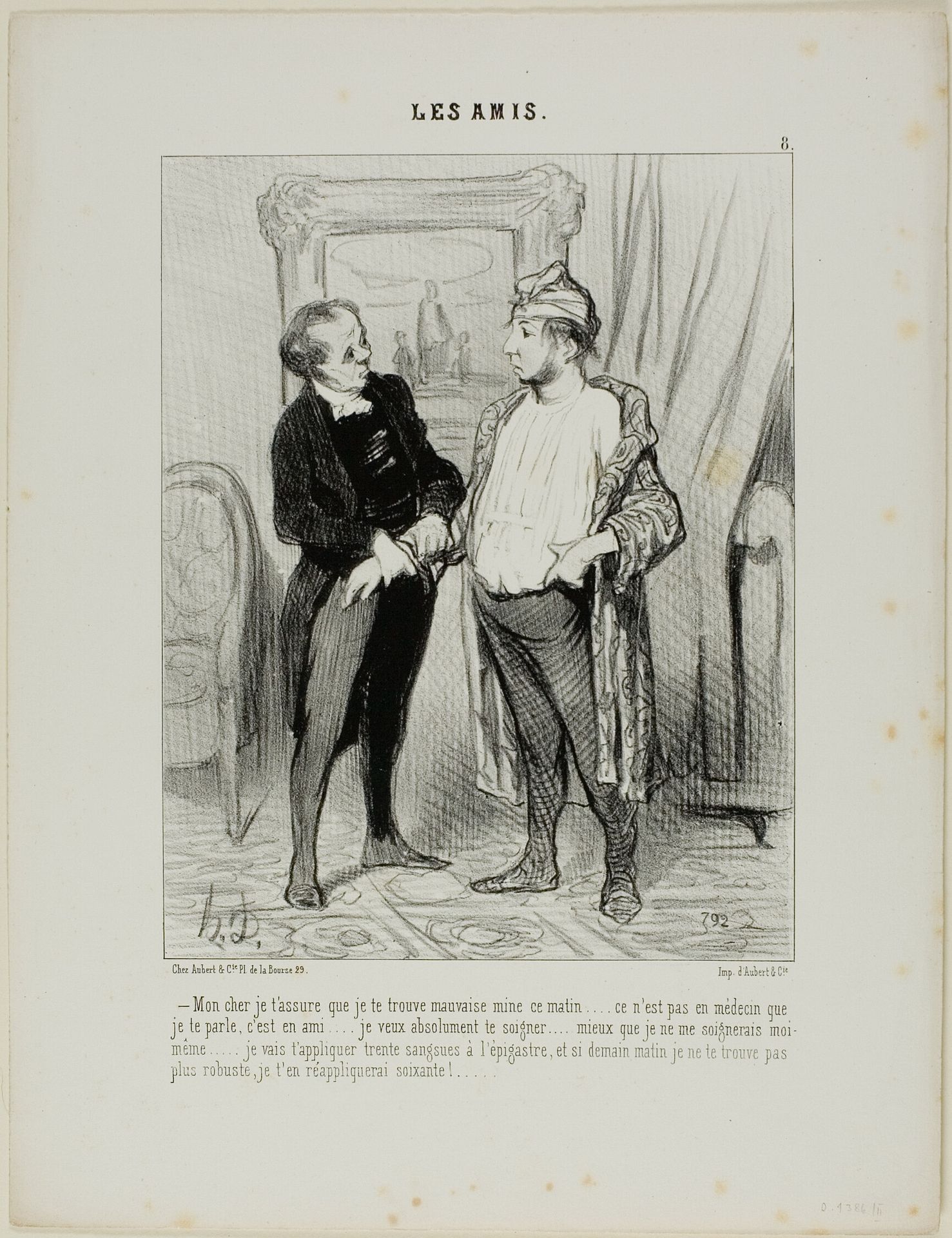
Honoré Daumier created this lithograph titled “- My dear friend, you really don't look very well this morning..." in 19th century France. His art often served as social commentary, reflecting the era’s political and cultural tensions. Here, we see a well-dressed man, presumably a doctor, speaking to a patient in a rather peculiar manner. The doctor insists on treating his friend with thirty leeches, and threatens to apply sixty more the next day if there is no improvement. Daumier uses humor to critique the medical practices of his time. The image is absurd and challenges the authority and methods of the medical profession. Through this scene, Daumier questions the competence and ethics of those in power, highlighting the vulnerabilities and sometimes the exploitation of the sick. It’s a darkly humorous take on trust, class, and the lengths people go to for help when faced with illness.
“- My dear friend, you really don't look very well this morning. I am not speaking to you as a doctor, but as a friend. I must insist in treating you.... better than I would treat myself. I am going to apply 30 leeches to your belly and if by tomorrow you have not improved, I'll apply another sixty,” plate 8 from Les Amis
1845


Artwork details
- Medium
- drawing, lithograph, print, paper
- Dimensions
- 236 × 185 mm (image); 357 × 273 mm (sheet)
- Location
- The Art Institute of Chicago
- Copyright
- Public Domain
Tags
Comments
Share your thoughts
About this artwork
Honoré Daumier created this lithograph titled “- My dear friend, you really don't look very well this morning..." in 19th century France. His art often served as social commentary, reflecting the era’s political and cultural tensions. Here, we see a well-dressed man, presumably a doctor, speaking to a patient in a rather peculiar manner. The doctor insists on treating his friend with thirty leeches, and threatens to apply sixty more the next day if there is no improvement. Daumier uses humor to critique the medical practices of his time. The image is absurd and challenges the authority and methods of the medical profession. Through this scene, Daumier questions the competence and ethics of those in power, highlighting the vulnerabilities and sometimes the exploitation of the sick. It’s a darkly humorous take on trust, class, and the lengths people go to for help when faced with illness.
Comments
Share your thoughts