
Curatorial notes
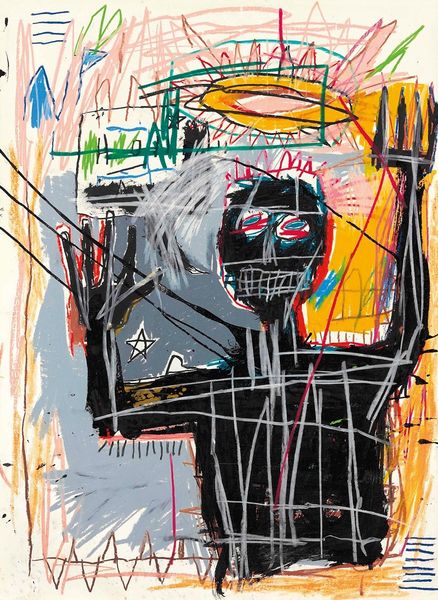
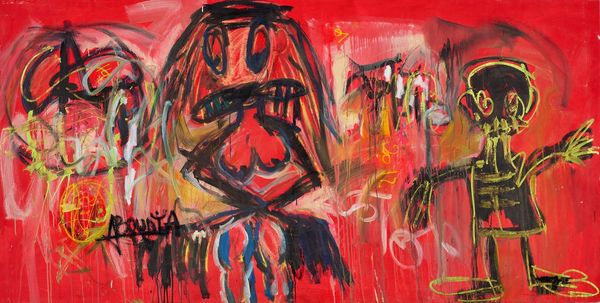
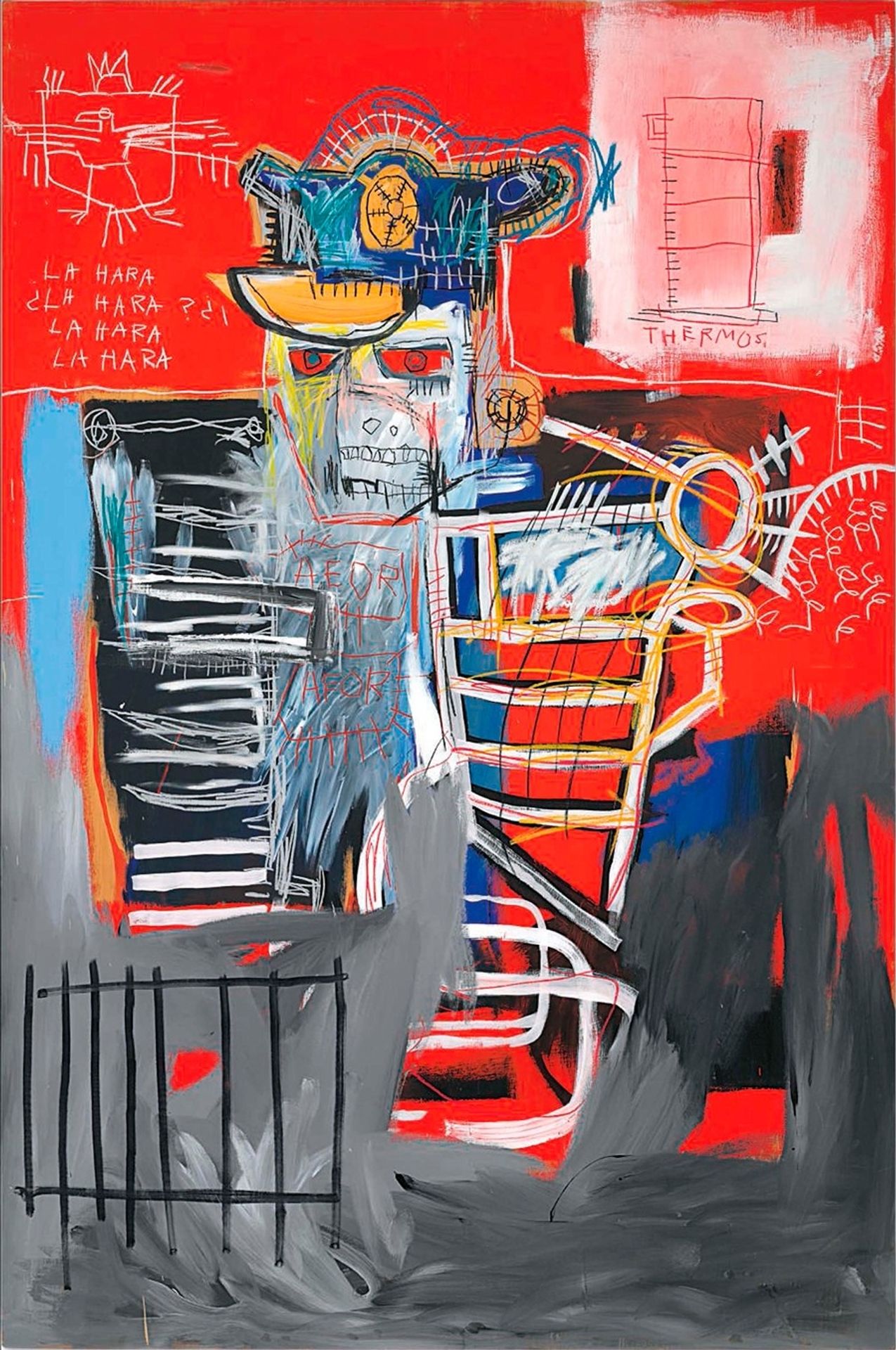
Editor: Here we have Jean-Michel Basquiat’s 1981 acrylic painting, *La Hara.* The skeletal figure dominating the canvas gives me a real sense of unease. What do you see in this piece? Curator: I see a powerful critique of systemic oppression, particularly police brutality. The title itself, "La Hara," is a slang term for the police. Look closely at the figure—it’s dehumanized, almost skeletal, reinforcing the idea of an oppressive, faceless force. Consider also the use of text, a common element in Basquiat’s work. What do those repetitions of 'La Hara' evoke for you? Editor: They feel almost like taunts, or maybe a desperate chant. I also notice the bars at the bottom; is that meant to symbolize incarceration? Curator: Precisely. And note the 'THERMOR' inscription alongside what appears to be a thermometer sketch. What implications can you draw from those signifiers? I find it relevant that Basquiat produced this piece only a few years after his transition from street tagger SAMO to gallery artist. Editor: Well, a thermometer measures heat, maybe hinting at rising tensions. So, taking into account the era and the artist, are you saying Basquiat uses graffiti-inspired imagery as a vehicle to deliver socio-political commentary? Curator: Exactly! Basquiat intertwines his personal experiences and cultural references to expose inequalities and provoke reflection. Think about the socio-political context of 1980s New York: racial tensions, economic disparities, and police misconduct were rampant. "La Hara" isn't just a painting; it’s a visual protest. How does considering these factors shift your initial sense of unease? Editor: It makes me realize that unease is the point. It's supposed to make me uncomfortable and force me to confront these issues. It's amazing how much context shapes understanding. Curator: Indeed. Art becomes truly powerful when it sparks dialogue and compels us to confront uncomfortable truths about society.