About this artwork
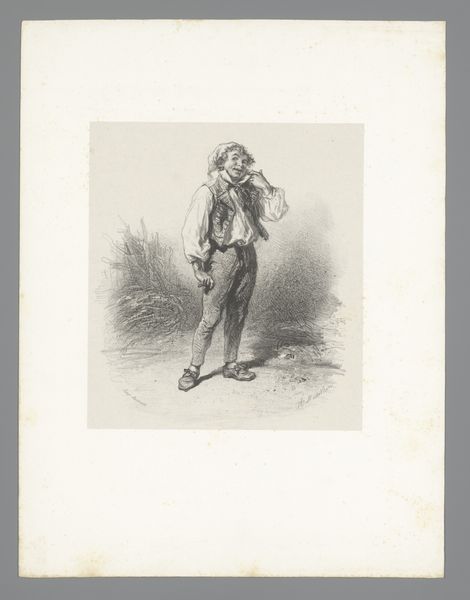
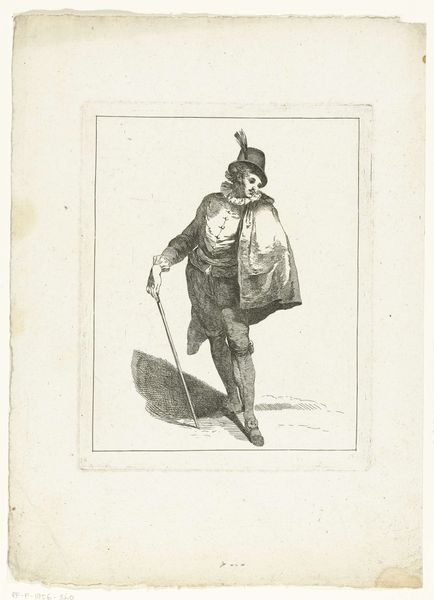
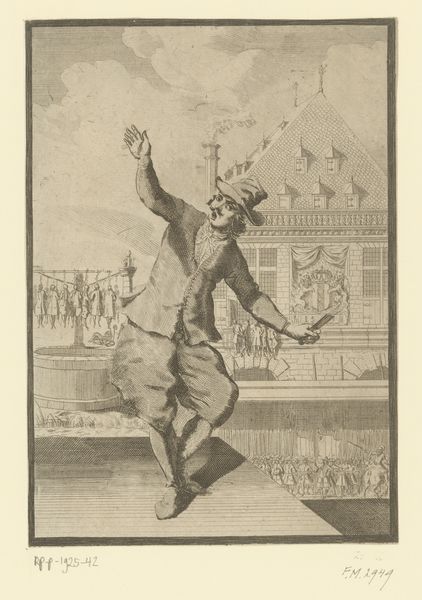
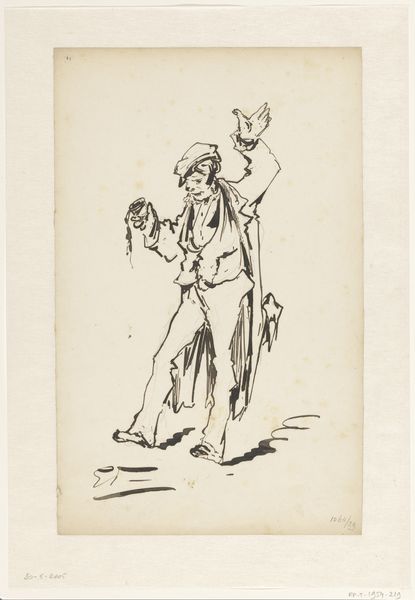
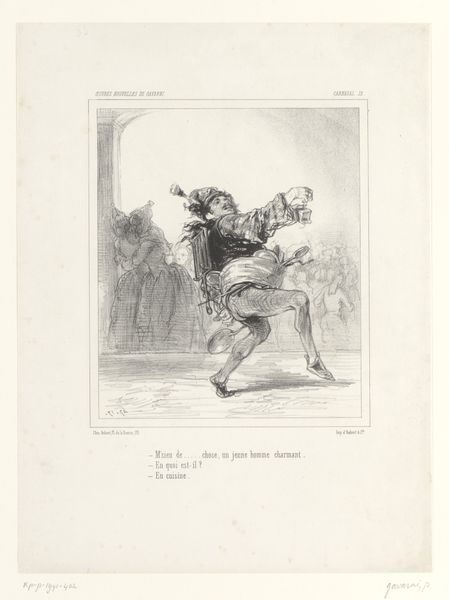
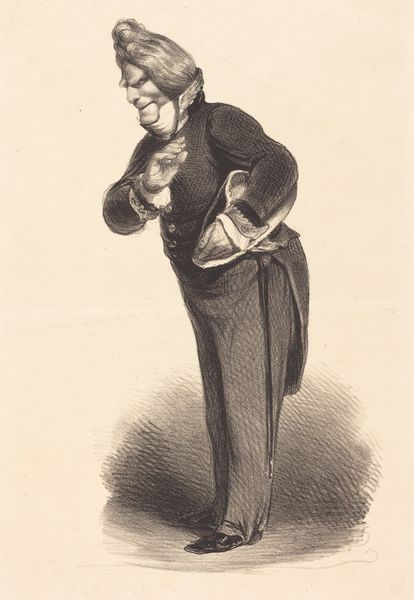
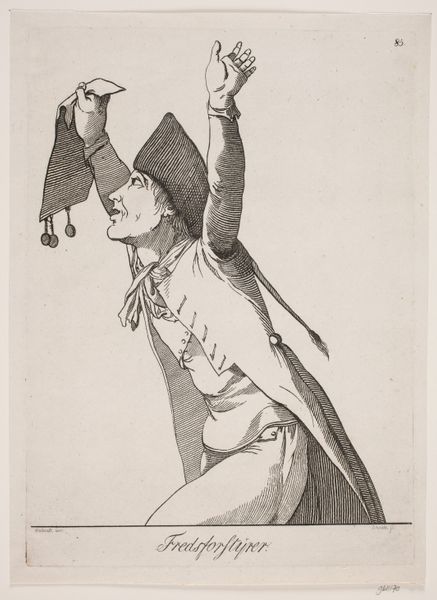
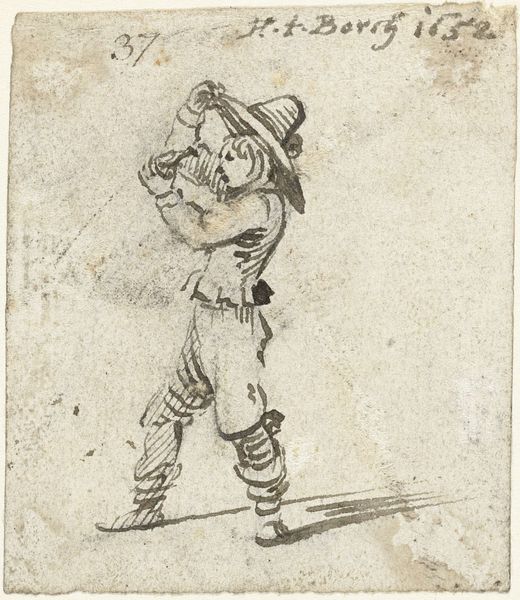
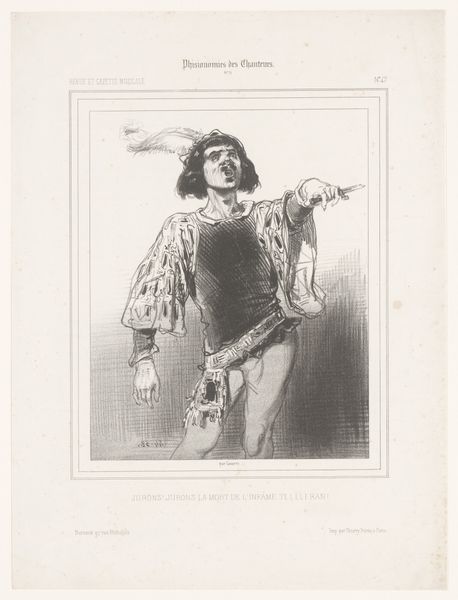
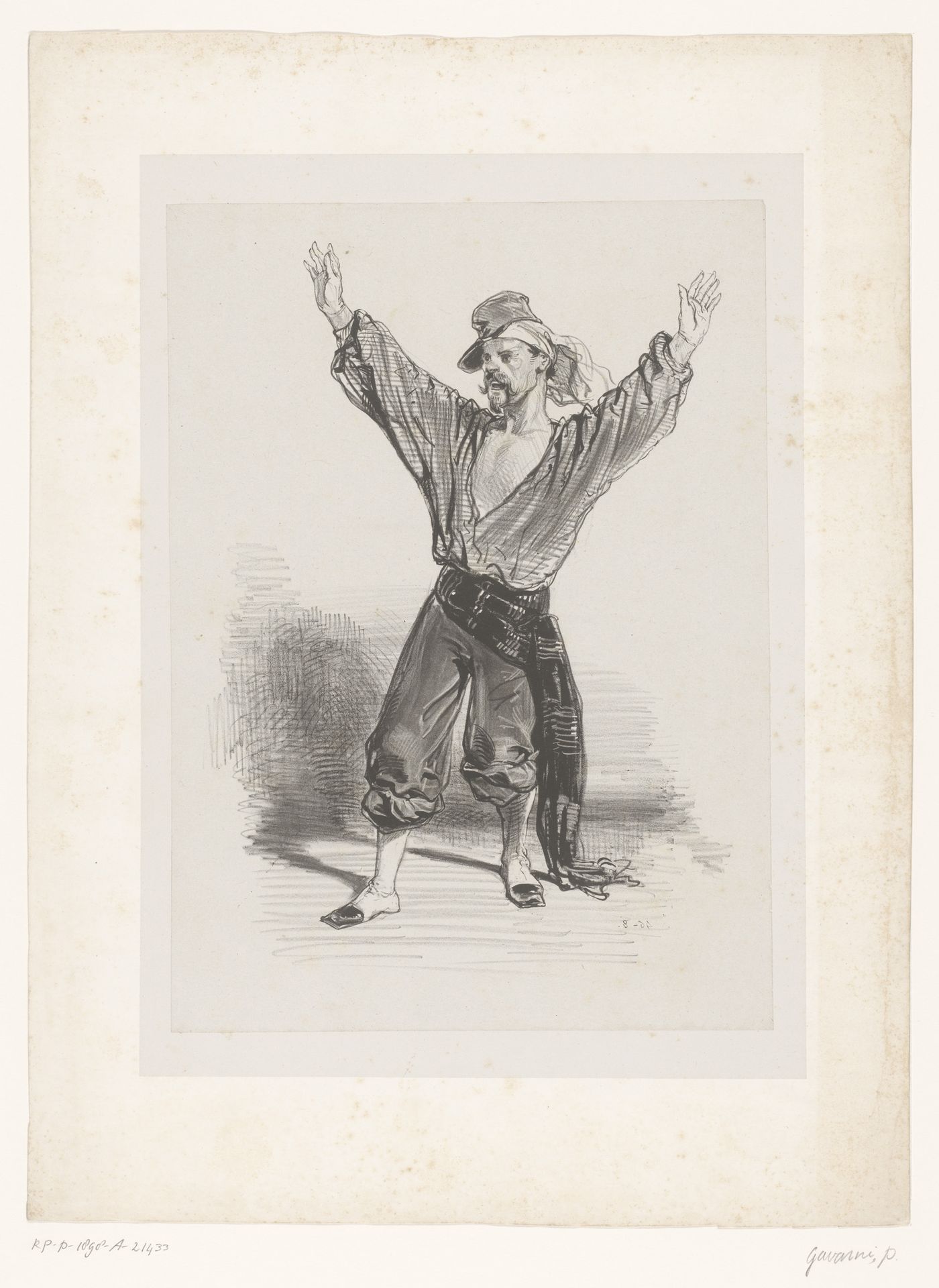
Paul Gavarni made this lithograph, “Man with Kepi and Arms Raised,” in 19th century France. It presents a figure with outstretched arms, a gesture of surrender, supplication, or perhaps theatrical performance. Gavarni’s artistic output provides a window into the social types and mores of his time. Here, his detailed rendering of costume and physiognomy allows us to speculate about the sitter’s class, profession, and identity. Is he a worker, an artist, or a bohemian figure? The kepi, a type of hat associated with the military and working classes, hints at a specific social milieu in post-revolutionary France. Looking at the cultural context, we might ask: What role did images like this play in shaping public perceptions of different social groups? Gavarni’s lithographs often appeared in popular journals, contributing to a broader visual culture that both reflected and shaped social norms. To fully understand this work, historians consult a range of sources, from fashion plates to literary texts. In doing so, we reveal the complex interplay between art, society, and historical context.

Artwork details
- Medium
- drawing, pencil, graphite
- Dimensions
- height 413 mm, width 307 mm
- Location
- Rijksmuseum
- Copyright
- Rijks Museum: Open Domain
Tags
Comments
Share your thoughts
About this artwork
Paul Gavarni made this lithograph, “Man with Kepi and Arms Raised,” in 19th century France. It presents a figure with outstretched arms, a gesture of surrender, supplication, or perhaps theatrical performance. Gavarni’s artistic output provides a window into the social types and mores of his time. Here, his detailed rendering of costume and physiognomy allows us to speculate about the sitter’s class, profession, and identity. Is he a worker, an artist, or a bohemian figure? The kepi, a type of hat associated with the military and working classes, hints at a specific social milieu in post-revolutionary France. Looking at the cultural context, we might ask: What role did images like this play in shaping public perceptions of different social groups? Gavarni’s lithographs often appeared in popular journals, contributing to a broader visual culture that both reflected and shaped social norms. To fully understand this work, historians consult a range of sources, from fashion plates to literary texts. In doing so, we reveal the complex interplay between art, society, and historical context.
Comments
Share your thoughts