About this artwork
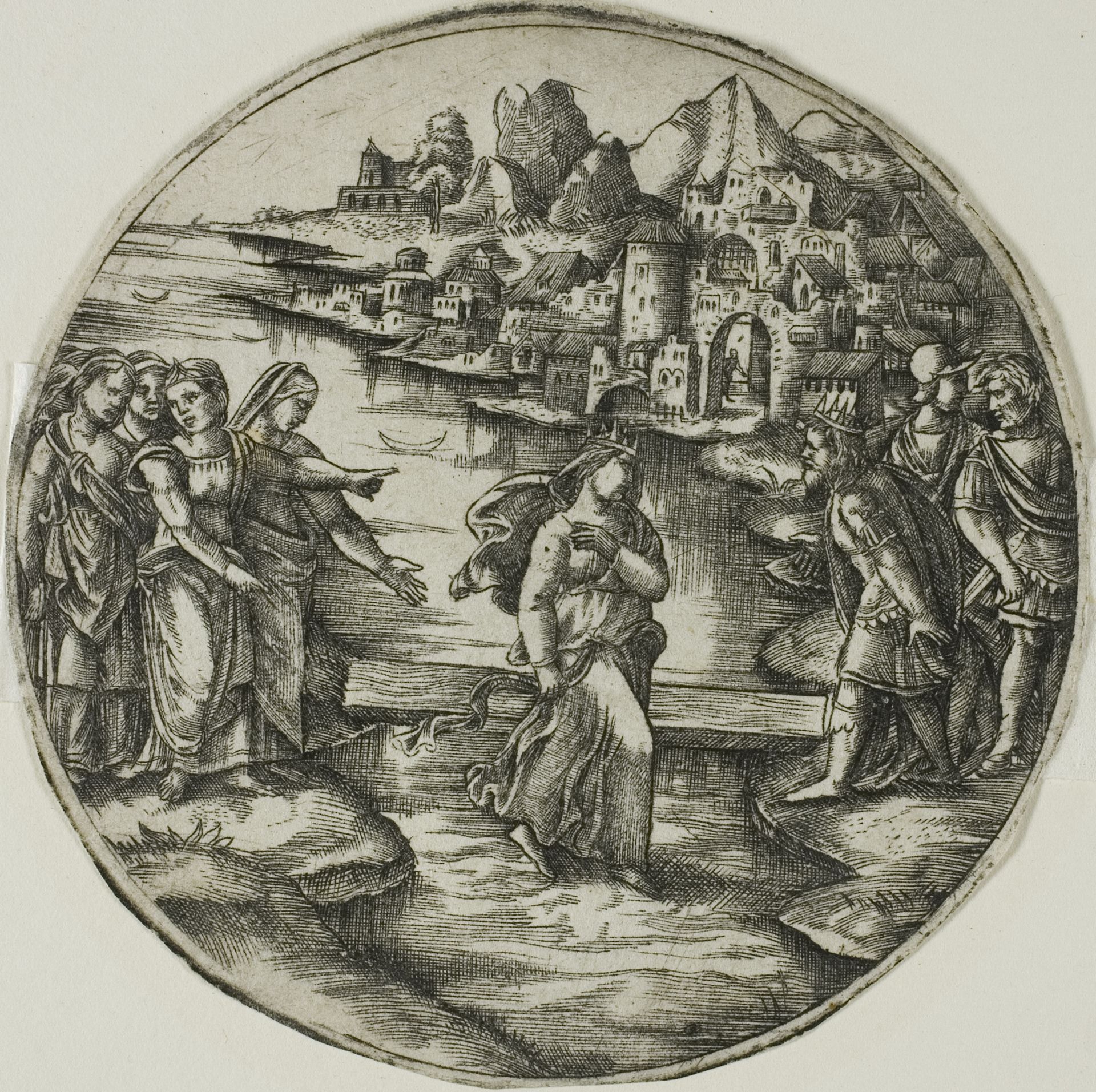
Georges Reverdy made this engraving, "The Queen of Sheba Walking on the Waters," sometime in the 16th century. It depicts a story where the Queen of Sheba visits King Solomon. Reverdy was working during the Renaissance, a period where there was a renewed interest in classical art, literature, and philosophy. But more than that, this is a period where European countries were expanding their reach and influence, often through colonization and trade. The figure of the Queen of Sheba here becomes a potent symbol of exoticism, and the "other." In this imagined encounter, the Queen must walk over water, in a test designed to reveal her true nature. Do you think the artist was interested in what it means to be a powerful woman? Or is it just about her ‘foreignness’? Perhaps the piece reflects the anxieties and fantasies that came with encountering different cultures, underscoring the biases and power dynamics inherent in these interactions. How does this historical depiction of the Queen of Sheba resonate with contemporary discussions about cultural exchange and representation?
The Queen of Sheba Walking on the Waters 1530 - 1535


Artwork details
- Medium
- drawing, print, etching, paper
- Dimensions
- 98 × 98 mm (image/sheet)
- Location
- The Art Institute of Chicago
- Copyright
- Public Domain
Tags
drawing
etching
landscape
figuration
paper
france
line
history-painting
italian-renaissance
Comments
No comments
About this artwork
Georges Reverdy made this engraving, "The Queen of Sheba Walking on the Waters," sometime in the 16th century. It depicts a story where the Queen of Sheba visits King Solomon. Reverdy was working during the Renaissance, a period where there was a renewed interest in classical art, literature, and philosophy. But more than that, this is a period where European countries were expanding their reach and influence, often through colonization and trade. The figure of the Queen of Sheba here becomes a potent symbol of exoticism, and the "other." In this imagined encounter, the Queen must walk over water, in a test designed to reveal her true nature. Do you think the artist was interested in what it means to be a powerful woman? Or is it just about her ‘foreignness’? Perhaps the piece reflects the anxieties and fantasies that came with encountering different cultures, underscoring the biases and power dynamics inherent in these interactions. How does this historical depiction of the Queen of Sheba resonate with contemporary discussions about cultural exchange and representation?
Comments
No comments