About this artwork
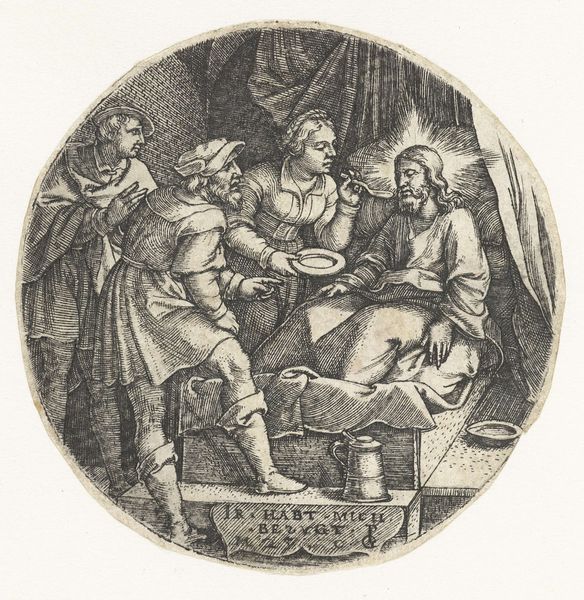
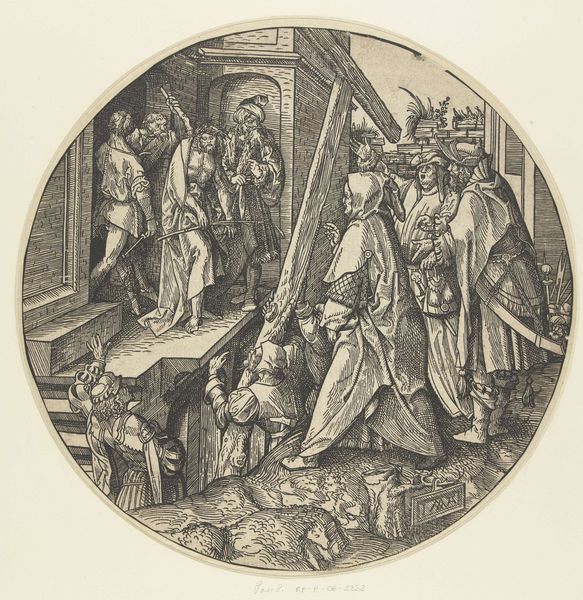
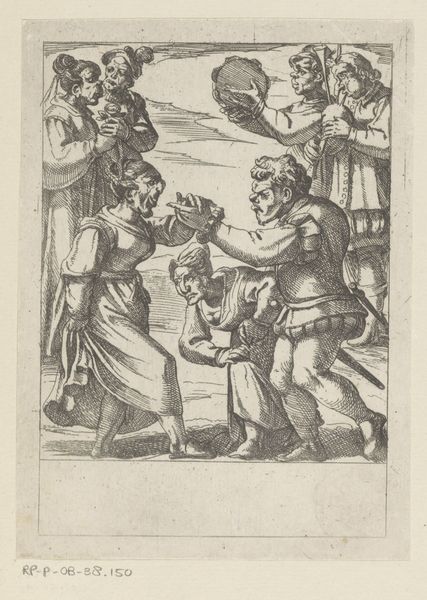
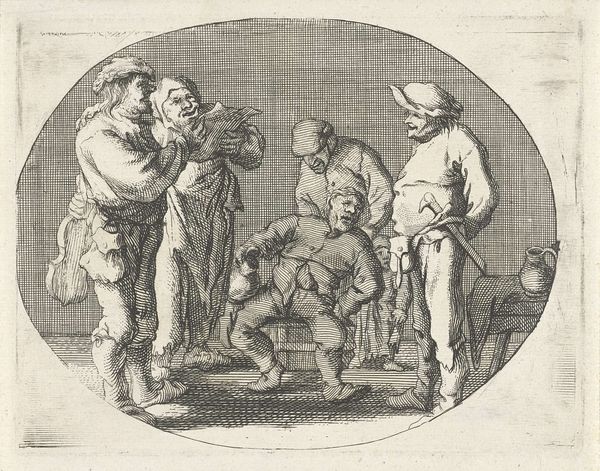
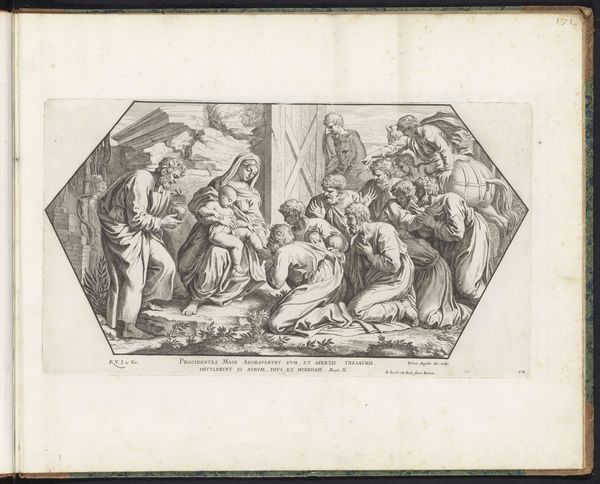
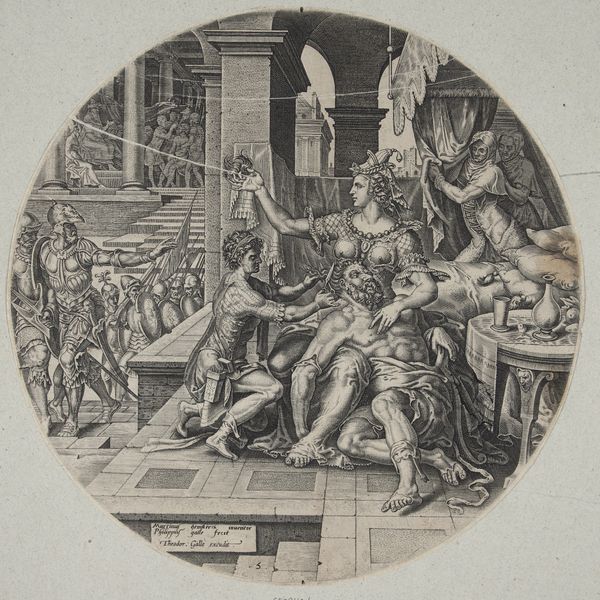
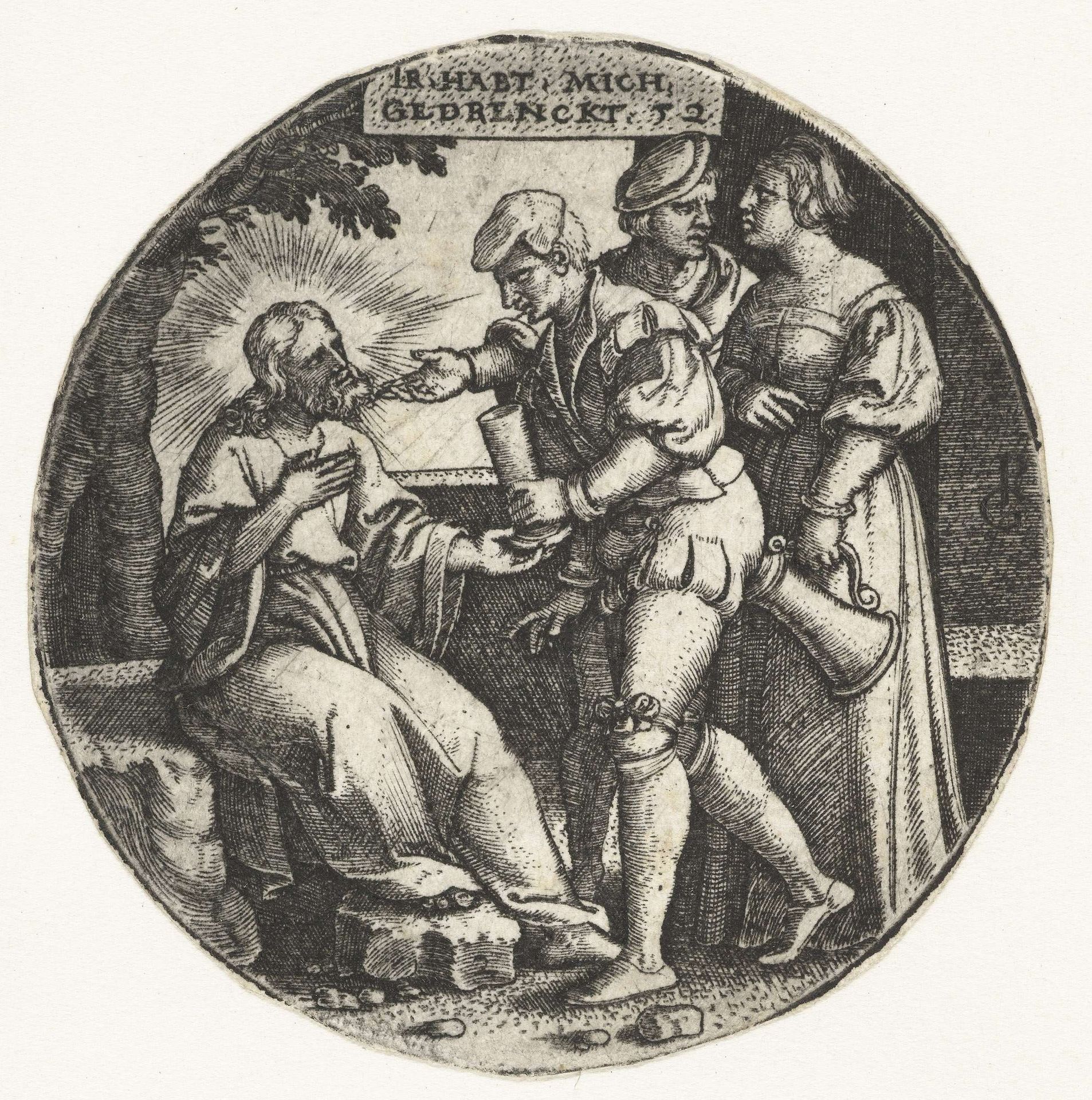
Georg Pencz created this engraving called 'Christus heeft dorst en krijgt drinken aangeboden', translating to "Christ is thirsty and is offered a drink" sometime between 1500 and 1550. Pencz, a German Renaissance printmaker, worked during a time of significant religious and social upheaval. This piece reflects the period's complex relationship between religious devotion and everyday life. You’ll see Christ depicted in a moment of vulnerability, receiving water from figures dressed in contemporary 16th-century clothing. This collapsing of biblical narrative and contemporary life was typical. Pencz was briefly imprisoned and banished from Nuremberg for his religious views, and this experience may have influenced his nuanced portrayals of religious themes. The emotional core of this artwork lies in its intimate portrayal of human compassion, crossing both social and divine boundaries. The act of offering water becomes a powerful symbol of empathy and human connection.
Christus heeft dorst en krijgt drinken aangeboden 1534

Georg Pencz
1500 - 1550Location
RijksmuseumArtwork details
- Medium
- print, engraving
- Location
- Rijksmuseum
- Copyright
- Rijks Museum: Open Domain
Tags
old engraving style
figuration
history-painting
northern-renaissance
engraving
Comments
No comments
About this artwork
Georg Pencz created this engraving called 'Christus heeft dorst en krijgt drinken aangeboden', translating to "Christ is thirsty and is offered a drink" sometime between 1500 and 1550. Pencz, a German Renaissance printmaker, worked during a time of significant religious and social upheaval. This piece reflects the period's complex relationship between religious devotion and everyday life. You’ll see Christ depicted in a moment of vulnerability, receiving water from figures dressed in contemporary 16th-century clothing. This collapsing of biblical narrative and contemporary life was typical. Pencz was briefly imprisoned and banished from Nuremberg for his religious views, and this experience may have influenced his nuanced portrayals of religious themes. The emotional core of this artwork lies in its intimate portrayal of human compassion, crossing both social and divine boundaries. The act of offering water becomes a powerful symbol of empathy and human connection.
Comments
No comments