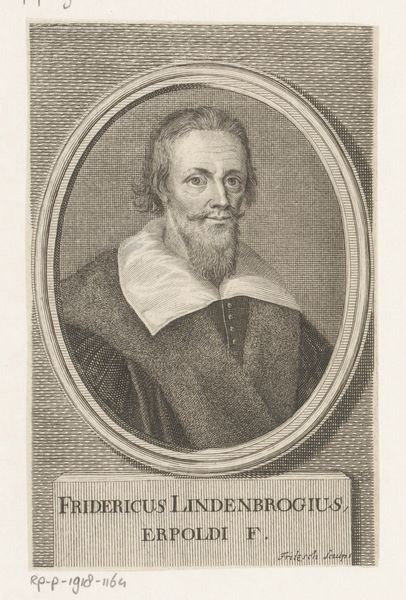
print, engraving
#
portrait
#
baroque
# print
#
old engraving style
#
19th century
#
history-painting
#
engraving
Dimensions: height 261 mm, width 157 mm
Copyright: Rijks Museum: Open Domain
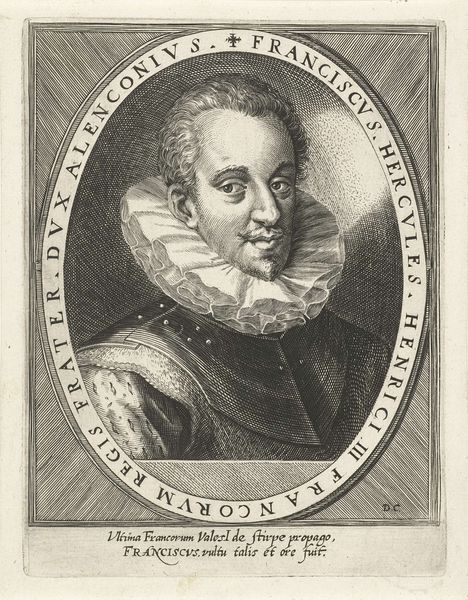
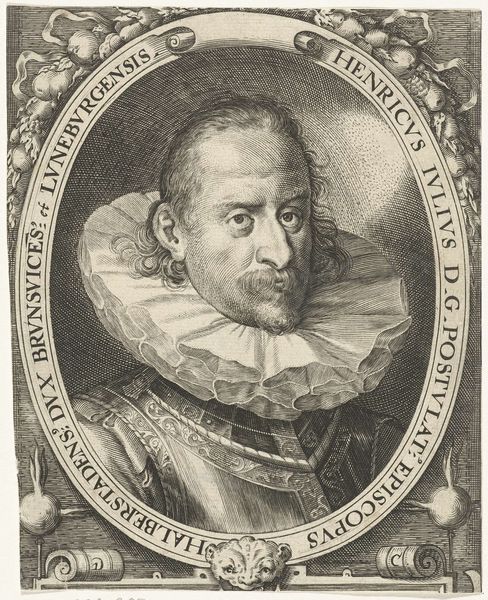
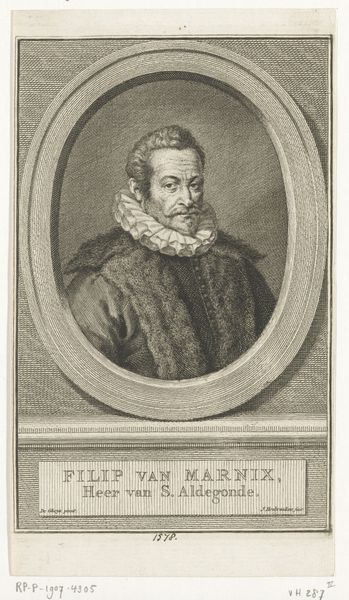
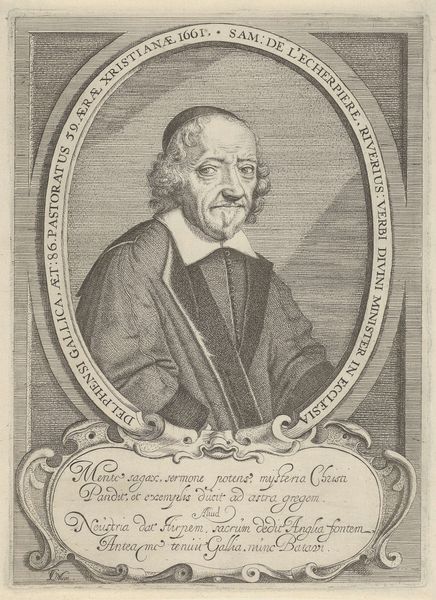
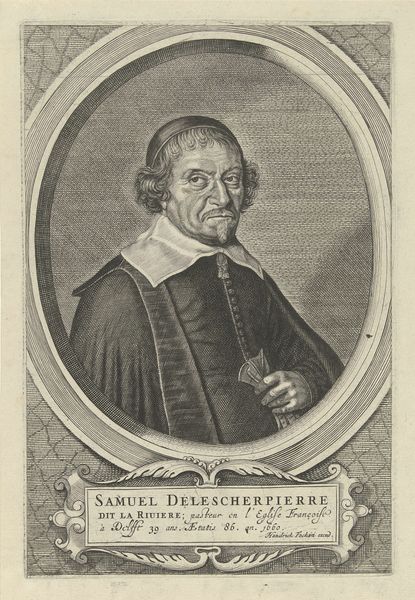
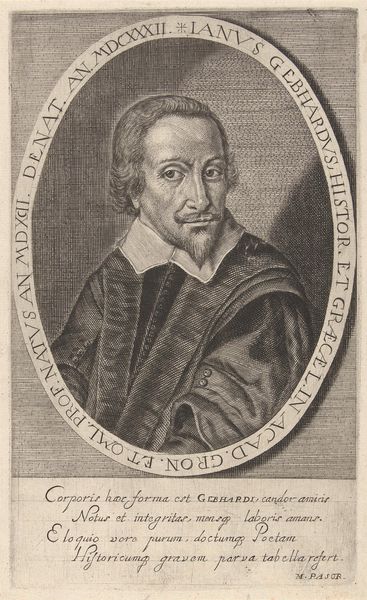
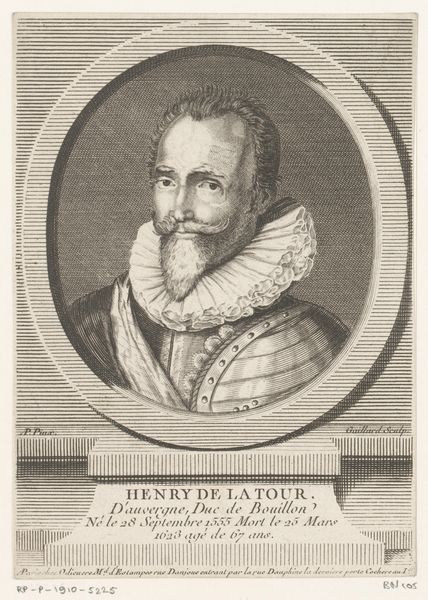
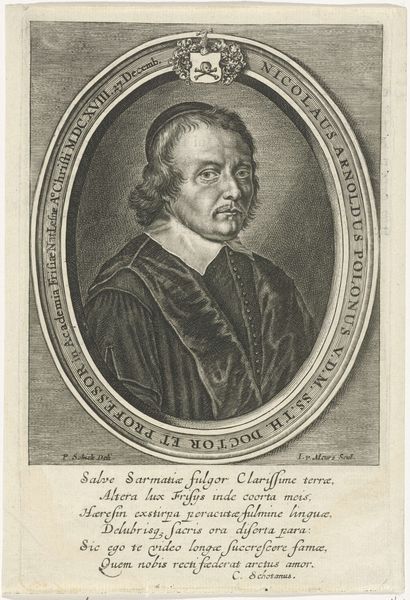
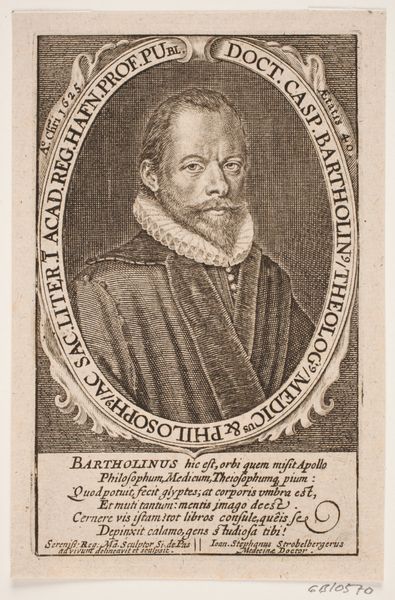
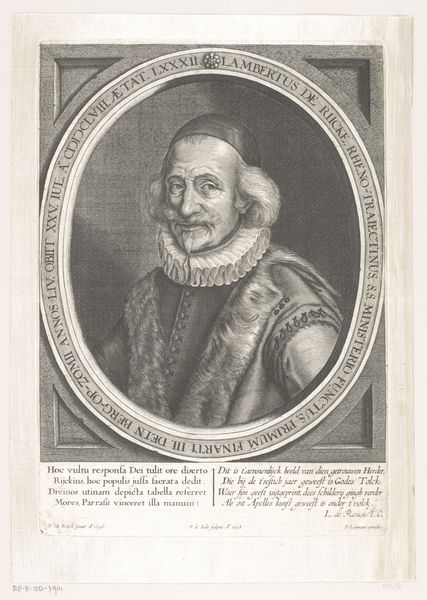
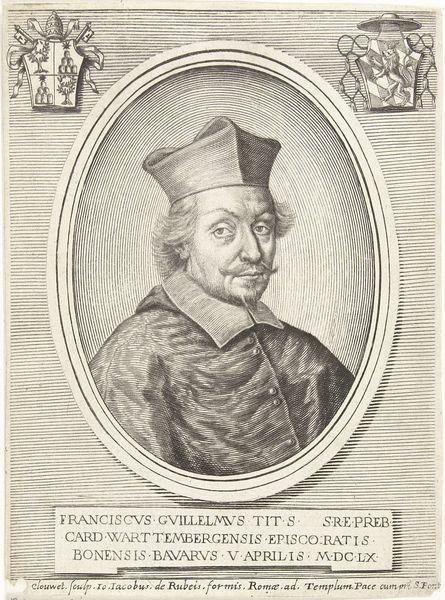
Editor: So, this is "Portret van Friedrich Lindenbrog," a print from around 1685-1688 by H. von Wiering. It's an engraving, which gives it this really detailed, almost austere look. What strikes me is how formal it feels, even a little severe. What do you see when you look at this piece? Curator: Immediately, I'm drawn to the process itself. The engraving as a reproducible medium speaks volumes. Who was this print *for*? Consider the market—it was not solely for wealthy art collectors, but perhaps scholars or members of Lindenbrog's circle, which illustrates a new accessibility that traditional painting lacked. Editor: That’s interesting. So the *means* of production broadens the potential audience... Curator: Precisely. And think about the labor involved. Engraving requires meticulous skill. Was von Wiering celebrating Lindenbrog or showcasing their own expertise in a competitive print market? Who controlled the means of visual representation? What status did these prints have as cultural products, blurring the line between craft and "high art"? Editor: So you're saying it's not just about Lindenbrog as an individual, but about the larger societal implications of how his image was produced and distributed. Curator: Exactly! We can also ask about the symbolism - look closely, and think: Why an oval frame with acanthus leaves and cherubs for *this* specific individual? Are these flourishes a reflection of Baroque opulence or marketing that seeks to imbue a certain type of image with the appearance of status? These visual components serve as material clues to unlocking broader socioeconomic and cultural narratives, rather than being taken merely at face value. Editor: I never thought about an artwork like that. It’s more than the subject; it's about production, labor, access... Curator: Indeed! The artwork is not just a pretty picture; it's evidence of historical labor relations and distribution networks, opening up new questions regarding material consumption. Editor: Okay, that provides so much context to how it's to be read...thanks for shifting my focus!
Comments
No comments
Be the first to comment and join the conversation on the ultimate creative platform.
 Collect
 React
React Comment
More like this