1917
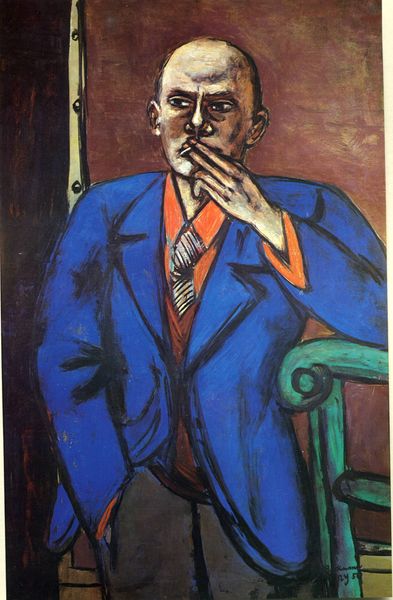
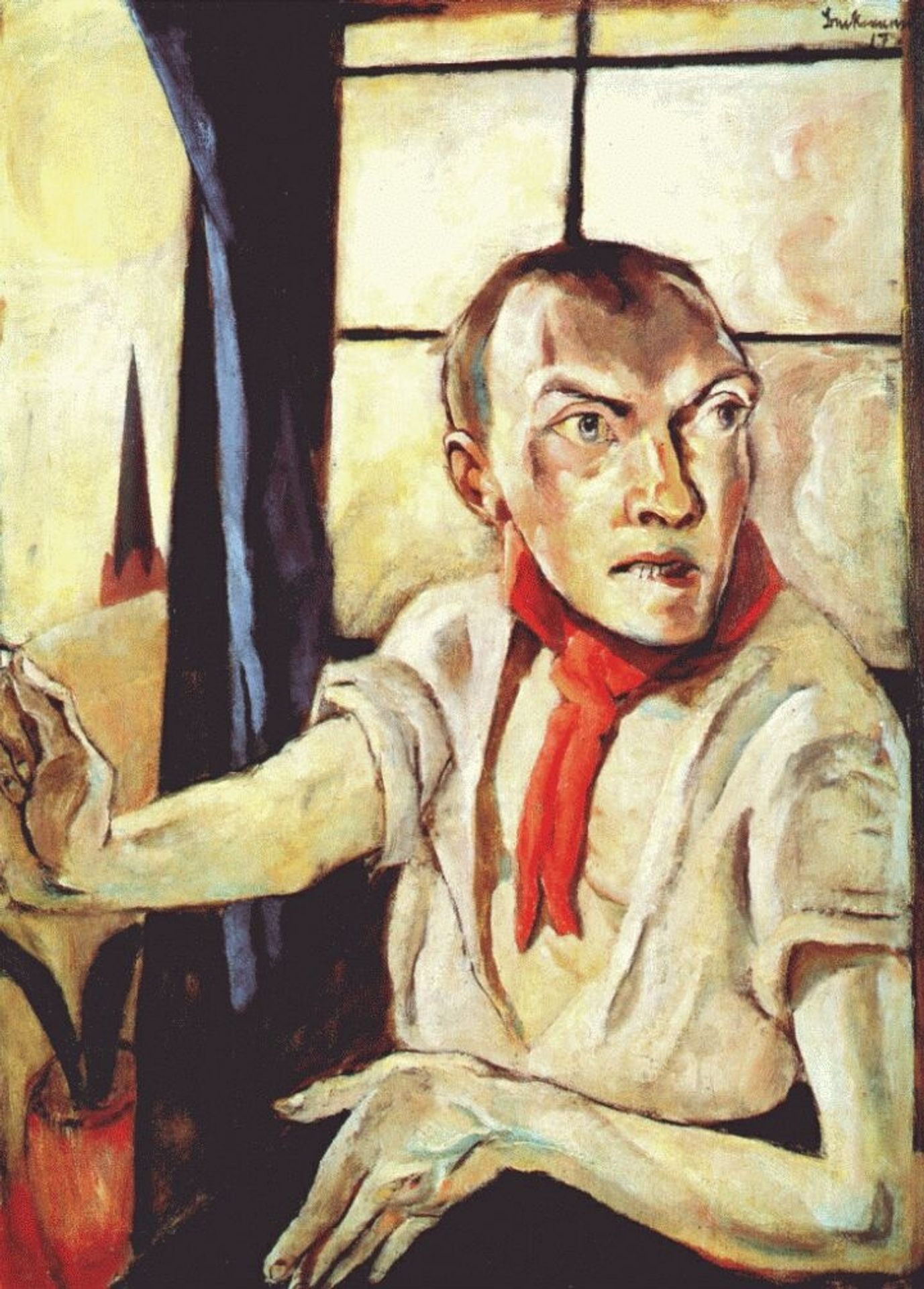
Self-Portrait with Red Scarf

Max Beckmann
1884 - 1950Location
Staatsgalerie Stuttgart, Stuttgart, GermanyListen to curator's interpretation
Curatorial notes
Curator: Before us we have Max Beckmann's "Self-Portrait with Red Scarf," an oil on canvas completed in 1917. It resides here, at the Staatsgalerie Stuttgart. Editor: My initial response? Stark. The rigid lines of the window frame juxtaposed against his unsettling gaze creates a palpable tension. And that red scarf—a vibrant disruption. Curator: Indeed. The placement of the red scarf is interesting. Beckmann painted this self-portrait during a period of immense upheaval. Having volunteered as a medical orderly in World War I, he suffered a breakdown. This painting exists as a raw portrayal of trauma, where the vibrant scarf becomes almost like a physical manifestation of the weight on his shoulders. The unnerving stare and tensed posture of the subject suggest someone teetering on the brink. Editor: I concur, and notice also the asymmetry of the composition itself. The off-center placement and strong diagonals suggest an intentional discord. Further enhanced by the use of crude brushstrokes and color which further emphasizes the subject's internal conflict, an almost palpable sense of unrest and existential unease is developed. It avoids the common visual harmony of the Renaissance for tension, something more psychologically driven. Curator: It’s a compelling example of German Expressionism. Beckmann refused easy categorization. The war irrevocably marked him and his work, placing his practice in line with social commentary and existential inquiries explored during the Weimar Republic. Think of his contemporaries tackling themes of alienation, the effects of industrialization and the fragmentation of the self. Editor: And you know, the very deliberate positioning of the artist's hand, as if arrested mid-gesture, invites further semiotic interpretation. The stark realism with the exaggeration of proportion draws viewers to question what narrative this image communicates. Does this frozen movement imply confinement? Resistance? Curator: I’d add it speaks to both internal and external tensions, reflective of his post-war anxiety. It invites critical discussion regarding masculinity. Editor: Absolutely. And focusing on the pure aesthetic of the painting and color relation: the artist masterfully juxtaposes bold, contrasting planes of color, further enhancing that feeling. Curator: So while Beckmann sought a sense of universal truth, this work remains deeply rooted in its specific historical and political contexts. It remains a stark document about the psychology and conditions of an artist and society deeply wounded by the horrors of war. Editor: True, this painting provides viewers with much insight both formally and socio-historically. It presents both artistic intention and reflection, if one approaches it critically.