About this artwork
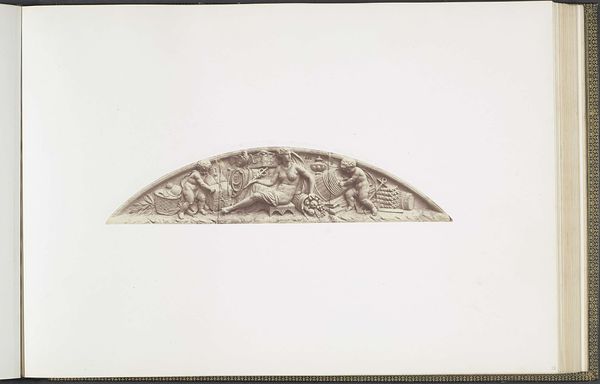
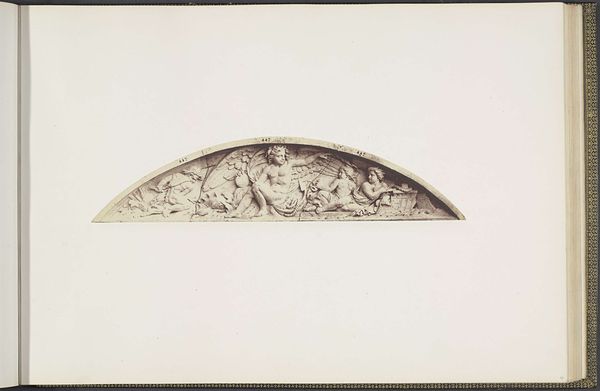
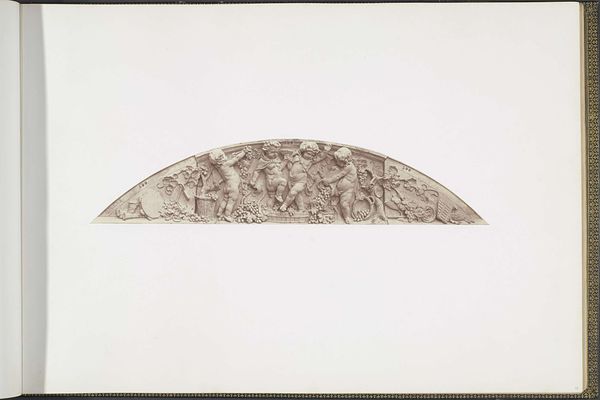
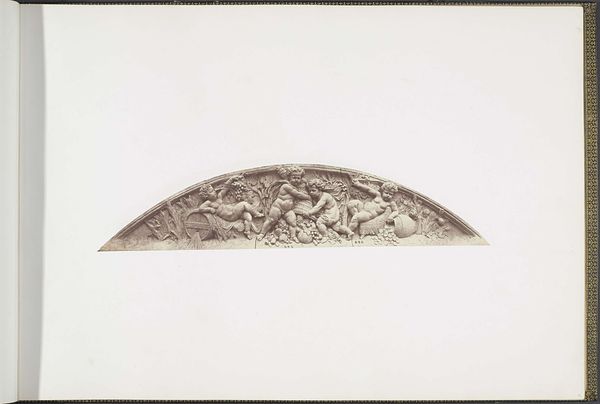
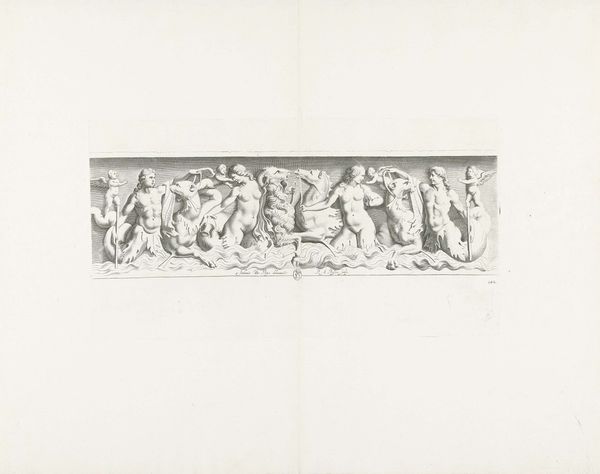
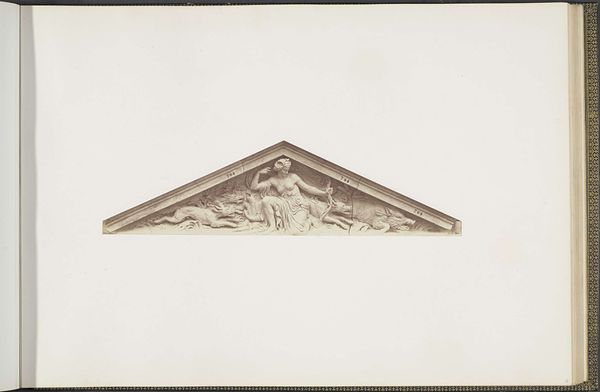
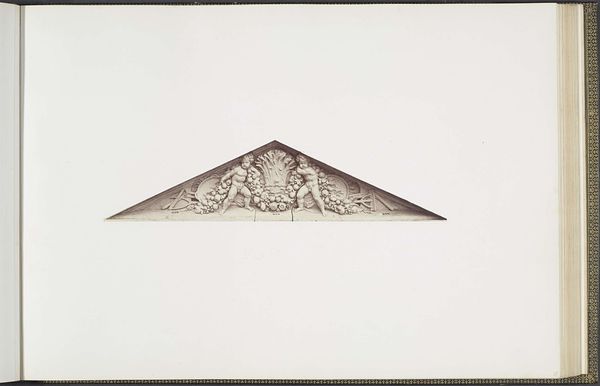
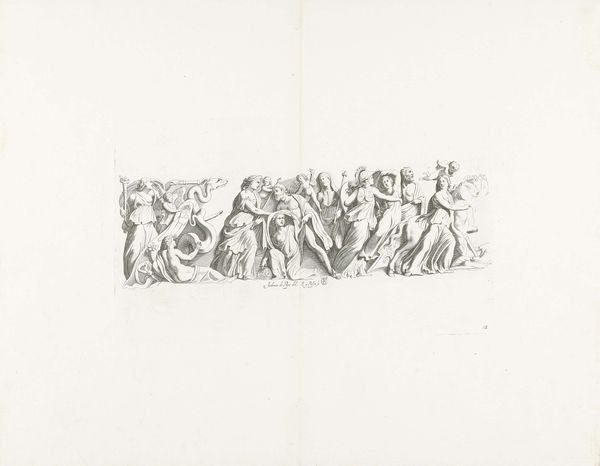
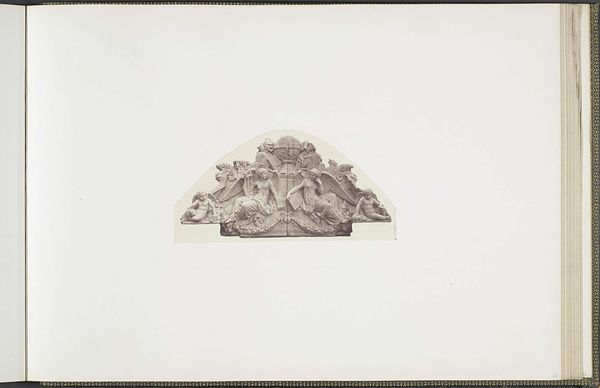
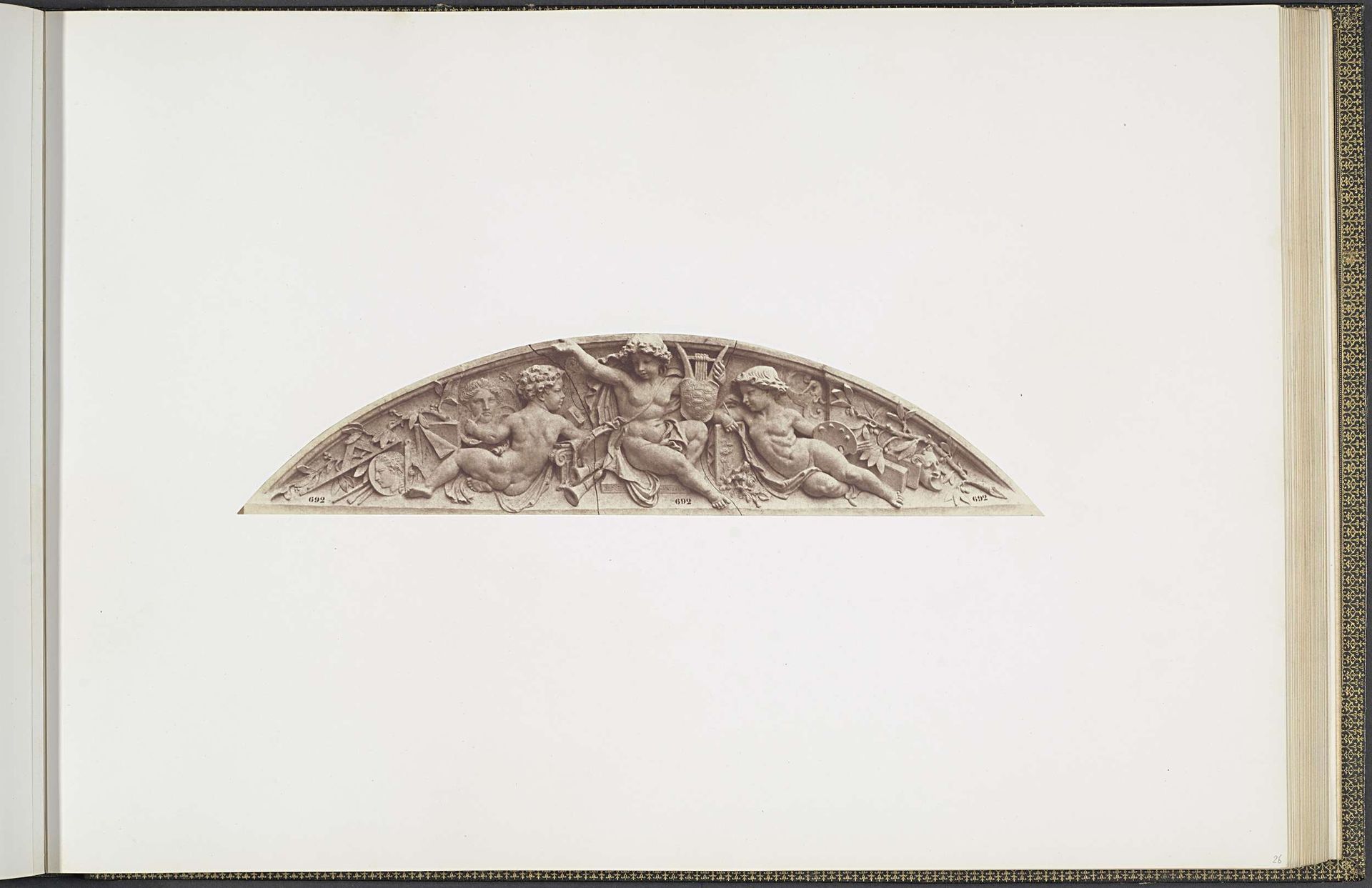
Editor: Here we have a photograph by Edouard Baldus, taken around 1855 to 1857, depicting the plaster models for sculptures at the Louvre, titled "Les Beaux-Arts" by Auguste Poitevin. It’s fascinating to see this intermediary stage. The relief itself feels very classical; how would you interpret this work formally? Curator: The photograph presents a study in form and line. Notice how the semi-circular composition reinforces the allegorical nature of the sculpture. The figures, rendered in exquisite detail, possess a palpable three-dimensionality despite being captured in two dimensions. Note also, if you will, how Baldus uses the contrast in light to bring forward the structure and the mass. Editor: Yes, the texture is beautifully rendered in the photograph. I wonder, do you think the photographic medium itself affects how we perceive the sculpture's formal qualities? Curator: Undoubtedly. Photography flattens and reinterprets space, but consider the advantage: Baldus captures a specific moment, isolating the sculptural forms in a way that the direct viewer of the actual architectural element couldn’t. It's also interesting that the absence of color draws attention to the relationship between light and shadow which, again, affects depth perception. It directs our attention to the essence of its design. Editor: That’s a great point. The contrast really highlights the texture and volume of the sculpture in a unique way. This really changes how I see photography's relationship to sculpture! Curator: Precisely! It underscores photography's transformative capacity. Each viewing provides a fresh structural dialogue and reveals new information on a visual level.
Gipsmodellen voor beeldhouwwerken op het Palais du Louvre: "Les Beaux-Arts" door Auguste Poitevin
c. 1855 - 1857

Edouard Baldus
1813 - 1889Location
RijksmuseumArtwork details
- Medium
- relief, bronze, photography, sculpture
- Dimensions
- height 378 mm, width 556 mm
- Location
- Rijksmuseum
- Copyright
- Rijks Museum: Open Domain
Tags
Comments
Share your thoughts
About this artwork
Editor: Here we have a photograph by Edouard Baldus, taken around 1855 to 1857, depicting the plaster models for sculptures at the Louvre, titled "Les Beaux-Arts" by Auguste Poitevin. It’s fascinating to see this intermediary stage. The relief itself feels very classical; how would you interpret this work formally? Curator: The photograph presents a study in form and line. Notice how the semi-circular composition reinforces the allegorical nature of the sculpture. The figures, rendered in exquisite detail, possess a palpable three-dimensionality despite being captured in two dimensions. Note also, if you will, how Baldus uses the contrast in light to bring forward the structure and the mass. Editor: Yes, the texture is beautifully rendered in the photograph. I wonder, do you think the photographic medium itself affects how we perceive the sculpture's formal qualities? Curator: Undoubtedly. Photography flattens and reinterprets space, but consider the advantage: Baldus captures a specific moment, isolating the sculptural forms in a way that the direct viewer of the actual architectural element couldn’t. It's also interesting that the absence of color draws attention to the relationship between light and shadow which, again, affects depth perception. It directs our attention to the essence of its design. Editor: That’s a great point. The contrast really highlights the texture and volume of the sculpture in a unique way. This really changes how I see photography's relationship to sculpture! Curator: Precisely! It underscores photography's transformative capacity. Each viewing provides a fresh structural dialogue and reveals new information on a visual level.
Comments
Share your thoughts