About this artwork
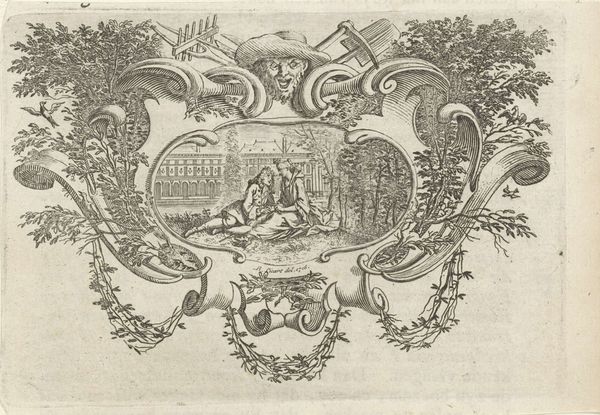
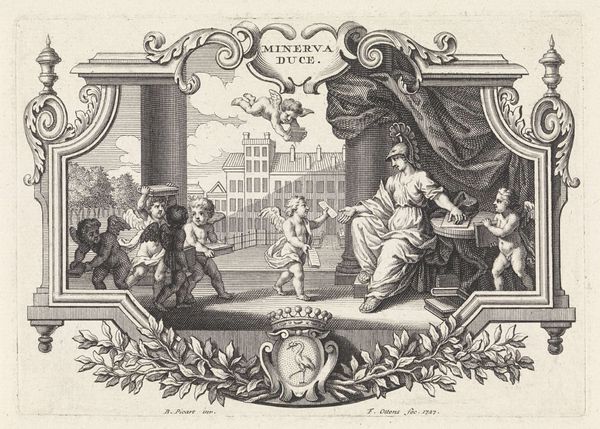
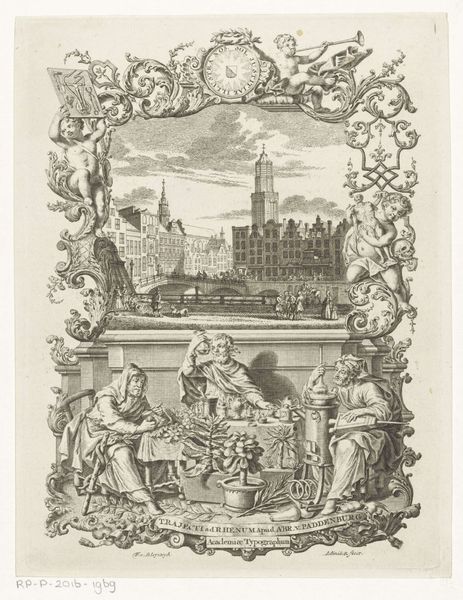
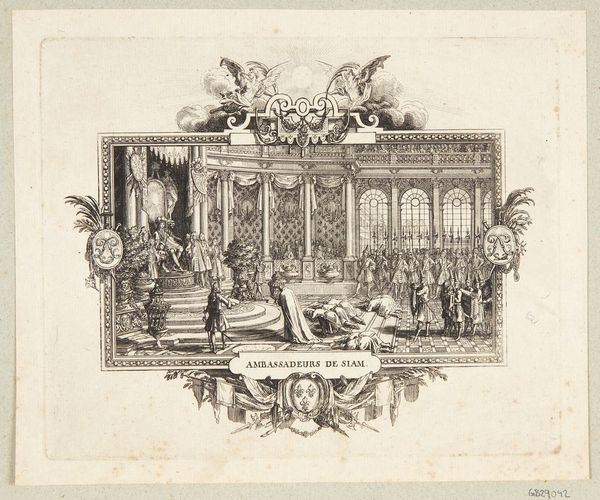
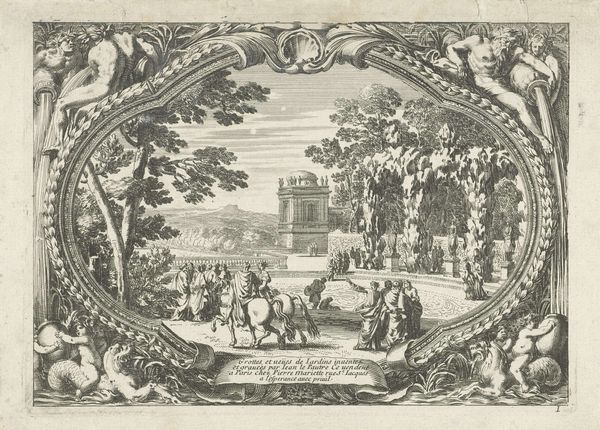
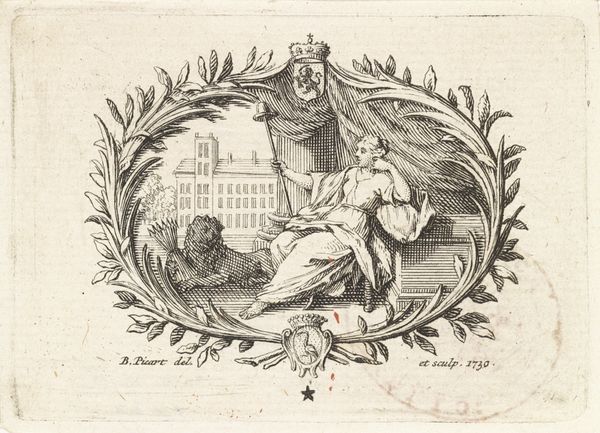
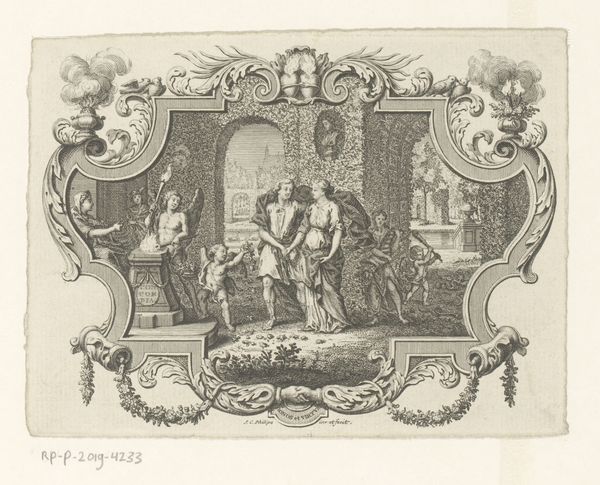
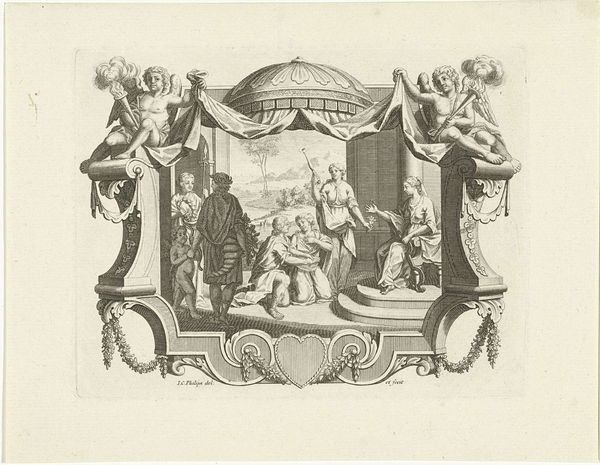
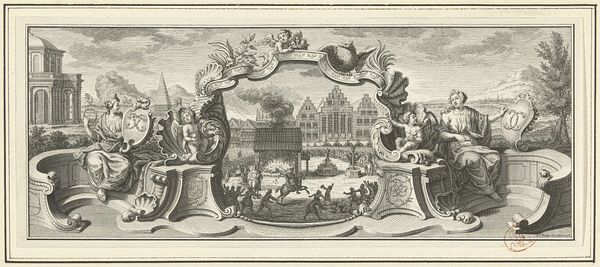
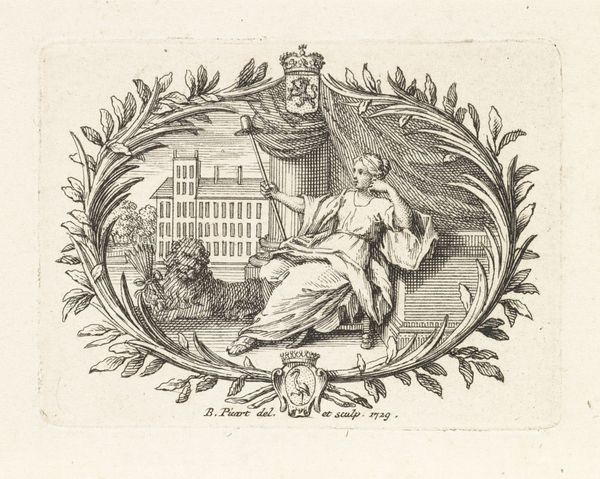
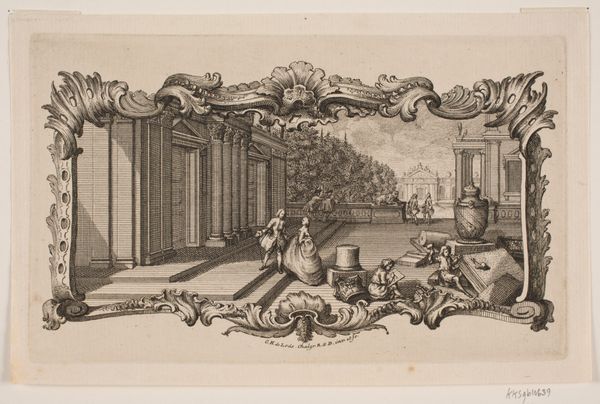
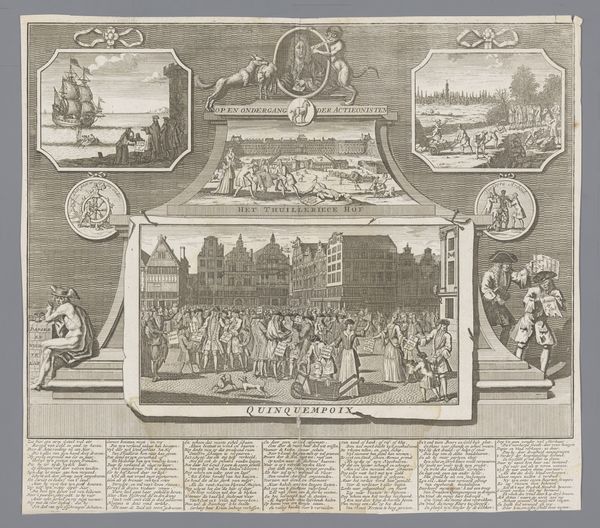
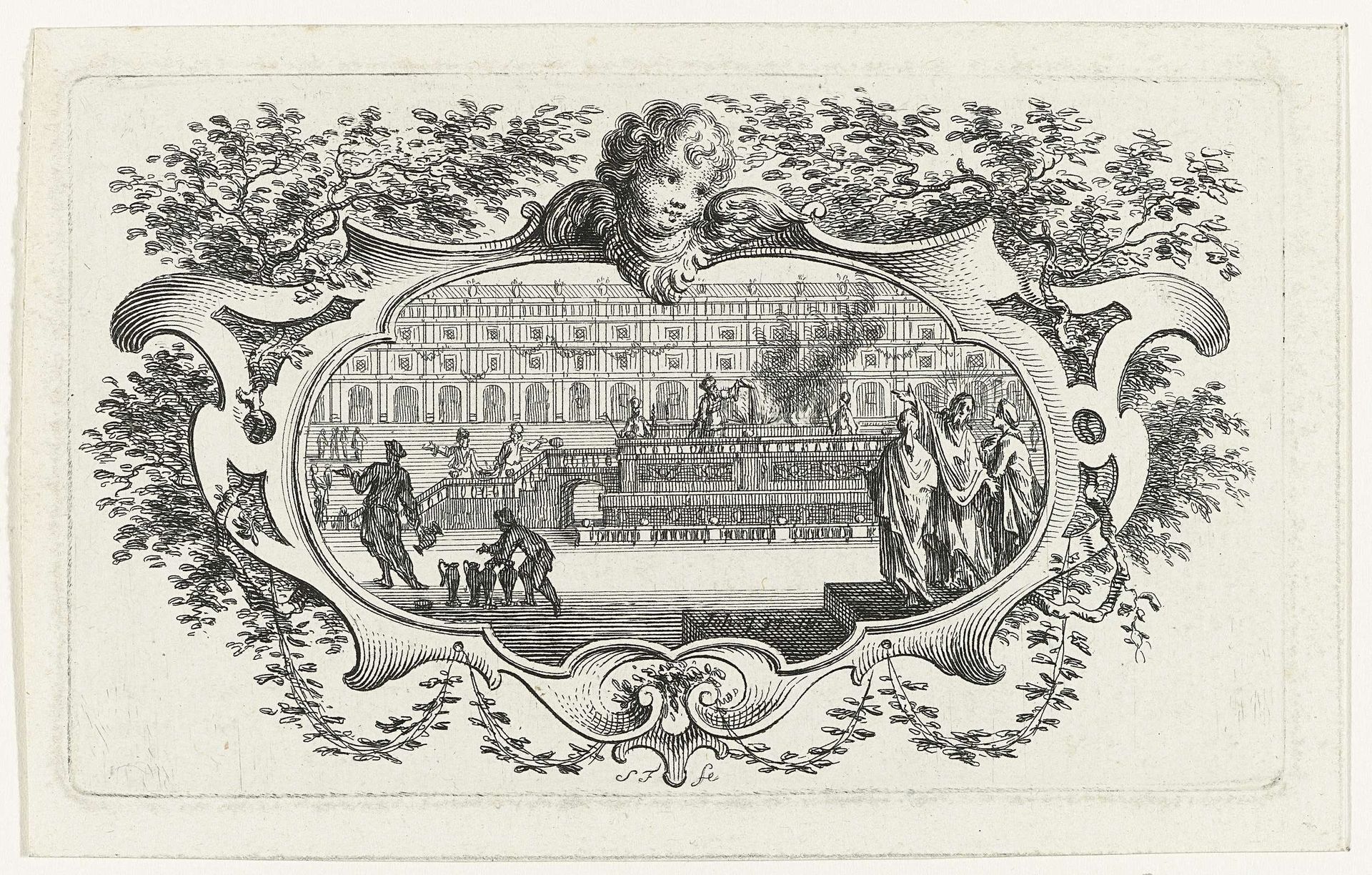
Simon Fokke created this print depicting Christ in the temple. The image is framed by a decorative cartouche with foliage and a cherubic head. The scene itself is rendered with meticulous detail, typical of the Dutch Golden Age. This print was created in the Netherlands during the 18th century, a time when Dutch society was shaped by the legacy of its Golden Age and the enduring influence of the Protestant Reformation. The print shows the temple rendered in a classical style, likely a reflection of the period’s architectural tastes, and perhaps a comment on the status of religious institutions in the modern world. Fokke shows an idealised version of biblical stories that reinforced the moral values of the time. Understanding this artwork involves examining its place in the broader context of Dutch social and religious history. By studying period documents, we can gain insights into the role of religious imagery in shaping cultural identity and social norms.
Cartouche met voorstelling van Christus in de tempel
1722 - 1784

Simon Fokke
1712 - 1784Location
RijksmuseumArtwork details
- Dimensions
- height 75 mm, width 126 mm
- Location
- Rijksmuseum
- Copyright
- Rijks Museum: Open Domain
Tags
Comments
Share your thoughts
About this artwork
Simon Fokke created this print depicting Christ in the temple. The image is framed by a decorative cartouche with foliage and a cherubic head. The scene itself is rendered with meticulous detail, typical of the Dutch Golden Age. This print was created in the Netherlands during the 18th century, a time when Dutch society was shaped by the legacy of its Golden Age and the enduring influence of the Protestant Reformation. The print shows the temple rendered in a classical style, likely a reflection of the period’s architectural tastes, and perhaps a comment on the status of religious institutions in the modern world. Fokke shows an idealised version of biblical stories that reinforced the moral values of the time. Understanding this artwork involves examining its place in the broader context of Dutch social and religious history. By studying period documents, we can gain insights into the role of religious imagery in shaping cultural identity and social norms.
Comments
Share your thoughts