About this artwork
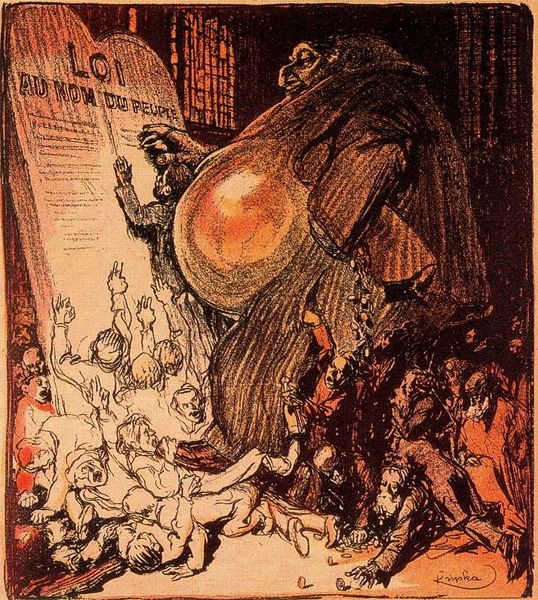
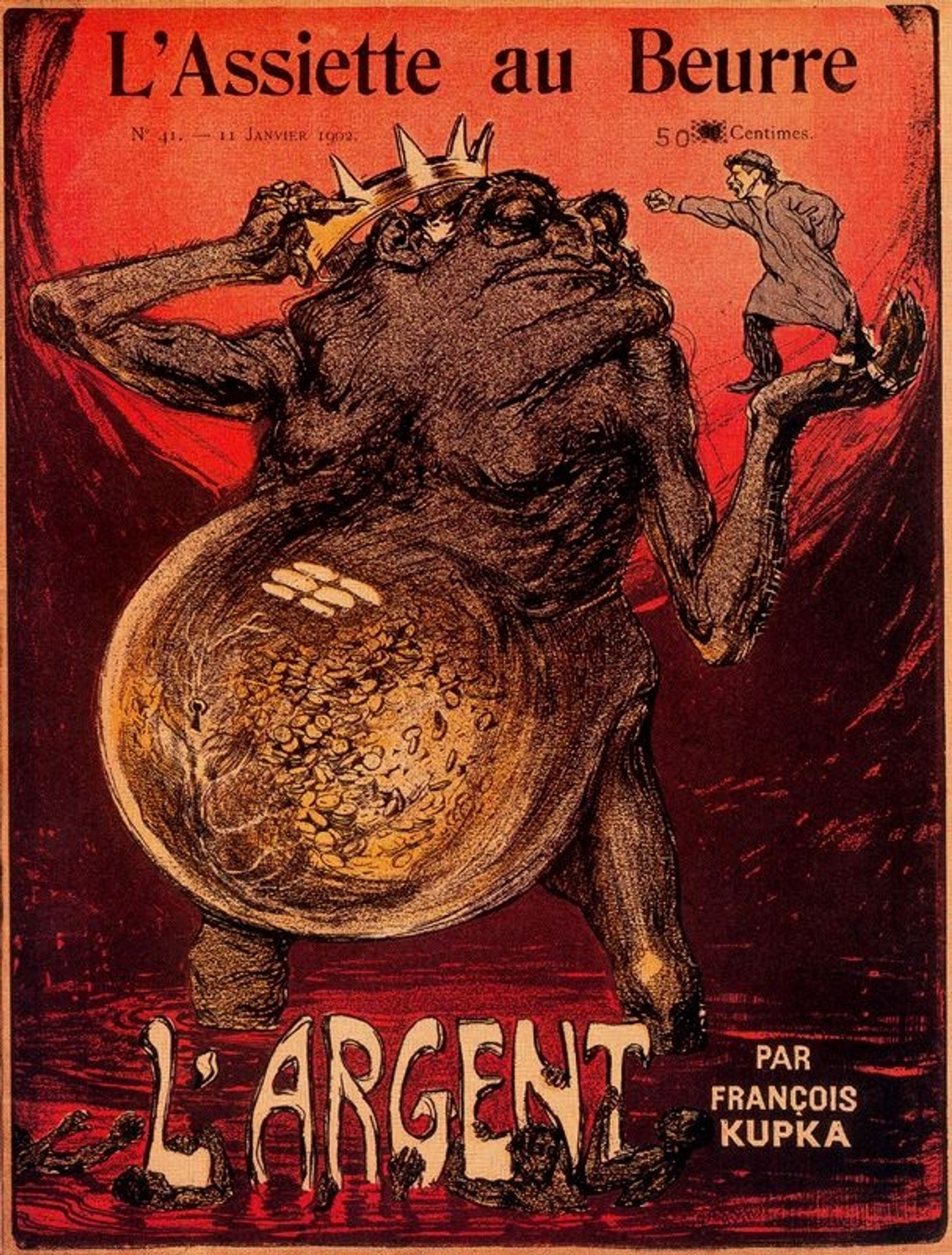
Curator: Let's delve into this striking lithograph by Frantisek Kupka, titled "Front cover of the 'L'Argent' issue, from 'L'Assiette au Beurre'", created in 1902. Editor: Oof, it's intense, isn’t it? Right away, I get this feeling of grotesque power and the ugliness that sometimes comes with wealth. The sheer bulk of that frog-like creature is just... oppressive. Curator: The image appeared on the cover of a satirical French magazine, "L'Assiette au Beurre." Kupka was known for his socially critical artwork, often targeting the bourgeoisie. This particular issue was themed around money, hence "L'Argent." Editor: Money, yes, that glistening, bulbous belly packed with coins! It's like the thing's pregnant with ill-gotten gains. And is that a crown it's casually adjusting? Such arrogance. Curator: Precisely. The amphibian form represents greed and corruption. The crown signifies its self-proclaimed authority, built upon wealth obtained at the expense of others. Note the tiny figure daring to challenge the giant, a symbol of the individual versus the system. Editor: That tiny man practically bouncing off the beast’s palm, utterly fearless! But around its feet—are those bodies sinking in a bloody river? So many casualties in the relentless pursuit of wealth...it's deeply disturbing. The artist is showing what money can do to people. Curator: Symbolism was prevalent in art nouveau, and Kupka certainly employs it effectively here. He critiques the socio-economic disparities and the moral compromises that arise from unchecked capitalism. The visual language speaks directly to the anxieties of the era. Editor: Absolutely. Even the red tones seem to drip with malevolence, amplifying the discomfort. It's not a pretty picture, is it? But damn, it's powerful. He really nailed the monstrous nature of unchecked avarice. I keep wondering, does the little man have any chance at all? Curator: The power of this image, more than a century later, resides in its unflinching depiction of the timeless struggles against inequality and exploitation. It provokes contemplation of our own roles within these systems. Editor: You're right, the raw emotion here still rings true today. Even in a new context, with different struggles, that tension, that frustration... it’s timeless, I think, to make art this angry, this brave.
Front cover of the 'L'Argent' issue, from 'L'Assiette au Beurre' 1902

Frantisek Kupka
1871 - 1957Location
Bibliotheque historique de la Ville de Paris (BHVP), Paris, FranceArtwork details
- Medium
- lithograph, print, poster
- Location
- Bibliotheque historique de la Ville de Paris (BHVP), Paris, France
- Copyright
- Public domain US
Tags
art-nouveau
narrative-art
lithograph
figuration
symbolism
poster
Comments
No comments
About this artwork
Curator: Let's delve into this striking lithograph by Frantisek Kupka, titled "Front cover of the 'L'Argent' issue, from 'L'Assiette au Beurre'", created in 1902. Editor: Oof, it's intense, isn’t it? Right away, I get this feeling of grotesque power and the ugliness that sometimes comes with wealth. The sheer bulk of that frog-like creature is just... oppressive. Curator: The image appeared on the cover of a satirical French magazine, "L'Assiette au Beurre." Kupka was known for his socially critical artwork, often targeting the bourgeoisie. This particular issue was themed around money, hence "L'Argent." Editor: Money, yes, that glistening, bulbous belly packed with coins! It's like the thing's pregnant with ill-gotten gains. And is that a crown it's casually adjusting? Such arrogance. Curator: Precisely. The amphibian form represents greed and corruption. The crown signifies its self-proclaimed authority, built upon wealth obtained at the expense of others. Note the tiny figure daring to challenge the giant, a symbol of the individual versus the system. Editor: That tiny man practically bouncing off the beast’s palm, utterly fearless! But around its feet—are those bodies sinking in a bloody river? So many casualties in the relentless pursuit of wealth...it's deeply disturbing. The artist is showing what money can do to people. Curator: Symbolism was prevalent in art nouveau, and Kupka certainly employs it effectively here. He critiques the socio-economic disparities and the moral compromises that arise from unchecked capitalism. The visual language speaks directly to the anxieties of the era. Editor: Absolutely. Even the red tones seem to drip with malevolence, amplifying the discomfort. It's not a pretty picture, is it? But damn, it's powerful. He really nailed the monstrous nature of unchecked avarice. I keep wondering, does the little man have any chance at all? Curator: The power of this image, more than a century later, resides in its unflinching depiction of the timeless struggles against inequality and exploitation. It provokes contemplation of our own roles within these systems. Editor: You're right, the raw emotion here still rings true today. Even in a new context, with different struggles, that tension, that frustration... it’s timeless, I think, to make art this angry, this brave.
Comments
No comments