c. 1938
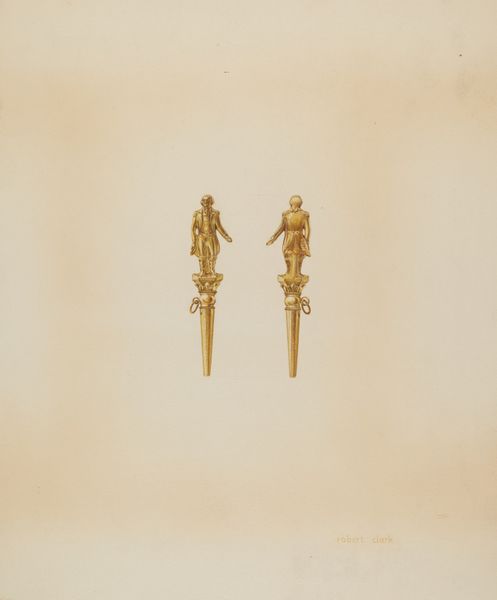
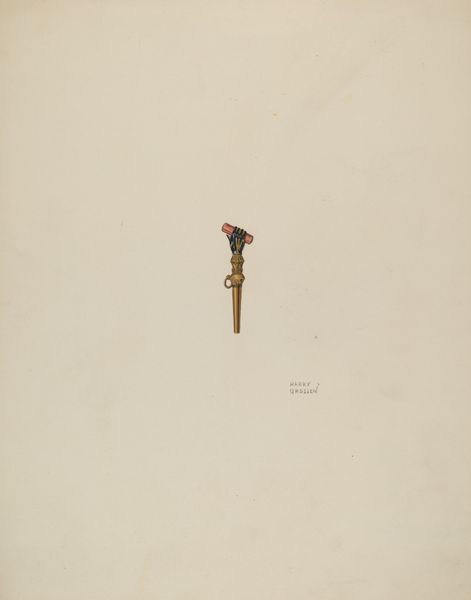
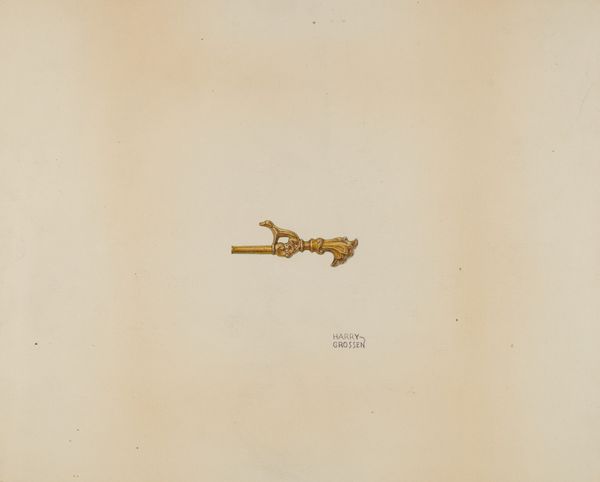
Watch Key


Listen to curator's interpretation
Curatorial notes
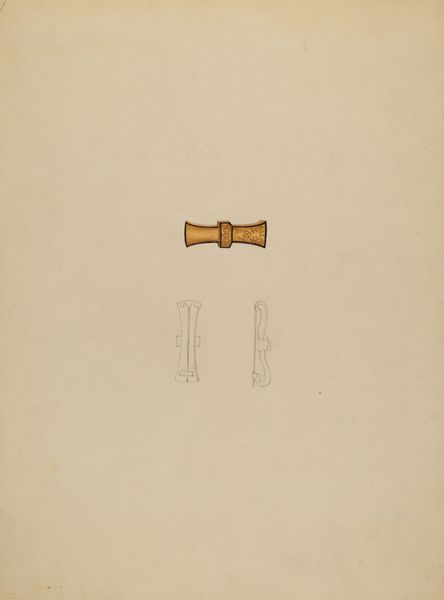
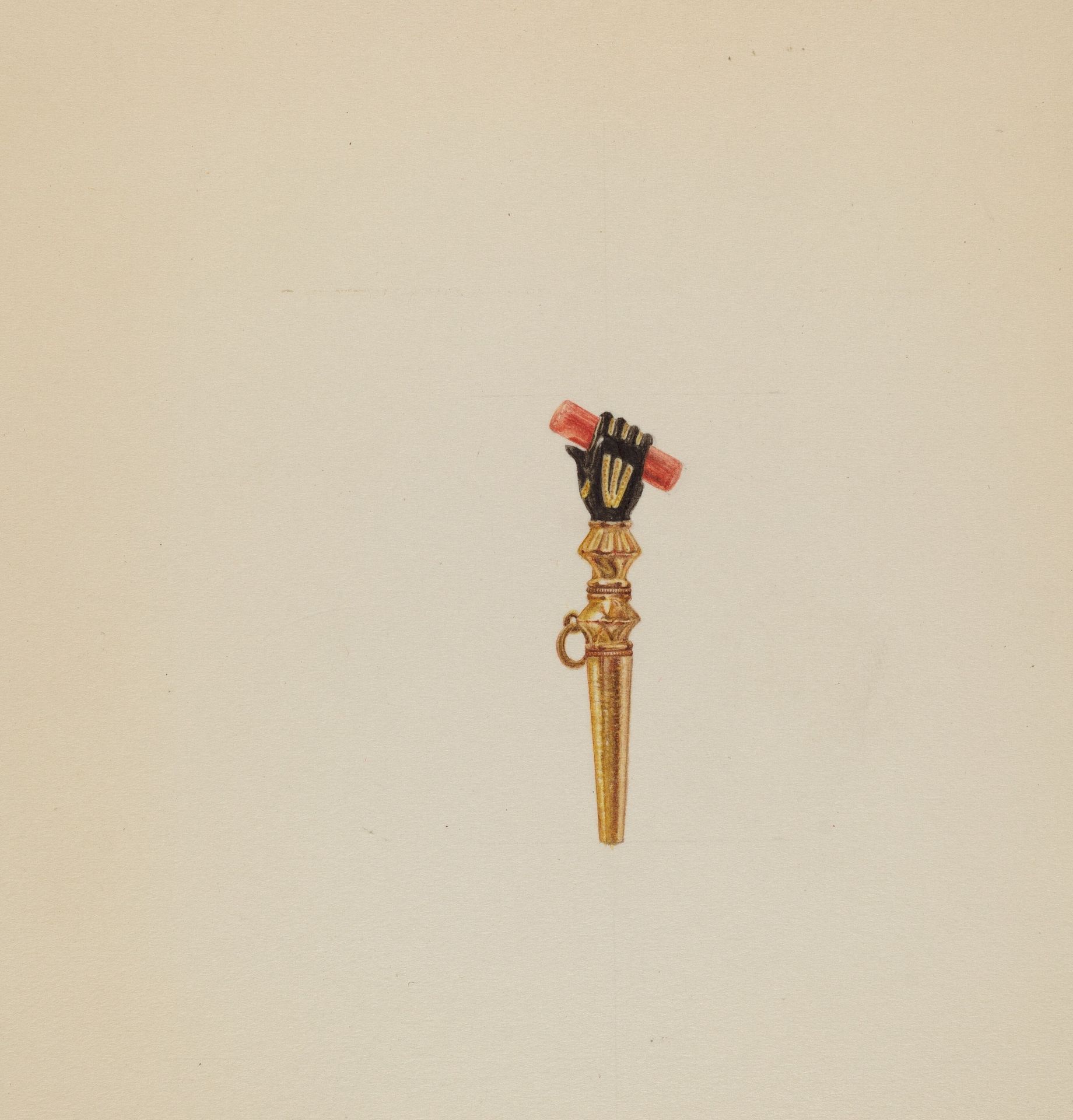
Curator: This delicate drawing, dating back to around 1938, is entitled "Watch Key" by Robert Clark, depicting what seems to be a gilded tool rendered in a stylized fashion. What stands out to you upon seeing it? Editor: There is something undeniably regal, perhaps even ritualistic about it, even though the key's use feels quite utilitarian. The raised hand motif holding a cylindrical object adds an immediate layer of symbolism, doesn't it? Curator: Absolutely, and knowing it's by Robert Clark contextualizes things further. He was known for his almost obsessive rendering of objects from the decorative arts and domestic sphere. It begs the question – what drew Clark to depicting this particular object? What was its purpose within its own specific means of production and social context? Editor: To me, the color palette feels almost heraldic: the stark contrast of black, red and gold against a neutral background. And that hand...it seems to present rather than merely hold the object, doesn't it? Almost like a scepter, an icon of some temporal power made tiny. Curator: Yes, though let's not forget these kinds of small mechanisms – keys, clockworks, fine ceramics – are integral to the interwar era’s boom in manufacturing. Their construction provided livelihood, demanding labor. And for what purpose other than the measurement of time, arguably, society's first technology. Editor: A clever point, however I still can’t shake the echo of authority in it. Isn’t it peculiar how Clark turns this mundane key into something akin to a symbol of power or even magic? Curator: Perhaps both are correct. The combination of mass-produced artifact and potential totem. It challenges traditional ideas of value and manufacture. What happens when the functional transcends the mere task and evolves into cultural signifier? Editor: And isn't that at the very heart of how imagery perseveres through culture and time? This piece resonates powerfully, due to Clark's grasp on its inherent symbolic potential. Curator: It prompts contemplation, most certainly. On the quiet grandeur of utilitarian artifacts, and their reflection of labour and social structures of a specific historical moment. Editor: An examination of how even humble materials might bear the weight of our cultural narratives. Intriguing, isn't it?