
Curatorial notes
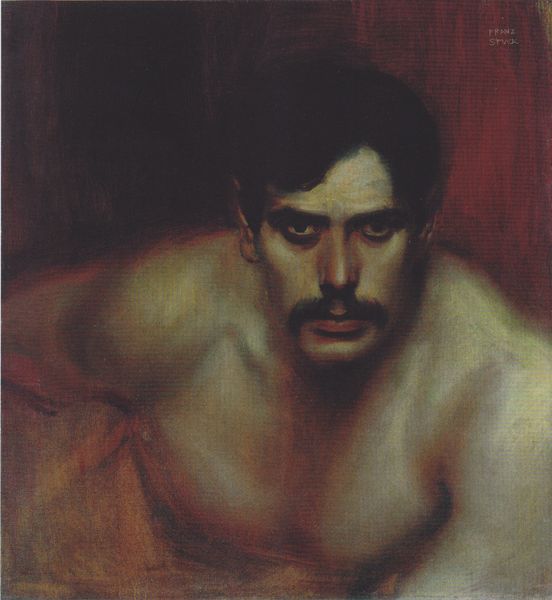
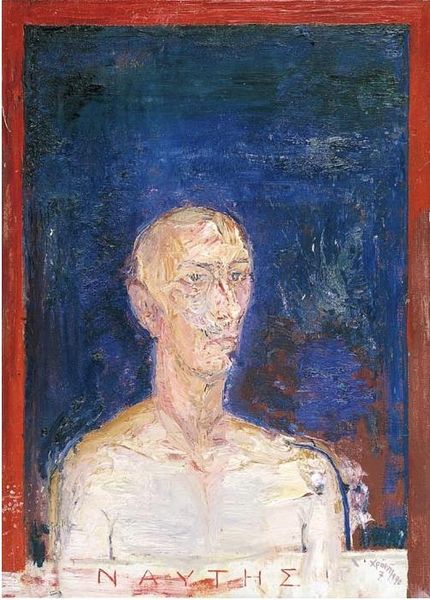
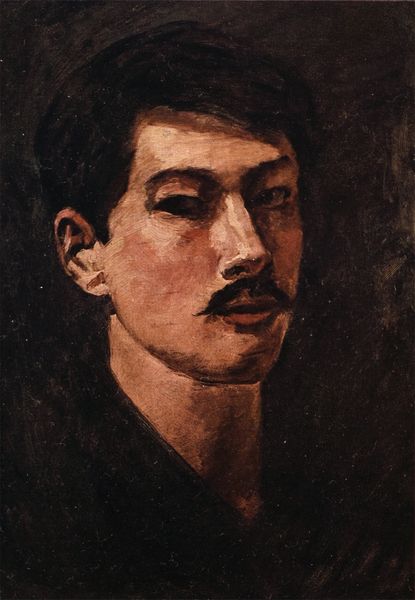
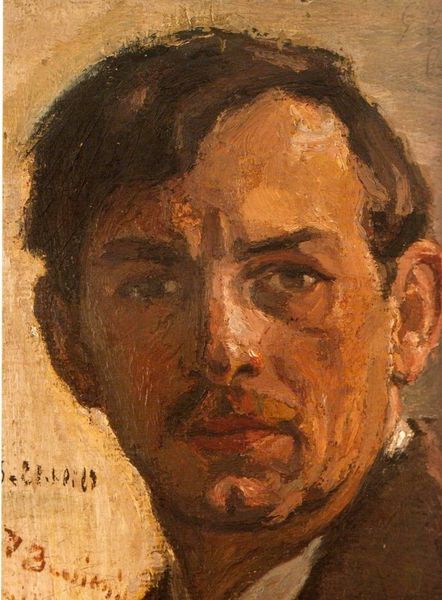
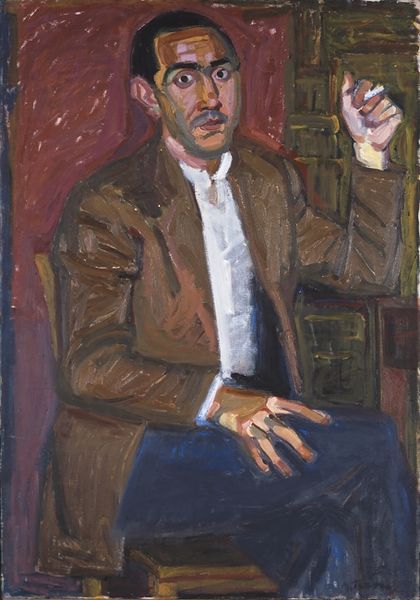
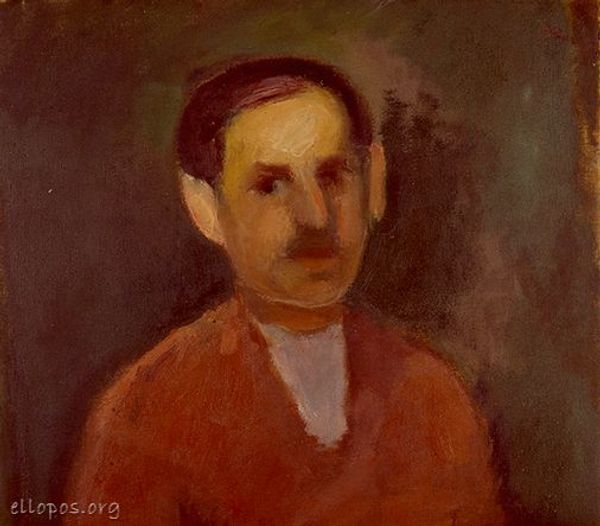
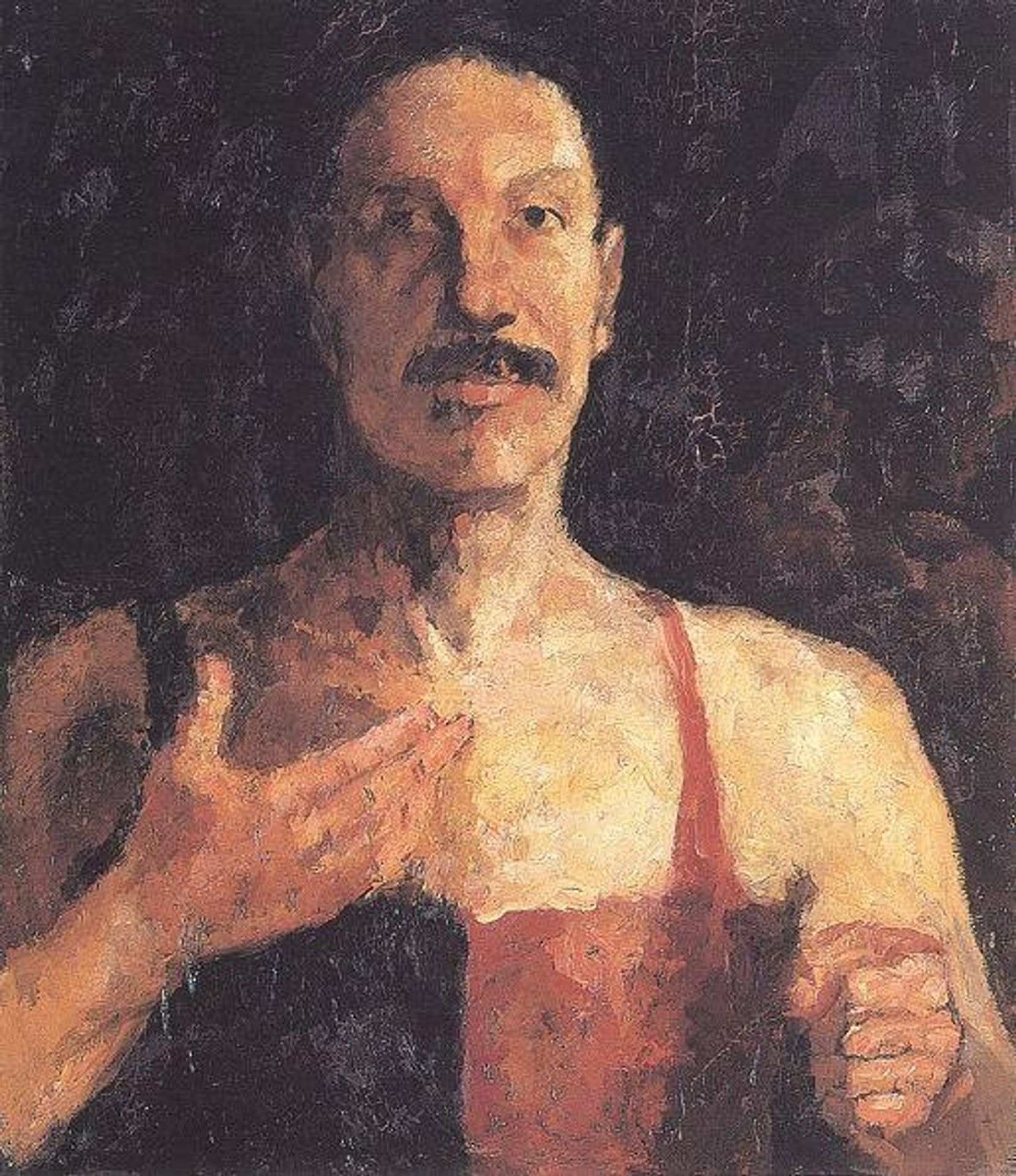
Curator: Good morning, let’s consider Kazimir Malevich’s 1933 oil painting, simply titled "Smith." Editor: Haunting. My immediate impression is of a stern, almost spectral figure emerging from darkness. There's something quite unsettling about it. Curator: The composition uses contrasting areas of light and shadow to give the figure dimensionality, a direct reference to classical figuration. But given the Soviet context, "Smith" raises pertinent questions about the artist’s position. Malevich attempts to synthesize avant-garde aesthetics with socialist realism to create a portrait of the ideal Soviet worker. Editor: Idealized? Really? Look at his expression – his raised eyebrow, the set of his mouth. The hand gesture strikes me as defensive, even suspicious. I'm getting anything *but* a sense of optimism. Was he wary of depicting such an idealized representation given Stalinist artistic mandates? Curator: It's a fascinating tension. Notice the muted palette and visible brushstrokes. They evoke a sense of authenticity, while also suggesting a painterly engagement that surpasses mere propaganda. The red garment, possibly a worker’s uniform, adds a subtle visual element that seems… intentional in its restraint. Editor: Restraint? Maybe a veil for subversion. Consider Malevich's fraught relationship with the regime. Having pioneered abstract forms with suprematism, he had to perform a sharp U-turn back to figurative work in order to survive within the dominant cultural system. Curator: This work, then, can be seen as an example of how personal aesthetic expression negotiates politically restrictive context. Editor: Precisely. A powerful example of what happens when the radical aspirations of art collide with the iron fist of ideology. An artist’s career—his life even—hung in the balance, demanding a compromise that may appear docile but reveals an incisive cultural criticism when one knows how to see. Curator: Indeed, our focus on form, texture, and coloration is incomplete without acknowledging these complexities of "Smith." It's about seeing how aesthetics and society influence one another. Editor: Right. A reminder that art isn't created in a vacuum, but reflects larger political and ideological currents and the negotiations the artists have to consider when creating work that represents the individual's view of the whole society.