About this artwork
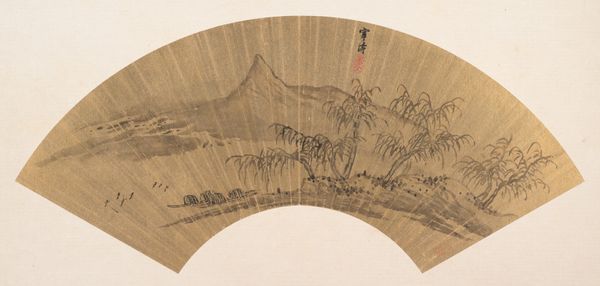
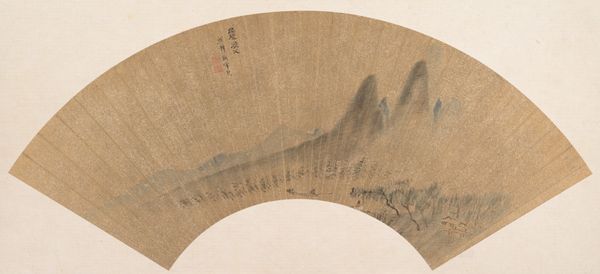
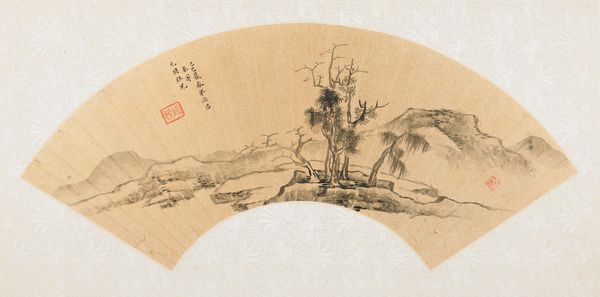
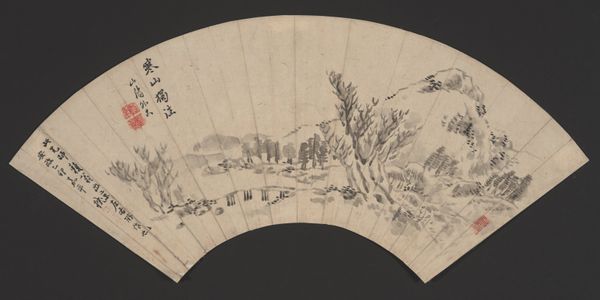
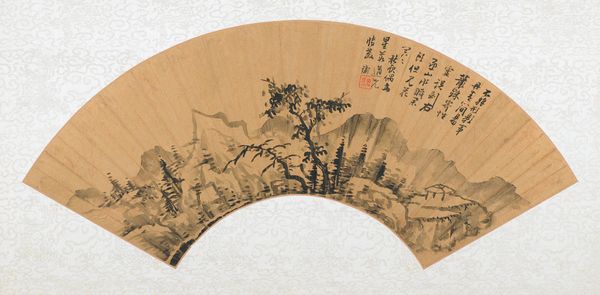
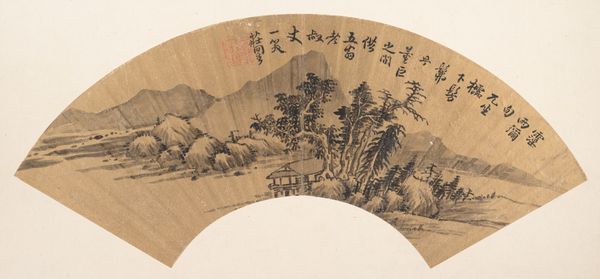
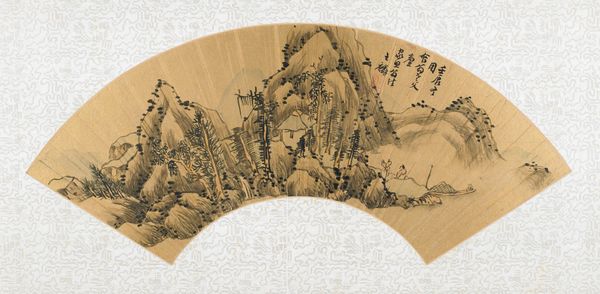
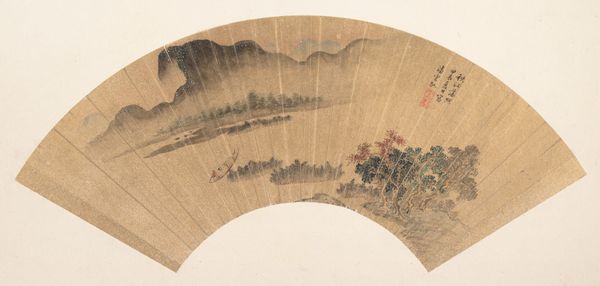
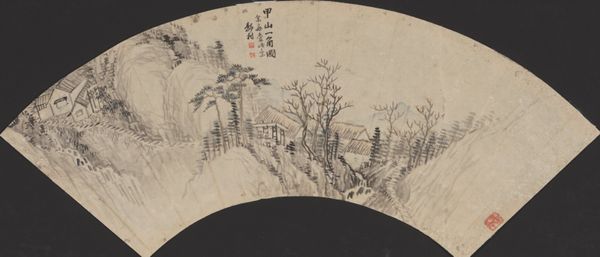
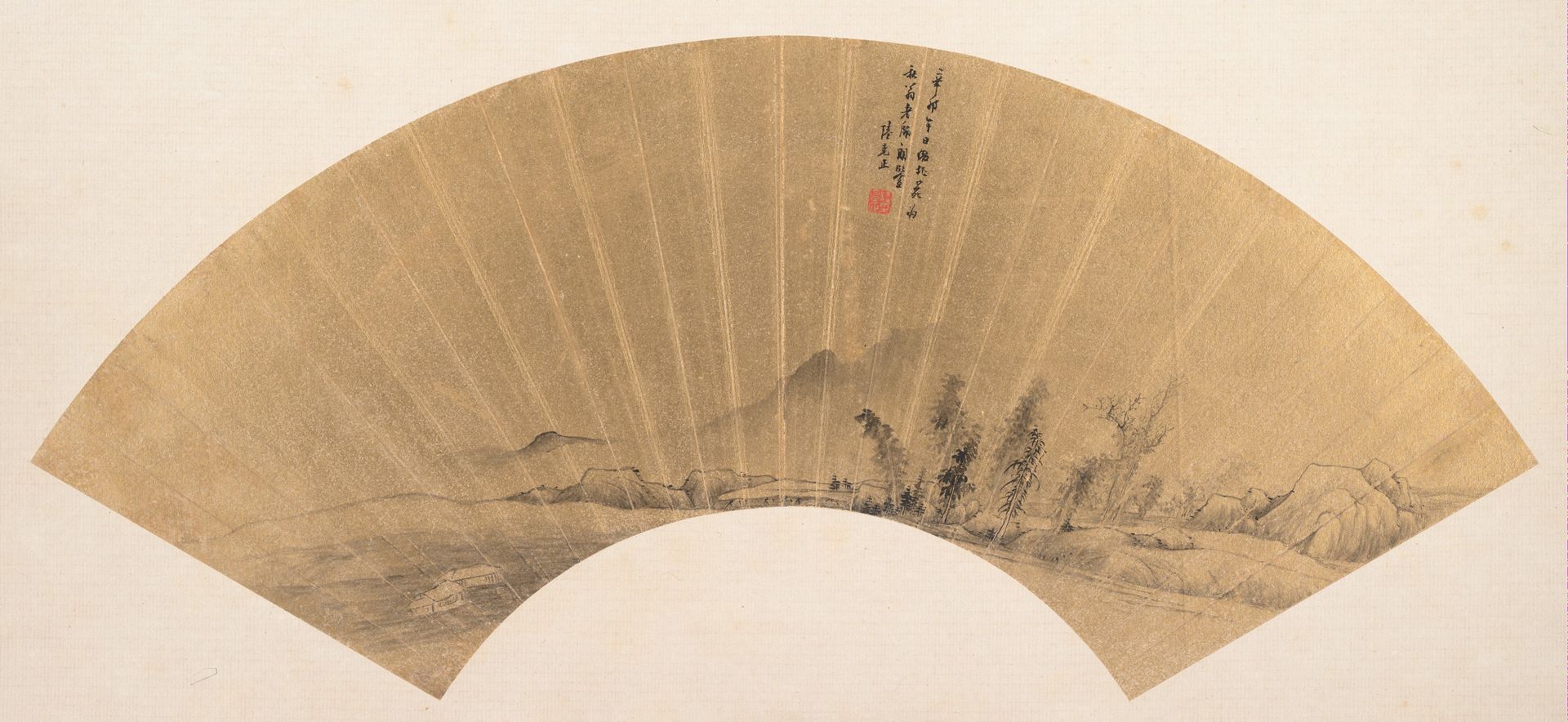
Lu Kezheng painted this landscape in the manner of Dong Yuan on a fan in the early 17th century. Note the mountain motif, a symbol deeply embedded in the Chinese psyche as a representation of stability, endurance, and spiritual retreat. Mountains are not merely geological formations; they are perceived as sacred spaces connecting heaven and earth. The artist uses the mountain as a visual embodiment of Taoist principles of harmony with nature and a pathway to enlightenment. In ancient Chinese art, mountains often appear alongside water, symbolizing the concept of yin and yang. The enduring appeal of the mountain lies in its power to evoke a sense of awe, reminding us of nature’s sublime presence and our humble place within the cosmos.
Landscape in the manner of Dong Yuan
1591 - 1651


Artwork details
- Medium
- drawing, paper, ink, mural
- Dimensions
- 6 1/2 x 20 in. (16.5 x 50.8 cm)
- Location
- Metropolitan Museum of Art, New York, NY
- Copyright
- Public Domain
Tags
Comments
Share your thoughts
About this artwork
Lu Kezheng painted this landscape in the manner of Dong Yuan on a fan in the early 17th century. Note the mountain motif, a symbol deeply embedded in the Chinese psyche as a representation of stability, endurance, and spiritual retreat. Mountains are not merely geological formations; they are perceived as sacred spaces connecting heaven and earth. The artist uses the mountain as a visual embodiment of Taoist principles of harmony with nature and a pathway to enlightenment. In ancient Chinese art, mountains often appear alongside water, symbolizing the concept of yin and yang. The enduring appeal of the mountain lies in its power to evoke a sense of awe, reminding us of nature’s sublime presence and our humble place within the cosmos.
Comments
Share your thoughts