About this artwork
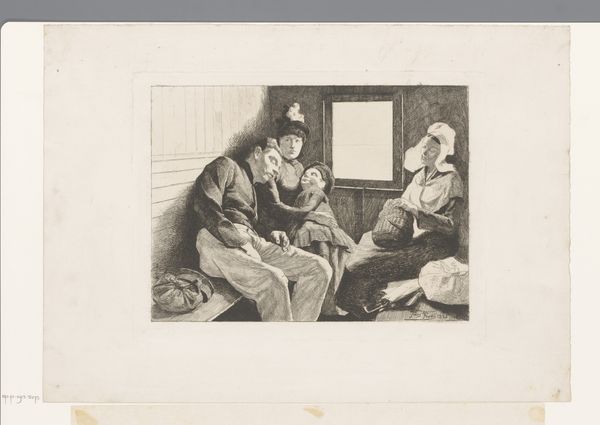
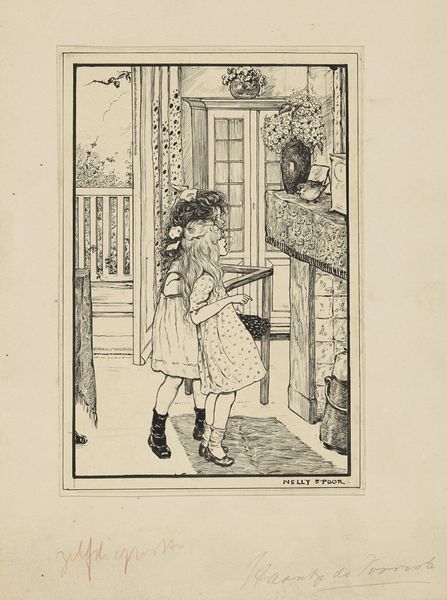
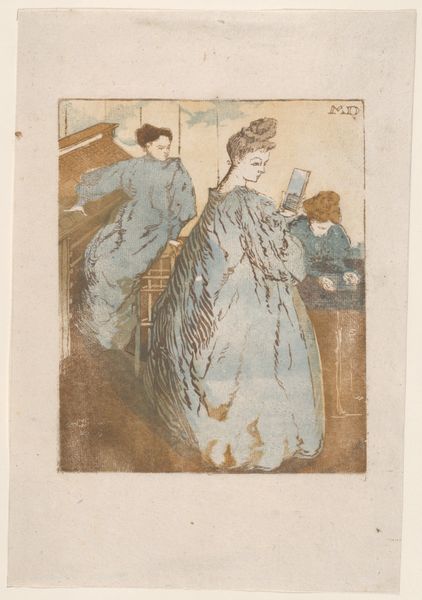
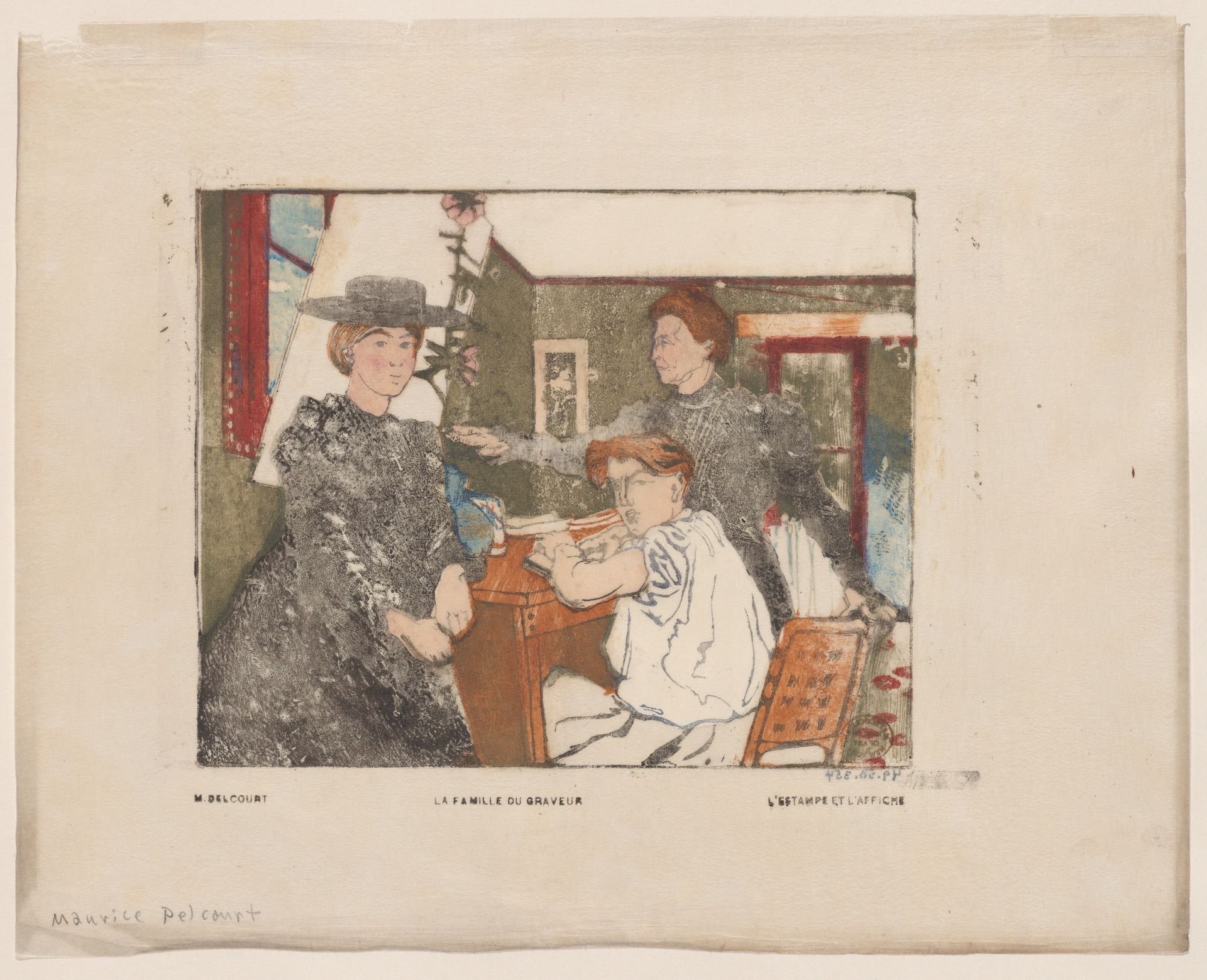
Maurice Delcourt created "La Famille du graveur," a print which captures a family scene with a striking arrangement of figures and spaces. The composition immediately draws you in with its subtle color palette and textured surfaces, inviting a close inspection of its formal qualities. Notice how Delcourt uses a limited range of muted tones to define the figures and their environment. The darker hues of the mother's dress contrast with the lighter tones of the child's clothing, creating a visual hierarchy that guides the viewer's eye. The spatial organization is particularly intriguing, with the figures occupying different planes, suggesting a complex interplay between presence and absence. This print challenges conventional notions of portraiture by emphasizing the relationships between the individuals and their surroundings. Through its formal elements, "La Famille du graveur" encourages us to think about the social and cultural contexts that shape our understanding of family and identity. As such, it offers a nuanced reflection on the human condition.
La Famille du graveur
1898


Artwork details
- Dimensions
- Image: 5 9/16 × 6 15/16 in. (14.1 × 17.6 cm) Sheet: 9 in. × 11 1/4 in. (22.9 × 28.6 cm)
- Location
- Metropolitan Museum of Art, New York, NY
- Copyright
- Public Domain
Comments
Share your thoughts
About this artwork
Maurice Delcourt created "La Famille du graveur," a print which captures a family scene with a striking arrangement of figures and spaces. The composition immediately draws you in with its subtle color palette and textured surfaces, inviting a close inspection of its formal qualities. Notice how Delcourt uses a limited range of muted tones to define the figures and their environment. The darker hues of the mother's dress contrast with the lighter tones of the child's clothing, creating a visual hierarchy that guides the viewer's eye. The spatial organization is particularly intriguing, with the figures occupying different planes, suggesting a complex interplay between presence and absence. This print challenges conventional notions of portraiture by emphasizing the relationships between the individuals and their surroundings. Through its formal elements, "La Famille du graveur" encourages us to think about the social and cultural contexts that shape our understanding of family and identity. As such, it offers a nuanced reflection on the human condition.
Comments
Share your thoughts