1892
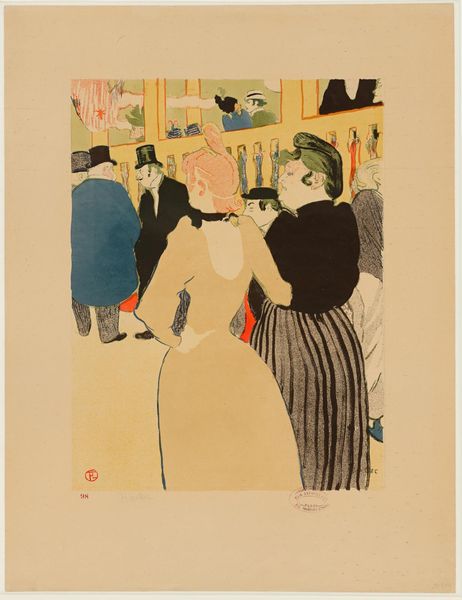
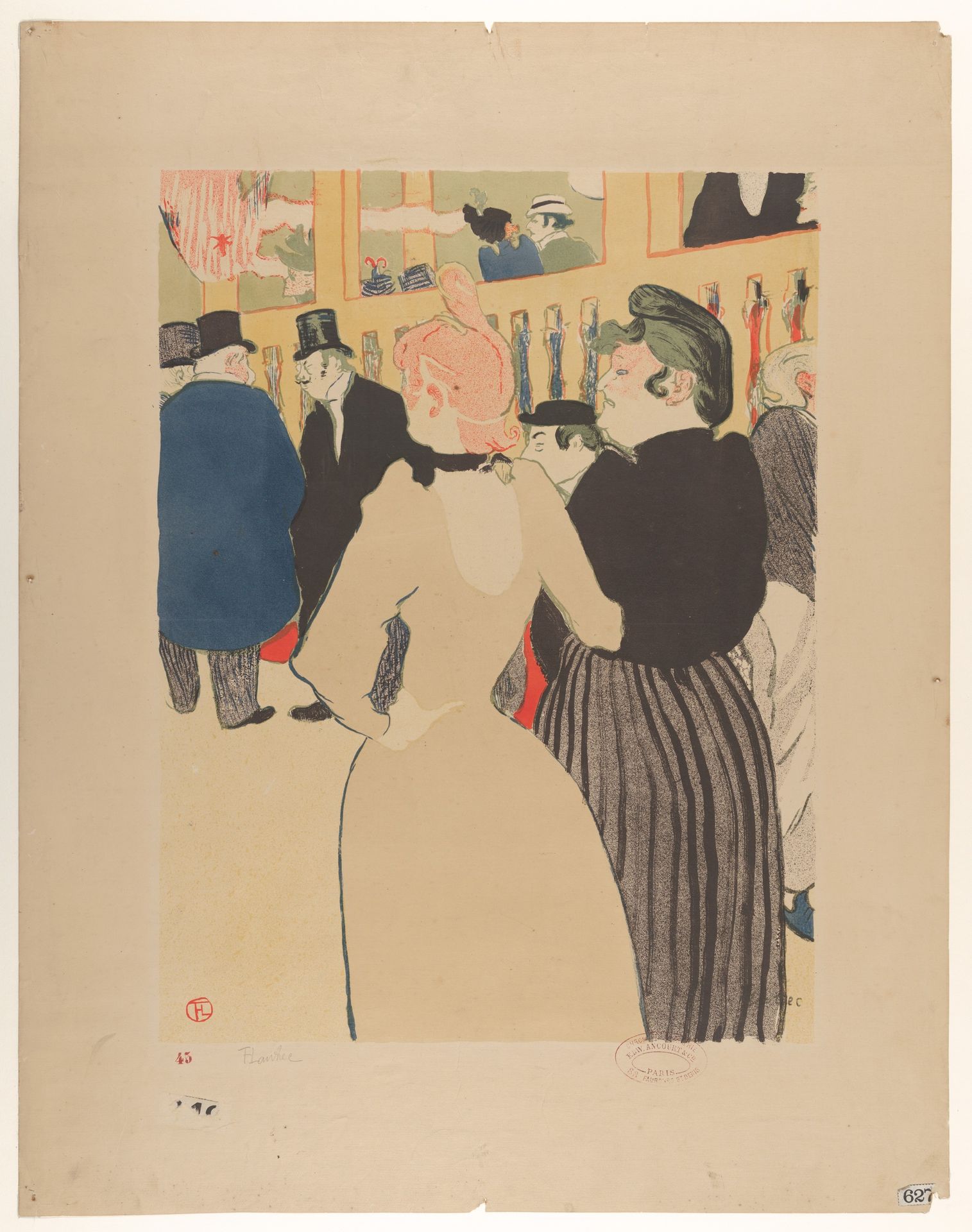
At the Moulin Rouge: La Goulue and Her Sister

Henri de Toulouse-Lautrec
1864 - 1901
The Metropolitan Museum of Art
Metropolitan Museum of Art, New York, NYListen to curator's interpretation
Curatorial notes
Henri de Toulouse-Lautrec created the lithograph, “At the Moulin Rouge: La Goulue and Her Sister” in the 1890s. Toulouse-Lautrec was a master at capturing the vibrant, sometimes seedy, nightlife of Montmartre. Here, he portrays La Goulue, a famous can-can dancer, with her sister, among a crowd in the iconic Moulin Rouge. His personal experiences shaped his artistic vision. Due to a genetic condition, he was an outsider, standing just shy of 5ft. This gave him unique access to the demimonde of Paris. The artist blurs the lines between observer and participant. We are invited to experience this world through his eyes. La Goulue, a working-class woman, achieved fame and a certain level of social mobility through her performances. Toulouse-Lautrec neither romanticizes nor condemns his subjects; instead, he captures their humanity. This work reflects the complexities of identity, class, and representation in late 19th-century Paris, while evoking a sense of intimacy and immediacy.