drawing, mixed-media
#
drawing
#
mixed-media
#
allegory
#
baroque
#
figuration
#
history-painting
#
italian-renaissance
#
mixed media
Dimensions: 334 mm (height) x 202 mm (width) (bladmaal)
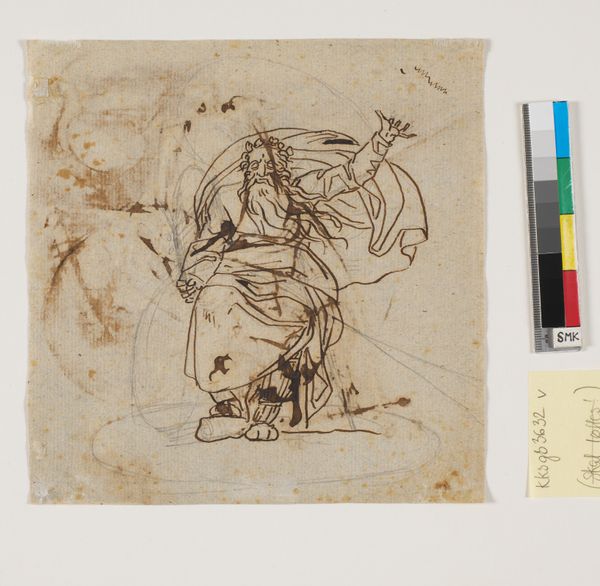
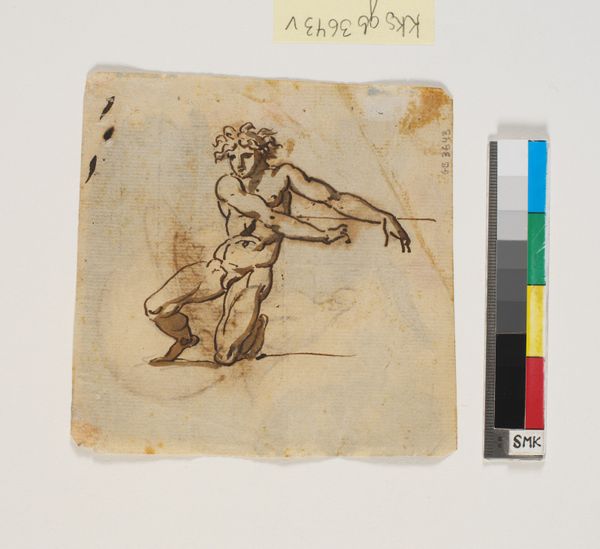
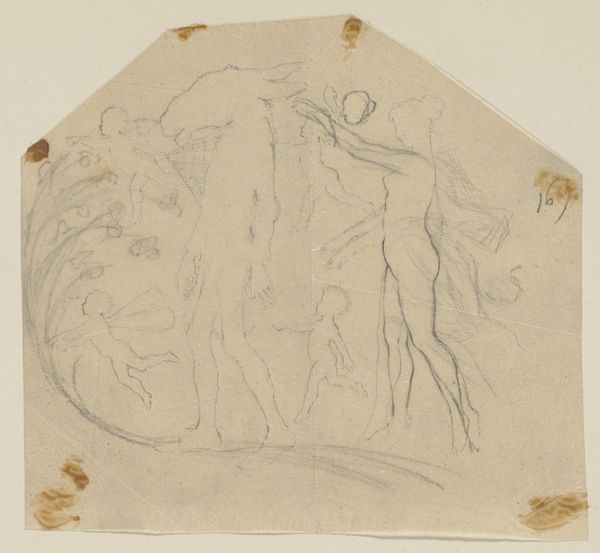
Curator: Giuseppe Passeri's "Fame Crowning Scipio Africanus" crafted sometime between 1654 and 1714, offers us a glimpse into the artistic sensibilities of the Baroque period. It’s a mixed-media drawing currently residing at the SMK, the Statens Museum for Kunst. What strikes you first about its formal qualities? Editor: The earthy tonality really sets the mood. The reddish-brown hues lend an antique air. It almost feels like uncovering an old fresco. Is that deliberate, do you think? Curator: Indeed. Passeri uses the warm tones of the paper and ink to suggest both age and perhaps, the heat of battle or glory associated with Scipio. The composition, organized with a clear hierarchy, presents Scipio Africanus at its center, wouldn't you say? His figure, poised, is a study in controlled dynamism. Editor: Absolutely. Scipio, receiving his laurel wreath. But consider the lion at the bottom and the allegorical figures floating above—these all contribute to a larger, powerful message of victory, perhaps? Scipio was known for his restraint, a quality emphasized by the lion of strength at his feet. Curator: The use of iconography serves a very important function, wouldn’t you agree? For starters, Fame, often depicted as a winged figure blowing a trumpet, signifies lasting renown. Her act of crowning Scipio speaks to his enduring legacy. The symbolic language is characteristic of its period. Editor: Exactly. Fame is there to say that virtue wins out over chaos, right? The mixed media helps deepen the narrative too; it allows for both a looseness in rendering the clouds and a sharp clarity when detailing Scipio's armor. Curator: The sketch-like quality of certain passages adds to the dynamism. Note the ethereal rendering of the figures amidst the clouds. And as you rightly pointed out, the detailing of Scipio's armour is superb, it signifies preparedness and power through realism, wouldn’t you agree? Editor: Passeri skillfully merges the specific historical narrative of Scipio Africanus with broader allegorical themes of fame and virtue, all communicated through expertly applied mixed media on a relatively muted background. It's pretty powerful, isn't it? Curator: A perfect confluence of skill and narrative ambition!
Comments

statensmuseumforkunst about 2 years ago
⋮
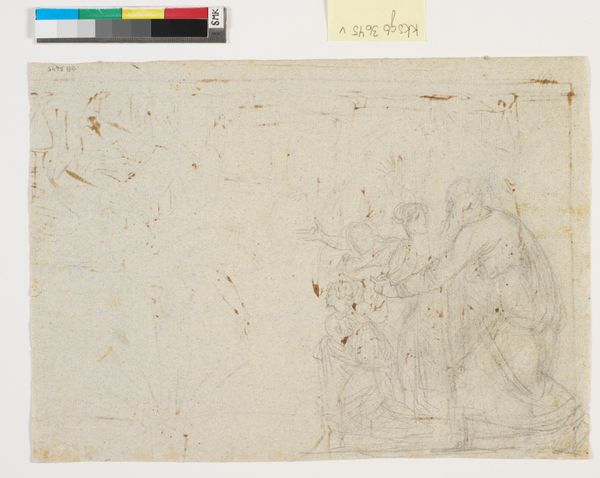
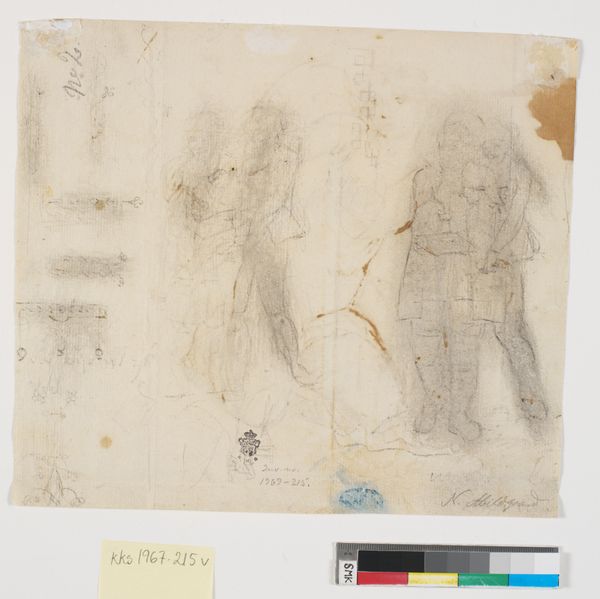
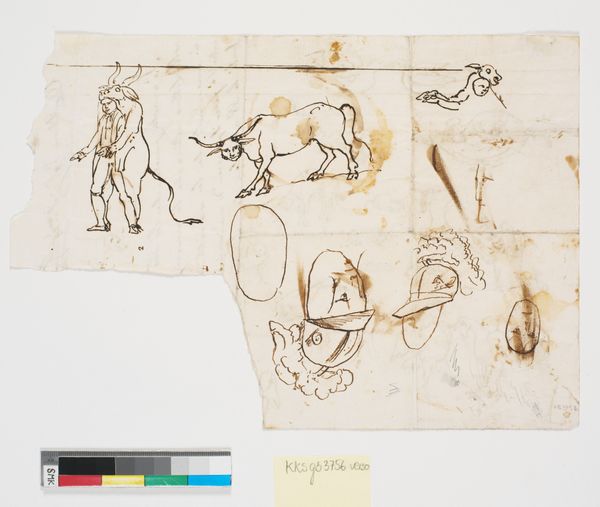
Squaring is a common technique used by artists to transfer a motif from a sketch to an actual artwork. By drawing a grid over the sketch, the motif can be copied section by section onto a canvas, wall, or larger sheet of paper with a corresponding grid. The method ensures the accurate copying of composition, perspective and details from the original sketch. Squaring can also be used in the perspective and scaling of a motif. Using the lines of a perspective grid, the size of an individual figure can be adjusted if, for example, it is to be moved further back in a composition and still be to scale. Here the back of the drawing is squared. This indicates that the artist wanted the drawing of ‘virtue and vice’ on the front to be laterally reversed.


Join the conversation
Join millions of artists and users on Artera today and experience the ultimate creative platform.
 Collect
More like this