About this artwork
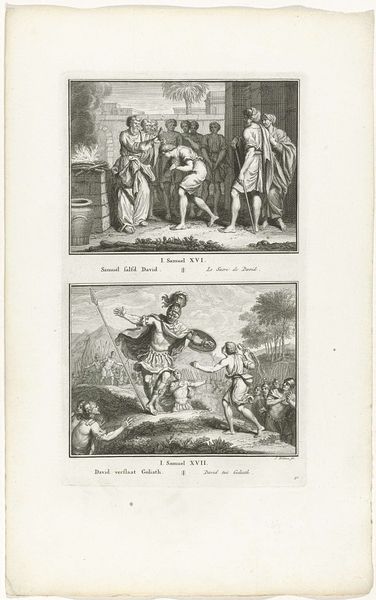
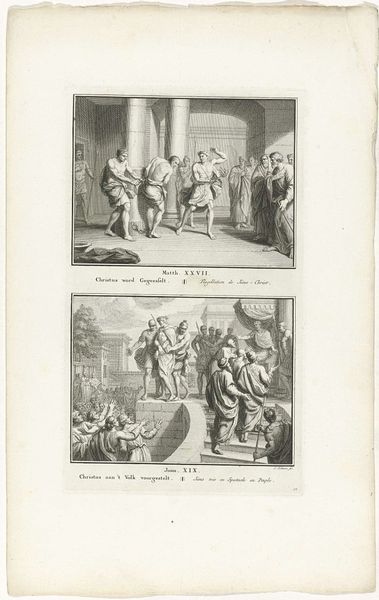
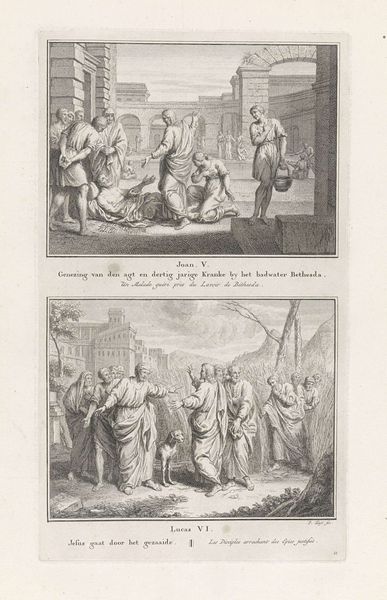
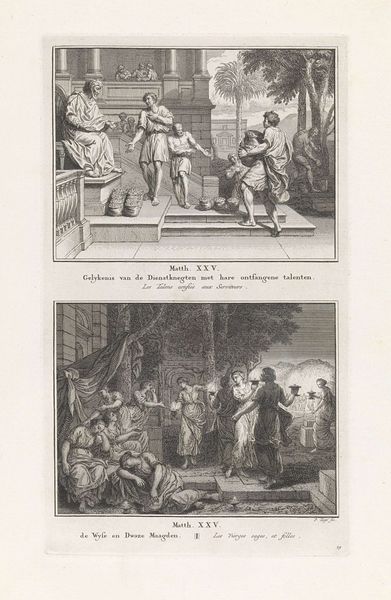
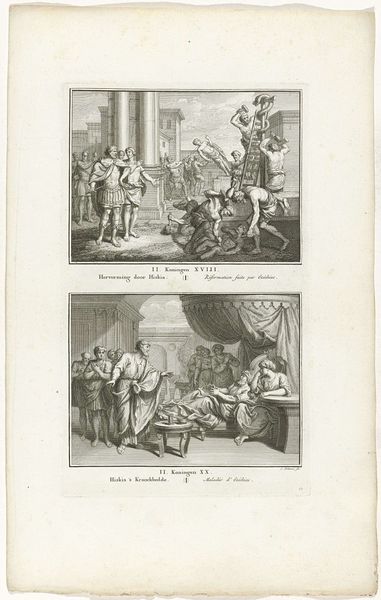
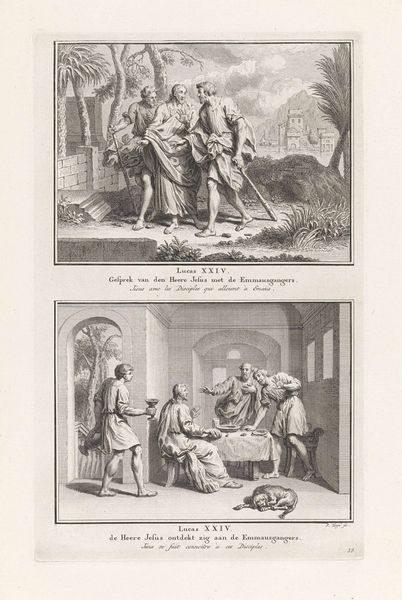
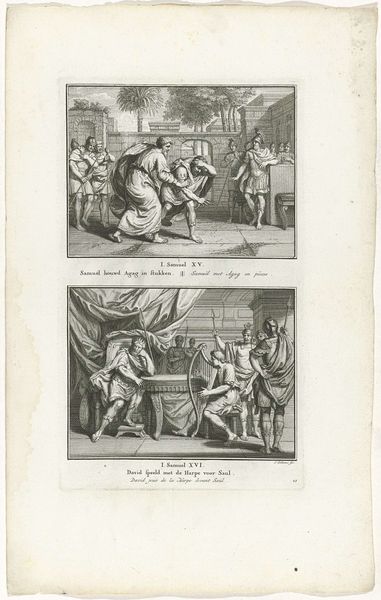
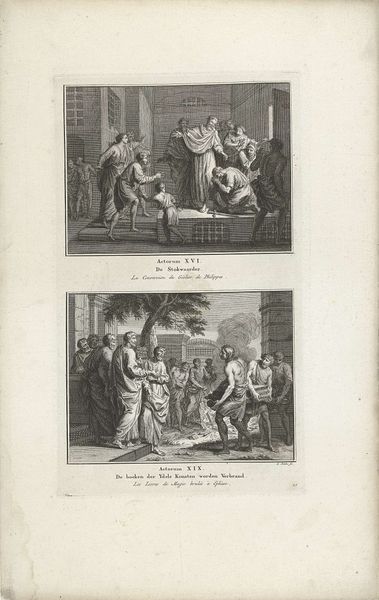
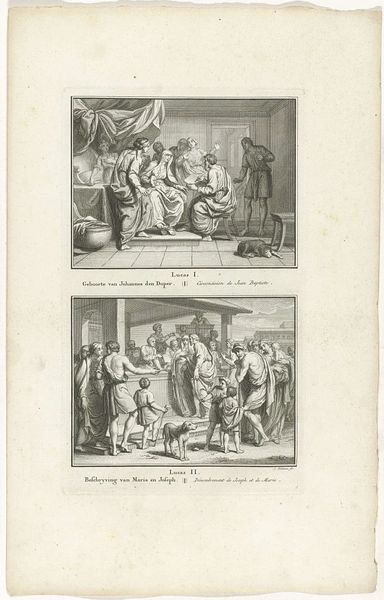
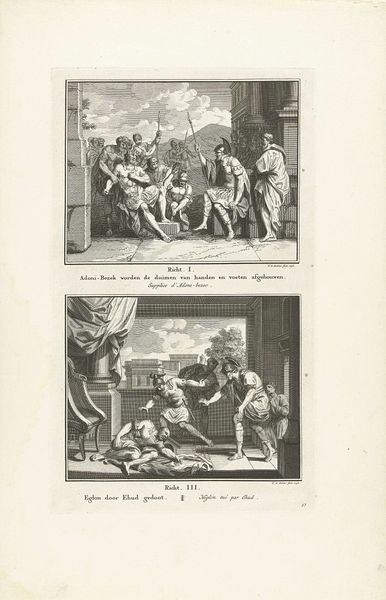
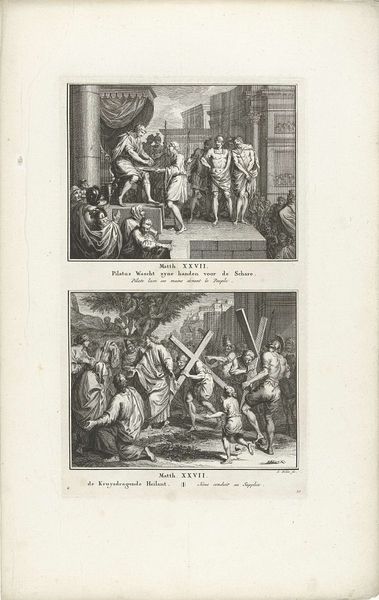
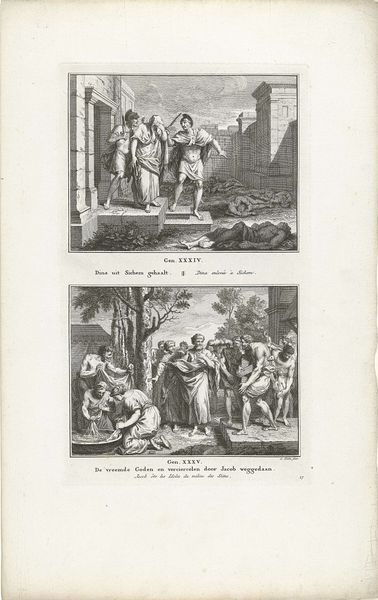
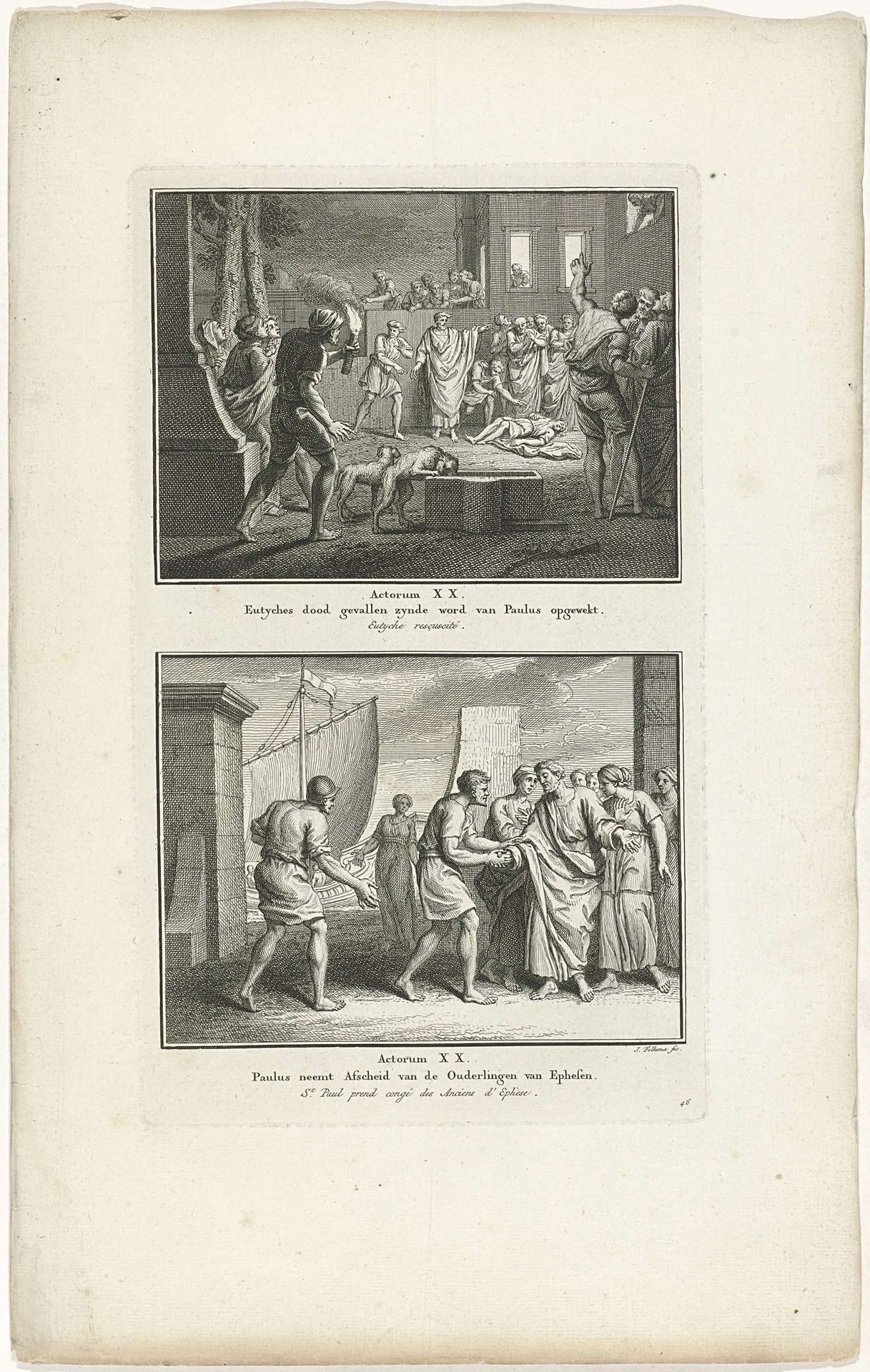
This print by Jacob Folkema, made in the 18th century, depicts two biblical scenes in a single, vertically oriented composition. The artwork presents a study in contrasts, both in content and formal execution. The upper scene, illustrating the raising of Eutychus, features a tightly packed group of figures around the body, creating a sense of drama. Note the use of light and shadow, achieved through fine, closely spaced lines, which gives volume to the figures and emphasizes the miraculous nature of the event. Below, the farewell of Paul is rendered with a more open composition, conveying a mood of solemn parting. The linear quality of Folkema's engraving style is particularly evident here, with each figure delineated by precise lines, creating a sense of order. The entire print operates within a semiotic framework, where each element – the gestures, the architectural details, the arrangement of figures – contributes to the narrative. The dual composition invites the viewer to consider themes of life, death, and the power of faith.
Opwekking van Eutychus door Paulus en Paulus neemt afscheid van de ouderlingen
1791

Jacob Folkema
1692 - 1767Location
RijksmuseumArtwork details
- Dimensions
- height 329 mm, width 194 mm
- Location
- Rijksmuseum
- Copyright
- Rijks Museum: Open Domain
Comments
Share your thoughts
About this artwork
This print by Jacob Folkema, made in the 18th century, depicts two biblical scenes in a single, vertically oriented composition. The artwork presents a study in contrasts, both in content and formal execution. The upper scene, illustrating the raising of Eutychus, features a tightly packed group of figures around the body, creating a sense of drama. Note the use of light and shadow, achieved through fine, closely spaced lines, which gives volume to the figures and emphasizes the miraculous nature of the event. Below, the farewell of Paul is rendered with a more open composition, conveying a mood of solemn parting. The linear quality of Folkema's engraving style is particularly evident here, with each figure delineated by precise lines, creating a sense of order. The entire print operates within a semiotic framework, where each element – the gestures, the architectural details, the arrangement of figures – contributes to the narrative. The dual composition invites the viewer to consider themes of life, death, and the power of faith.
Comments
Share your thoughts