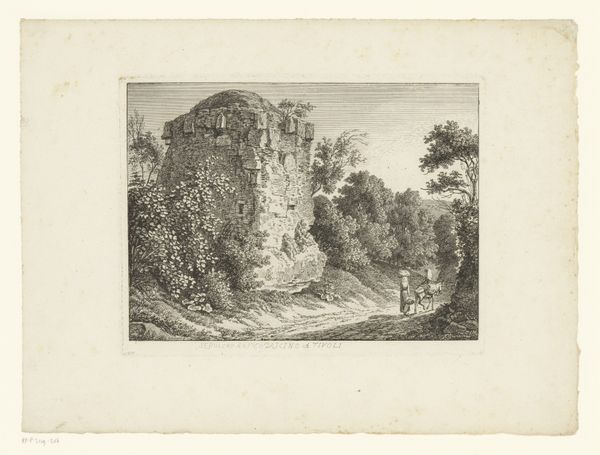
Dimensions: 93.5 × 133 mm (image); 105 × 135 mm (sheet)
Copyright: Public Domain
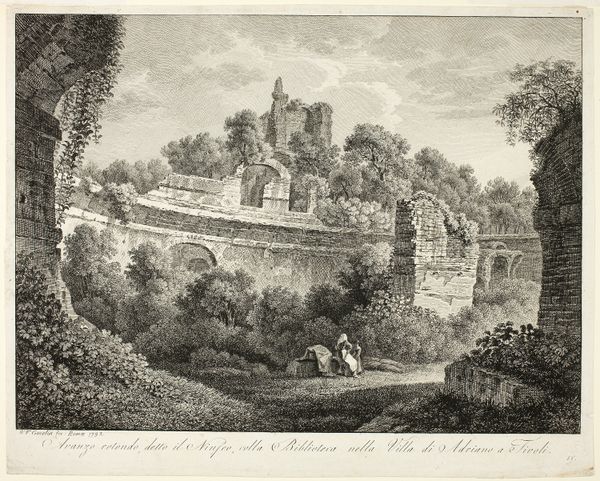
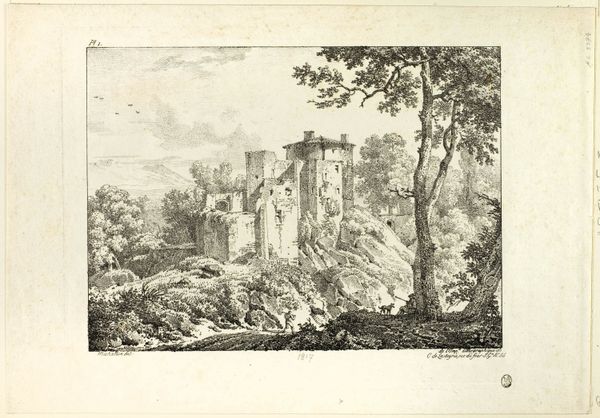
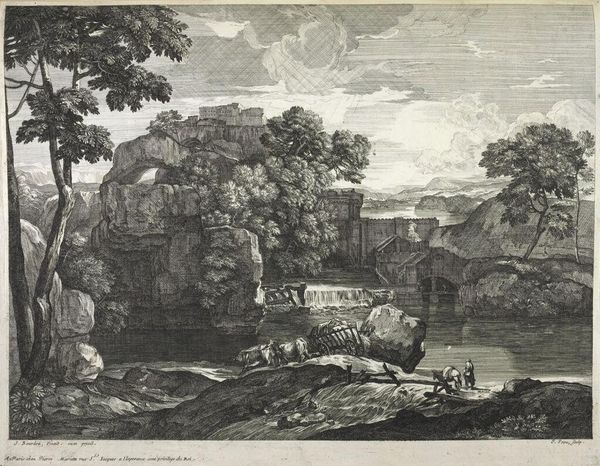
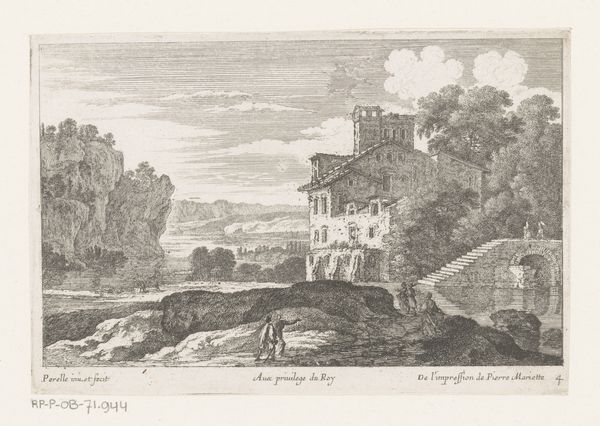
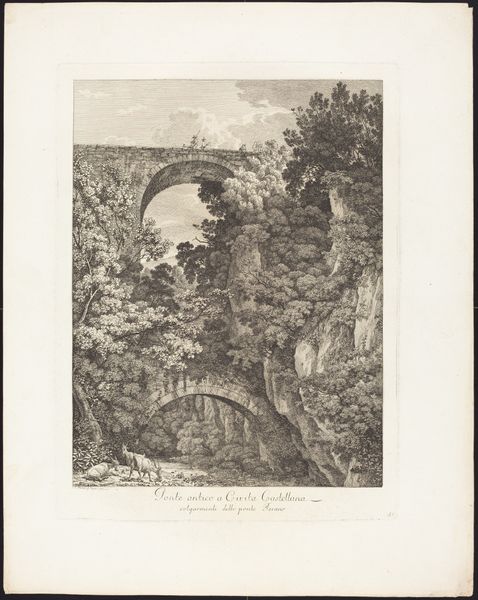
Curator: Let’s take a look at Franz Ludwig Catel’s "View of the Weissenstein Near Cassel," created around 1880. This etching offers us a window into 19th-century Germany and a specific approach to representing landscape and history. Editor: Immediately, I notice how Catel's deployment of contrasting values creates drama. The sharp lines and intricate detail pull the eye toward the illuminated cascade. Curator: Precisely. This etching showcases the Romantic sensibility. What appears at first glance to be simply a picturesque scene, reveals, on closer inspection, a ruin. It’s not merely depicting natural beauty; it also explores themes of memory and the passage of time, a common preoccupation of the era. Editor: And consider how the architectural form of the aqueduct or bridge clashes, yet also harmonizes, with the organic lines of the nature that reclaims it. I am captivated by the geometric starkness softened and overgrown. Note, also, the human figures, almost an aside to the majesty around them, emphasizing nature's grandeur over the human scale. Curator: Yes, and it is crucial to consider the cultural context of such imagery. During this period, the rising tide of nationalism spurred a renewed interest in local histories and legends, quite a change from Classicism. "View of the Weissenstein Near Cassel" encapsulates that very sentiment: it blends nature, national pride, and the contemplation of history, very often of one's own lands, within a single image, a symbol to connect the citizens to their land. Editor: Catel masterfully orchestrated this piece. From the dramatic cascade and complex layering of flora to that crumbling architectural relic in the background—he forces our eyes on an adventurous trek. The entire design is nothing short of virtuosic! Curator: It definitely urges us to look beneath the surface, and past beauty. We're encouraged to ponder about what time has wrought and consider humanity's place within the larger natural order. It presents an interesting study of 19th-century landscape, one tinged with reflection on humanity's past achievements. Editor: A stimulating encounter indeed, as this careful examination highlights.
Comments
No comments
Be the first to comment and join the conversation on the ultimate creative platform.
 Collect
 React
React Comment
More like this