About this artwork
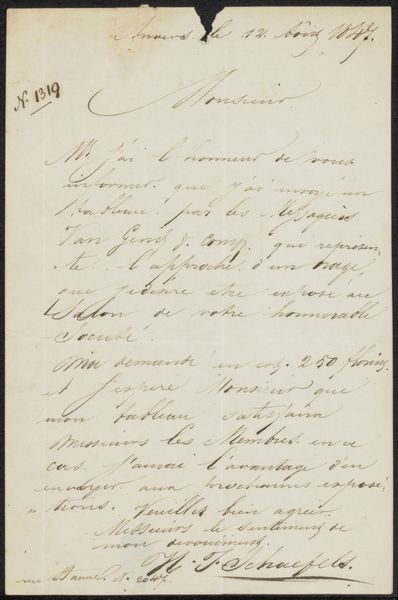
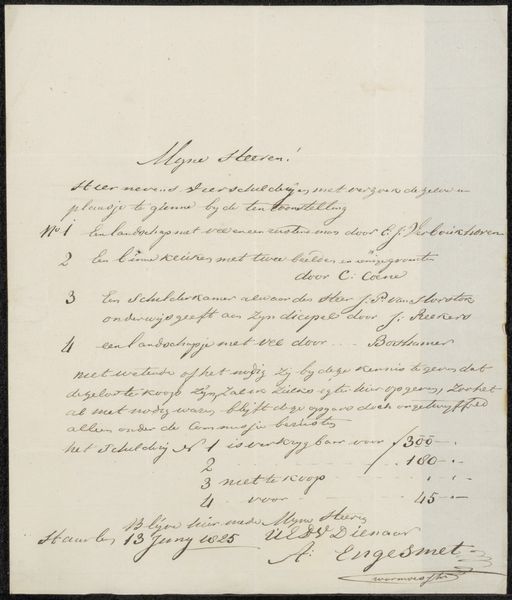
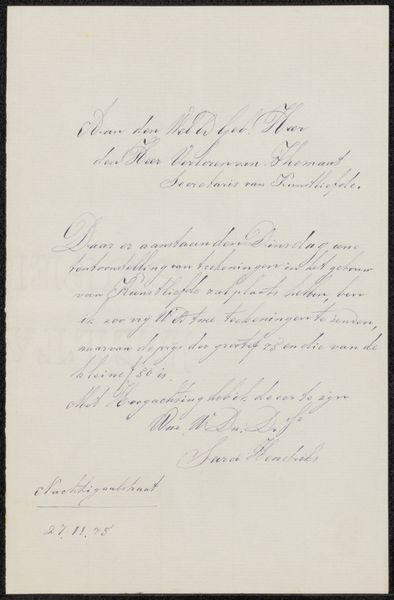
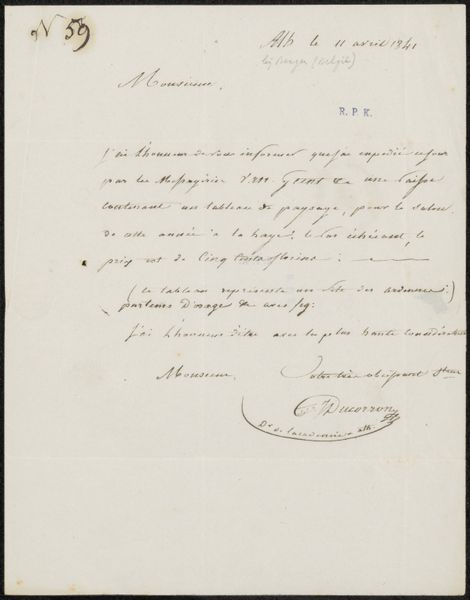
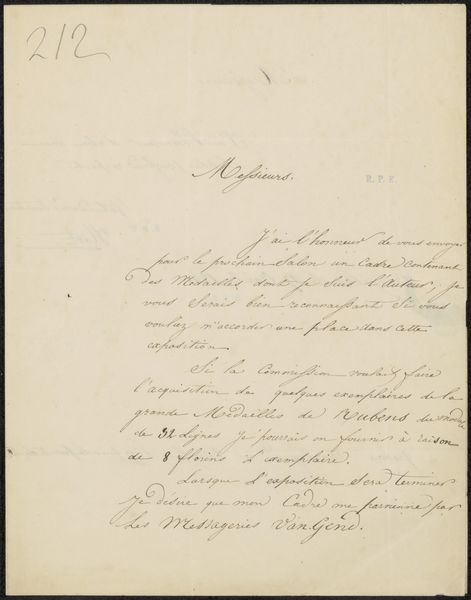
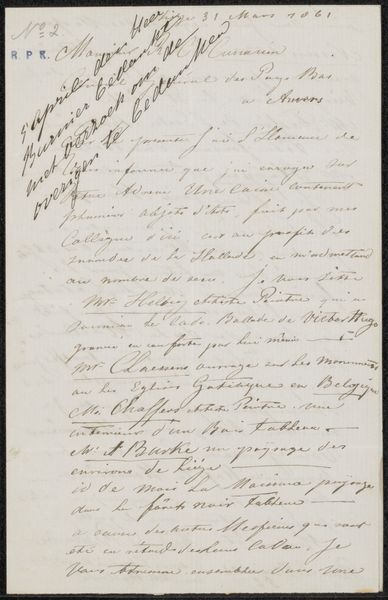
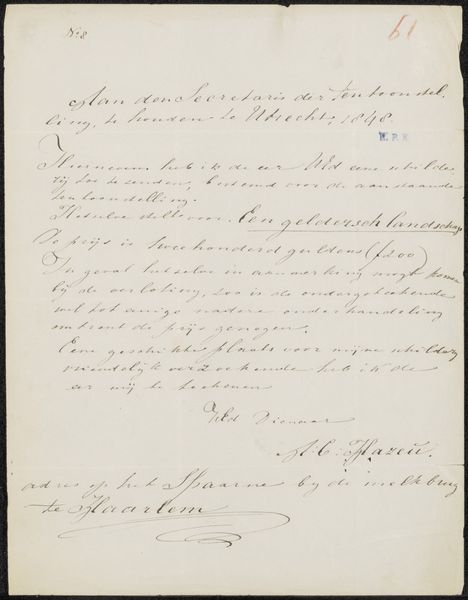
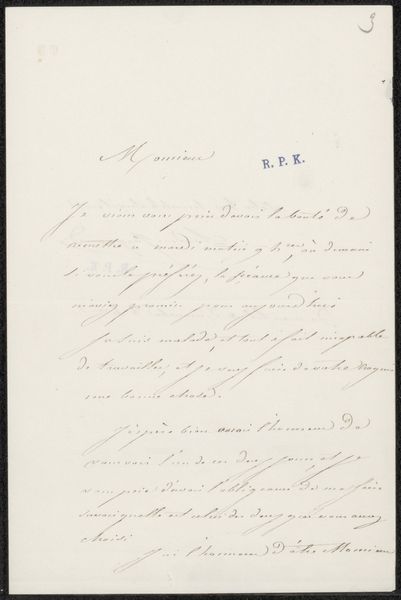
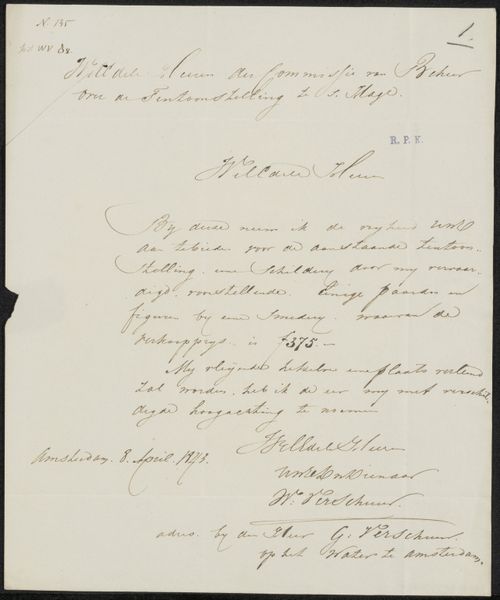
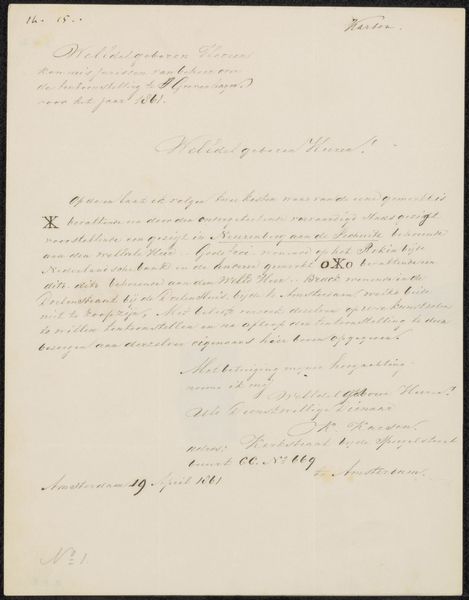
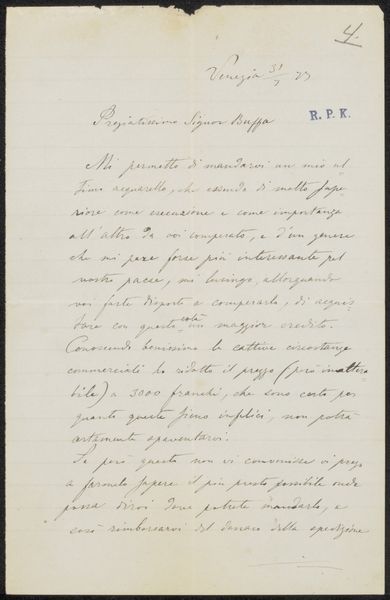
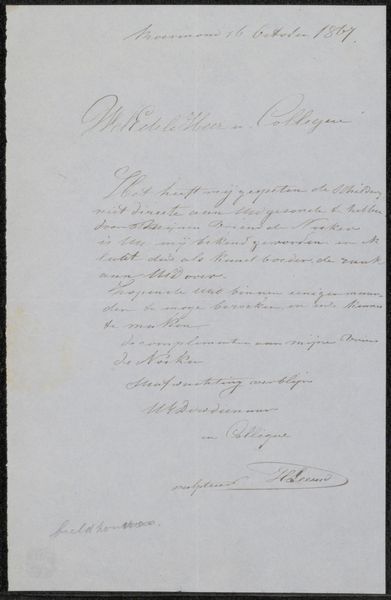
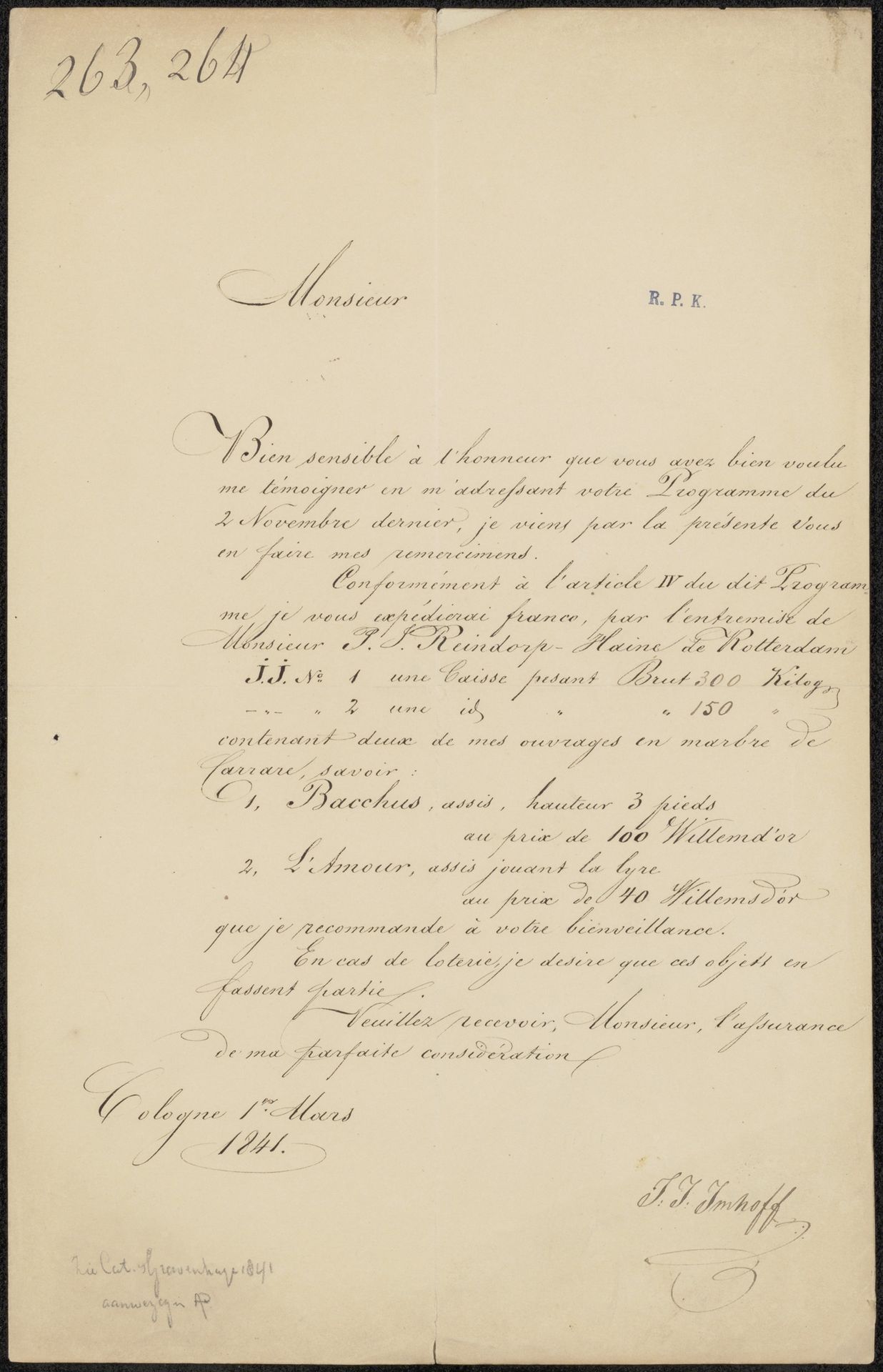
This letter was composed in Cologne on March 1, 1841, by the sculptor Johann Joseph Imhoff. It's a submission to the Commission of the Exhibition of Living Masters in The Hague. The letter offers insights into the economics of art and the institutional processes that shape artistic careers. Imhoff details the shipment of two marble sculptures, one depicting Bacchus and the other, Cupid. The choice of subject matter draws on classical mythology, which had been a mainstay of European art for centuries. We can imagine that the Commission would have had its own ideas about what kind of art was appropriate for public display and we might wonder whether Imhoff's submission met those expectations. The document offers a glimpse into the art market of the time, including the cost of materials, labor, and shipping. Art historians can use archival documents like this, along with exhibition catalogs and artists' biographies, to reconstruct the complex social and economic networks that support artistic production. By attending to these institutional contexts, we can develop a richer understanding of art’s public role.
Brief aan de Commissie van de Tentoonstelling van Levende Meesters in Den Haag
Possibly 1841 - 1843

Artwork details
- Medium
- drawing, paper, ink
- Copyright
- Rijks Museum: Open Domain
Tags
Comments
Share your thoughts
About this artwork
This letter was composed in Cologne on March 1, 1841, by the sculptor Johann Joseph Imhoff. It's a submission to the Commission of the Exhibition of Living Masters in The Hague. The letter offers insights into the economics of art and the institutional processes that shape artistic careers. Imhoff details the shipment of two marble sculptures, one depicting Bacchus and the other, Cupid. The choice of subject matter draws on classical mythology, which had been a mainstay of European art for centuries. We can imagine that the Commission would have had its own ideas about what kind of art was appropriate for public display and we might wonder whether Imhoff's submission met those expectations. The document offers a glimpse into the art market of the time, including the cost of materials, labor, and shipping. Art historians can use archival documents like this, along with exhibition catalogs and artists' biographies, to reconstruct the complex social and economic networks that support artistic production. By attending to these institutional contexts, we can develop a richer understanding of art’s public role.
Comments
Share your thoughts