About this artwork
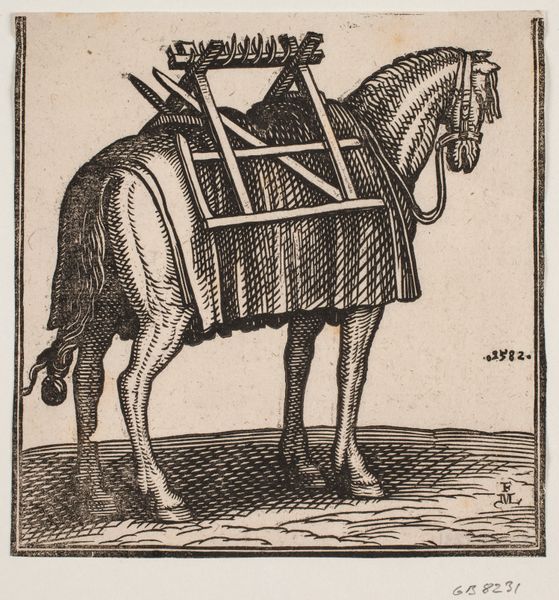
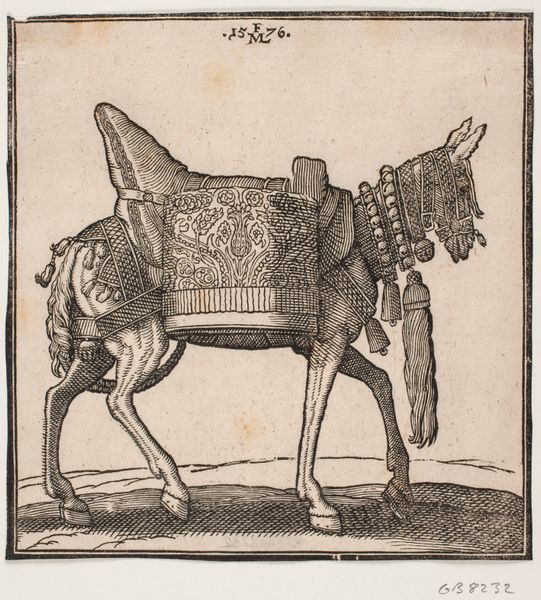
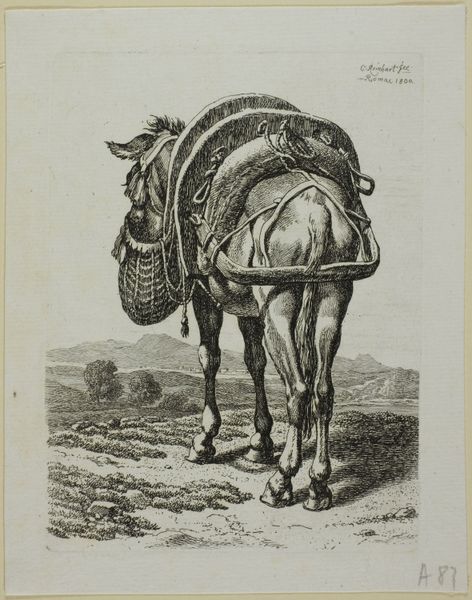
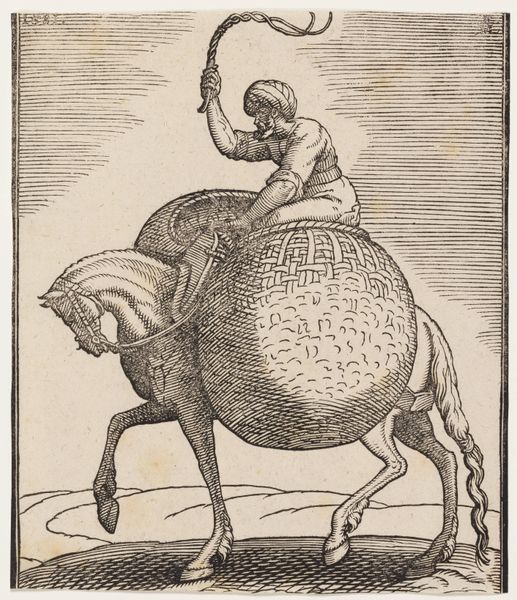
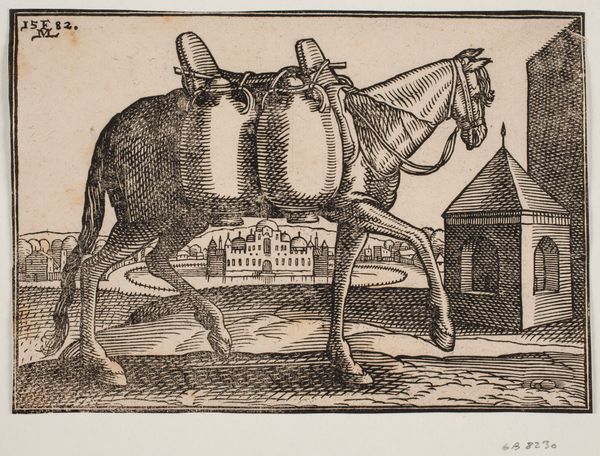
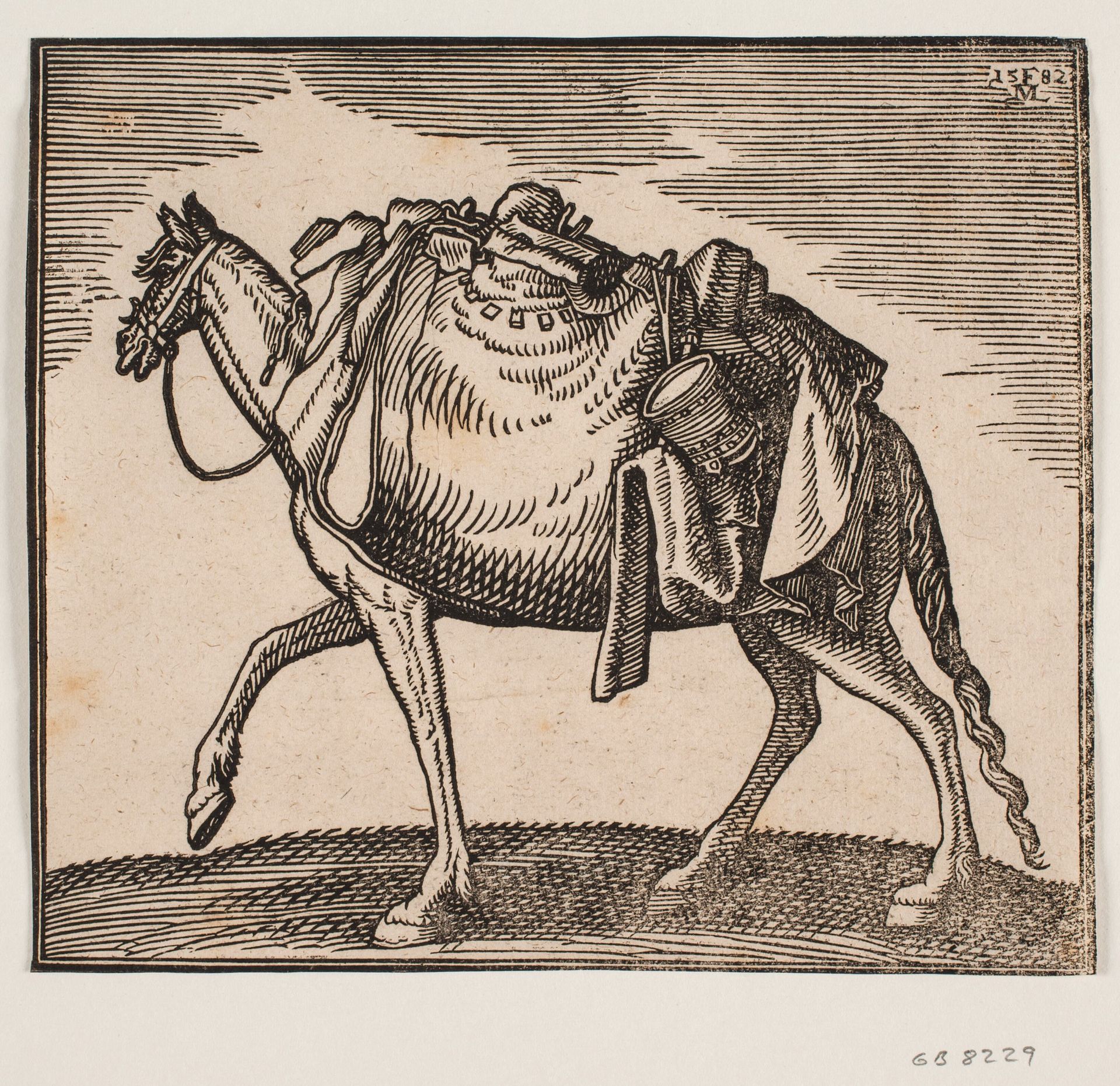
This is a woodcut print, made in 1582 by Melchior Lorck, showing a heavily laden horse. Woodcut is a relief printing process. The artist carves an image into a block of wood, removing the areas that will not be printed. The remaining raised surface is inked and pressed onto paper. This print is small, but the labor involved is evident in the fine lines that create the textures of the horse's body and the goods it carries. Lorck's skill as a draughtsman is on full display through the precise control of the cutting tools. The social context of the image is intriguing. The horse is weighed down with goods, suggesting trade and commerce. The print may have been intended for a merchant or someone involved in the transportation of goods. Woodcut was a relatively accessible medium, allowing for the mass production of images, but in this image, we can sense the tension between the demands of commerce and the skill of the artist. Understanding the materials, making, and context allows us to appreciate the full meaning of the artwork.
Svært bepakket hest 1582


Artwork details
- Medium
- drawing, print, woodcut
- Dimensions
- 150 mm (height) x 170 mm (width) (bladmaal)
- Location
- SMK - Statens Museum for Kunst
Tags
drawing
medieval
landscape
figuration
11_renaissance
woodcut
line
Comments
No comments
About this artwork
This is a woodcut print, made in 1582 by Melchior Lorck, showing a heavily laden horse. Woodcut is a relief printing process. The artist carves an image into a block of wood, removing the areas that will not be printed. The remaining raised surface is inked and pressed onto paper. This print is small, but the labor involved is evident in the fine lines that create the textures of the horse's body and the goods it carries. Lorck's skill as a draughtsman is on full display through the precise control of the cutting tools. The social context of the image is intriguing. The horse is weighed down with goods, suggesting trade and commerce. The print may have been intended for a merchant or someone involved in the transportation of goods. Woodcut was a relatively accessible medium, allowing for the mass production of images, but in this image, we can sense the tension between the demands of commerce and the skill of the artist. Understanding the materials, making, and context allows us to appreciate the full meaning of the artwork.
Comments
No comments