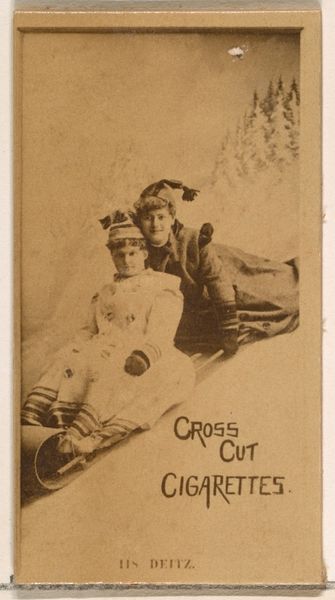
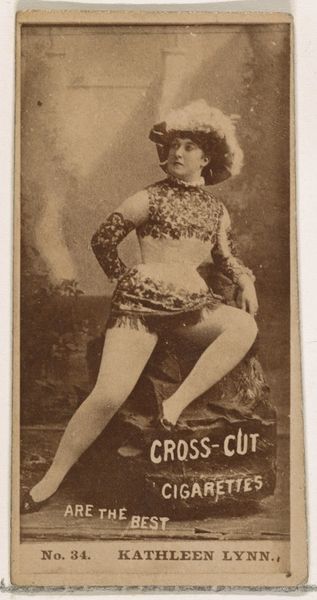
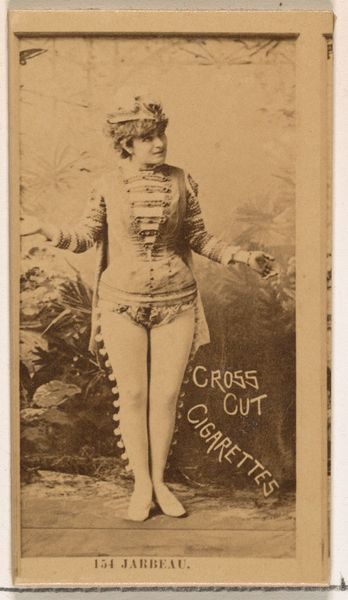
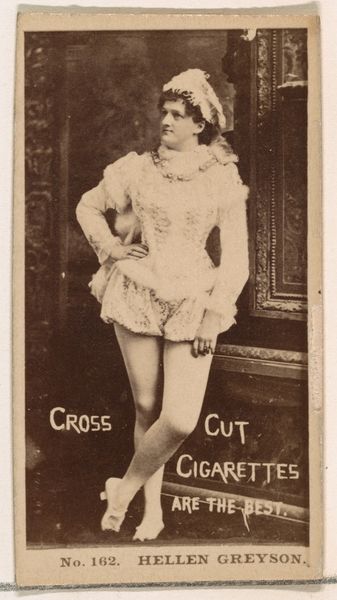
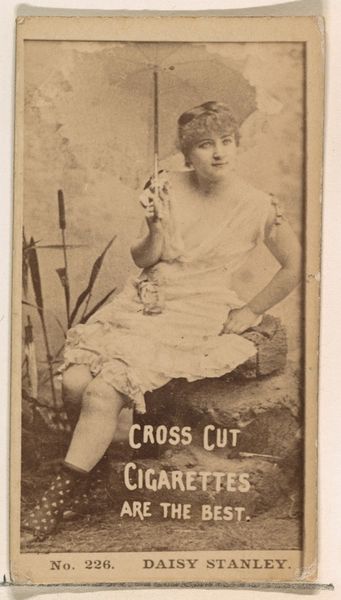
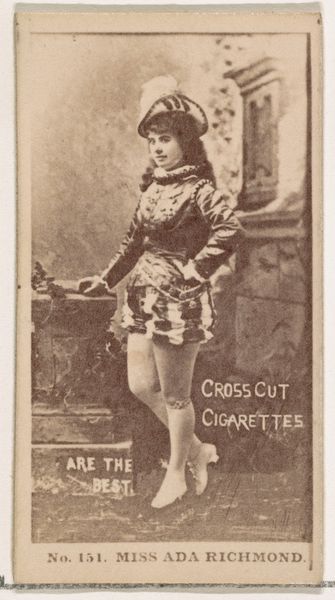
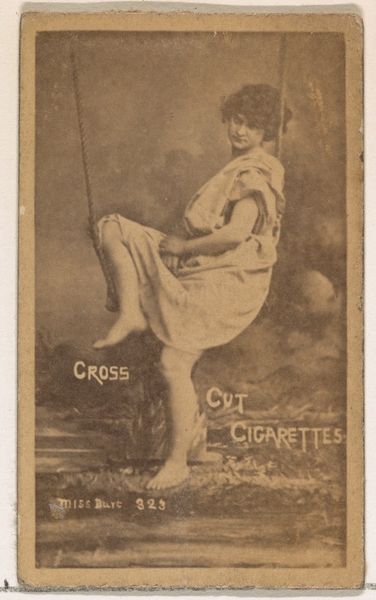
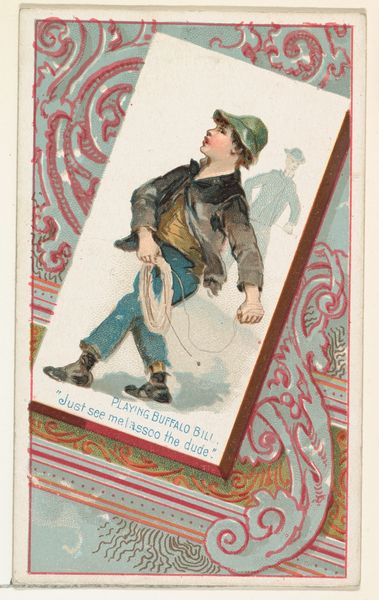
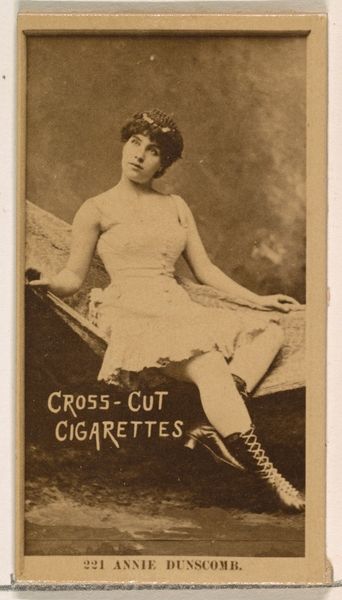
Card Number 113, Lepori, from the Actors and Actresses series (N145-2) issued by Duke Sons & Co. to promote Cross Cut Cigarettes 1880s
0:00
0:00


Dimensions: Sheet: 2 5/8 × 1 7/16 in. (6.6 × 3.7 cm)
Copyright: Public Domain
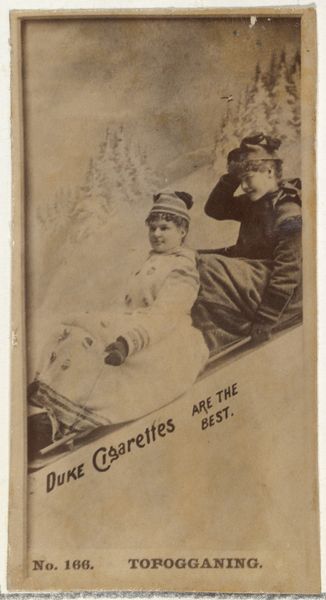
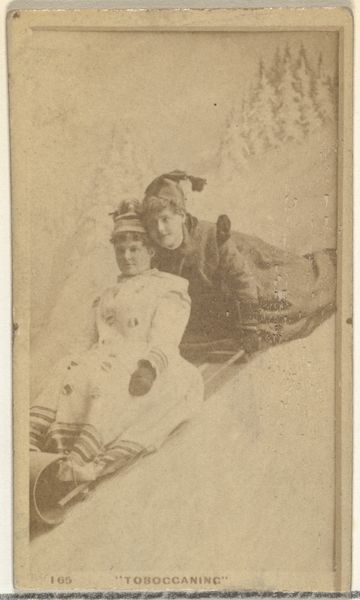
Curator: This is card number 113 from the "Actors and Actresses" series, created by W. Duke, Sons & Co. in the 1880s as promotional material for Cross Cut Cigarettes. Editor: It has a certain vintage charm, almost dreamlike in its sepia tones. Two figures on a sled—is that real snow or stagecraft, I wonder? It feels poised between genuine recreation and curated performance. Curator: Given that it's a cigarette card, intended to be collected, consider how accessible these images were. They acted as portable artworks, mass-produced through methods of printmaking and inserted directly into everyday consumer goods. The value was in circulation and distribution. Editor: That's precisely where I find the social commentary compelling. Smoking was highly gendered, but also coded by class. Who were these women in the photograph, how much control did they have over the construction of their image, and to whom did they represent an aspiration? These cards normalize leisure activity for a specific demographic, but whose labour produced these images? Curator: Labor practices in the late 19th century are obviously significant here, and the materials themselves are relevant—the card stock, the inks. The print was a means to popularize, to almost fetishize certain performances and personalities, effectively democratizing portraiture through capitalism. Editor: Indeed, this "democratization" wasn’t benevolent. Tobacco farming and cigarette production often relied on exploitation. The consumption of these cards coincided with larger societal issues: class division, the objectification of women, and the insidious rise of consumer culture driven by problematic labor practices. Curator: I agree. Thinking materially, one could examine the quality of the print run, variations in ink density, how the photographic image is reproduced for mass consumption. How many made it into albums versus ending up crumpled and discarded? What's their ultimate fate in landfills versus museums? Editor: It’s powerful to think of it now, situated in a museum collection—a marker of the shifting cultural norms surrounding recreation, identity, and commodification that still affect us today. Curator: Ultimately, its value lies not in any inherent artistic merit but its representation of cultural and manufacturing processes. It’s a snapshot of a moment embedded in material conditions. Editor: Leaving us to question what performative functions these seemingly harmless pieces of memorabilia continue to exert on gender and social memory.
Comments
No comments
Be the first to comment and join the conversation on the ultimate creative platform.
 Collect
 React
React Comment
More like this