c. 1677 - 1692
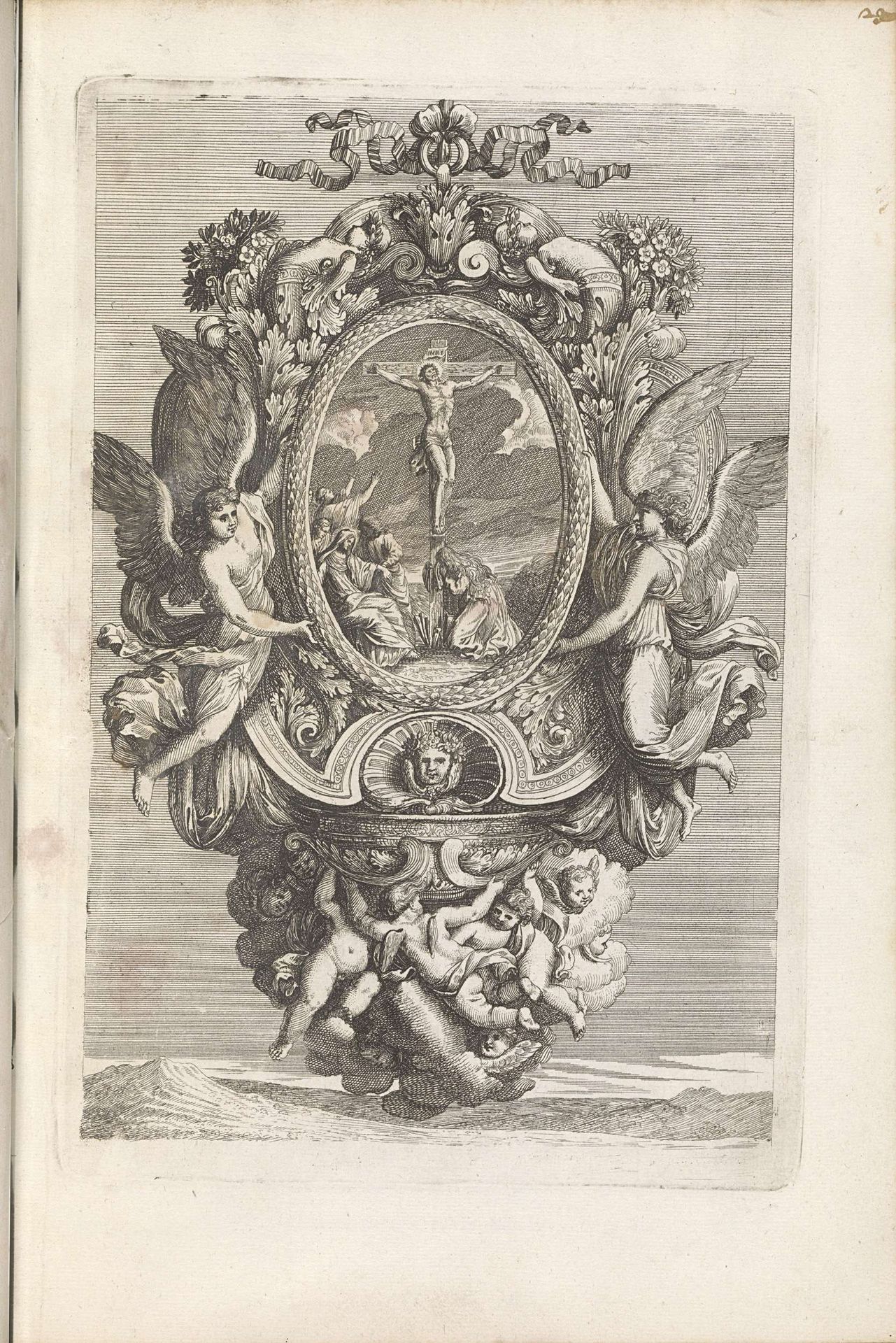
Wijwaterbak met de Kruisiging

Franz Ertinger
1640Location
RijksmuseumListen to curator's interpretation
Curatorial notes
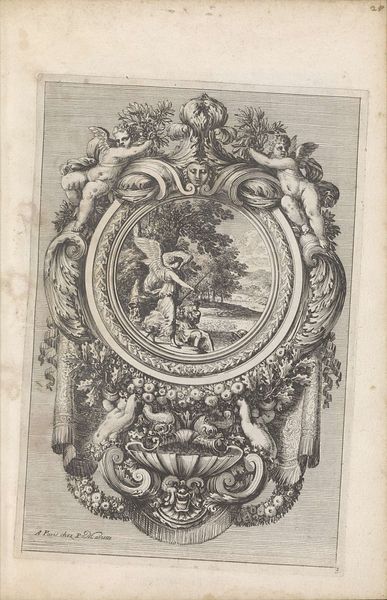
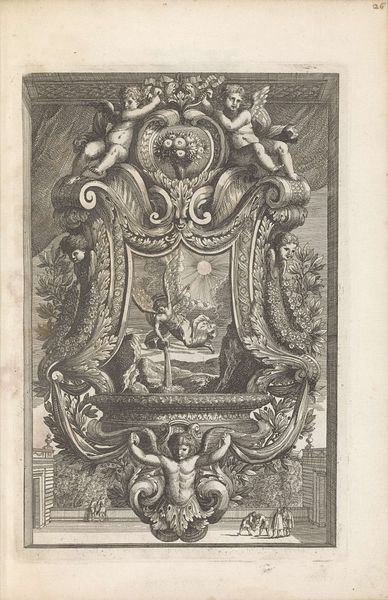
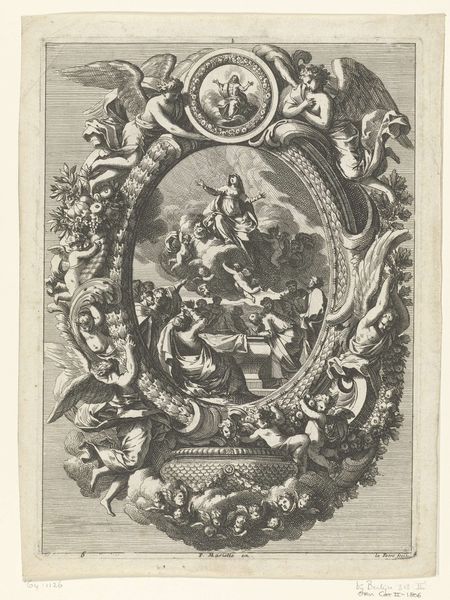
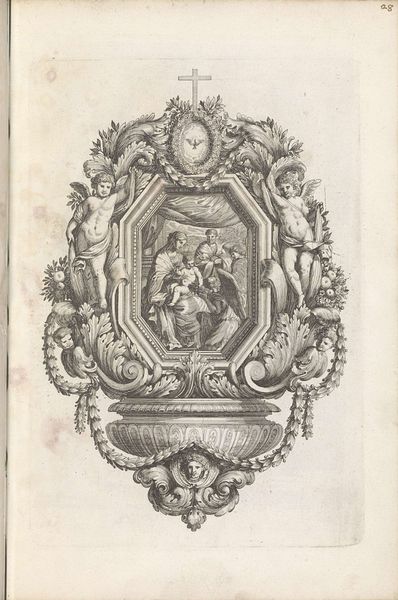
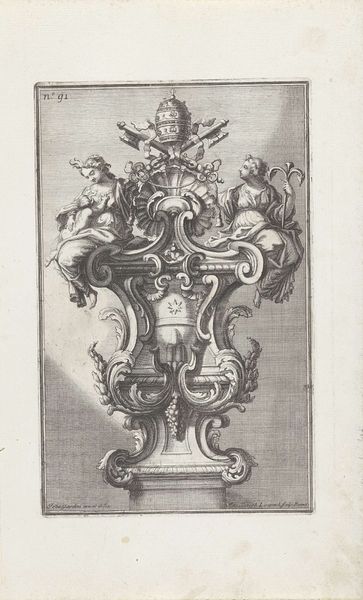
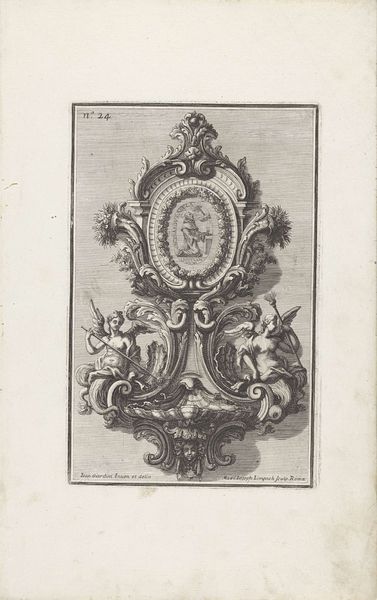
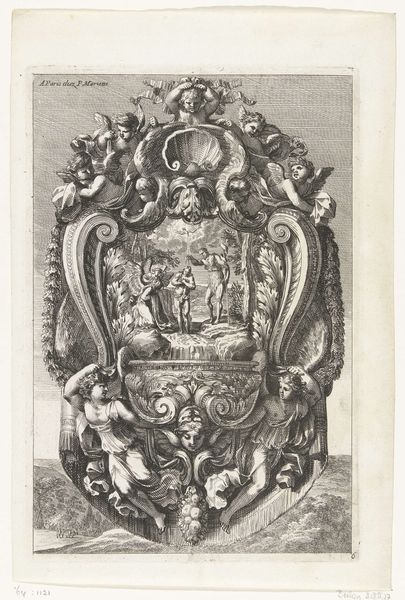
Franz Ertinger created this etching of a Holy Water Font with the Crucifixion in the 17th century. The composition is structured around an ornate, vertically-oriented oval. It is an essay in contrasts and delicate rendering. The artist juxtaposes earthly anguish at the bottom with salvation in the ovoid zone. Note how the cherubic figures contrast with the somber scene of the Crucifixion above. The oval itself is framed by foliage and ribbons, with the scene of the Crucifixion at its heart. The symmetry and decorative elements reflect the Baroque period's emphasis on ornate design and the interplay of light and shadow to evoke emotional depth. Consider the semiotic function of the cherubs. They serve as both physical support for the font and symbolic messengers, embodying the intertwining of divine and earthly realms that is central to Christian iconography. The piece reflects the period's theological and philosophical currents, where visual expression served as a means to convey complex spiritual concepts.