print, textile, woodblock-print
#
portrait
# print
#
asian-art
#
textile
#
ukiyo-e
#
figuration
#
woodblock-print
#
watercolor
Dimensions: height 203 mm, width 178 mm
Copyright: Rijks Museum: Open Domain
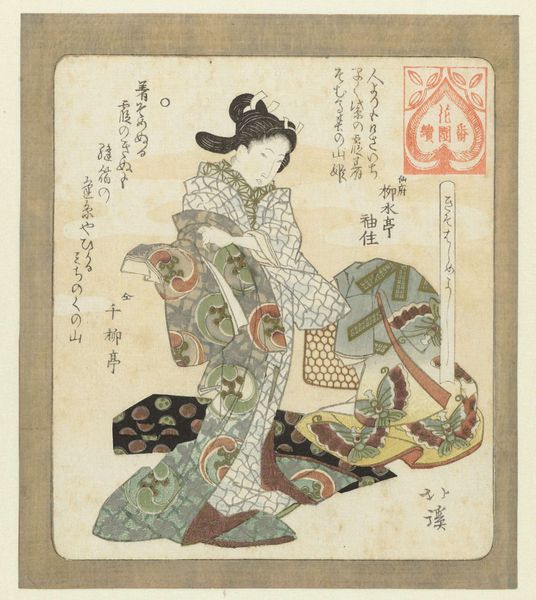
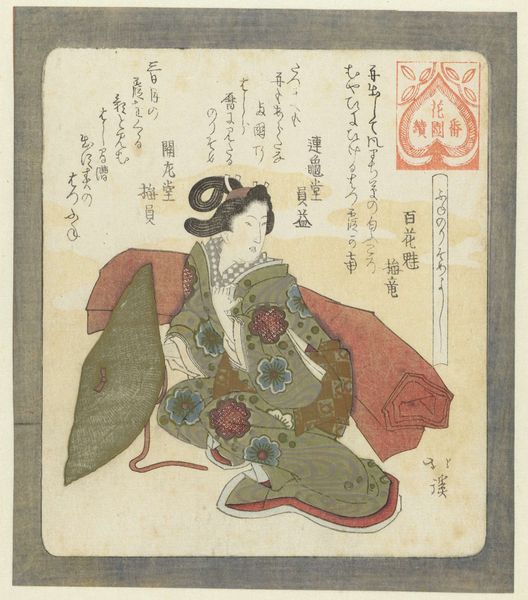
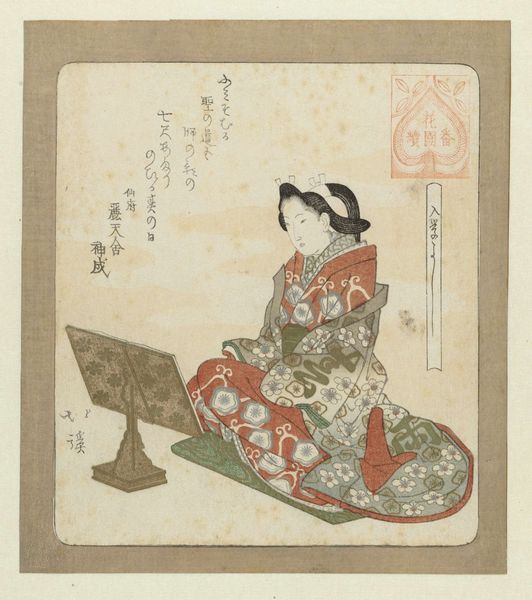
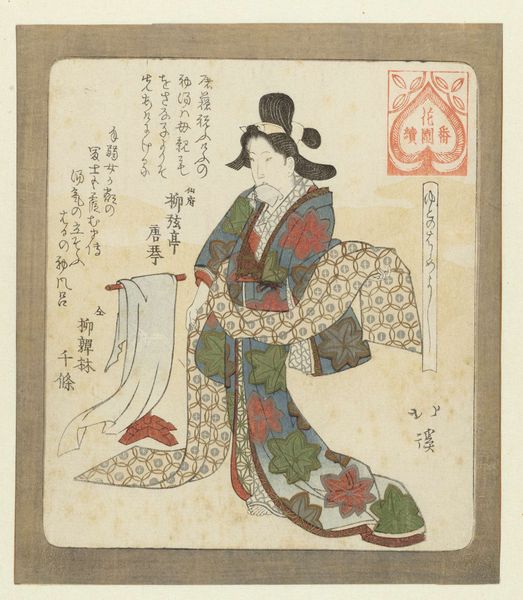
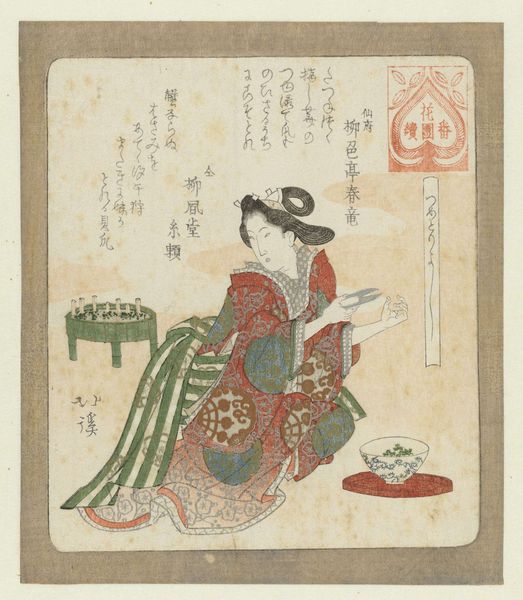
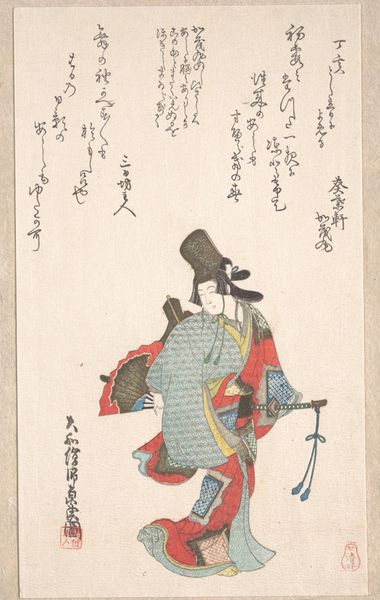
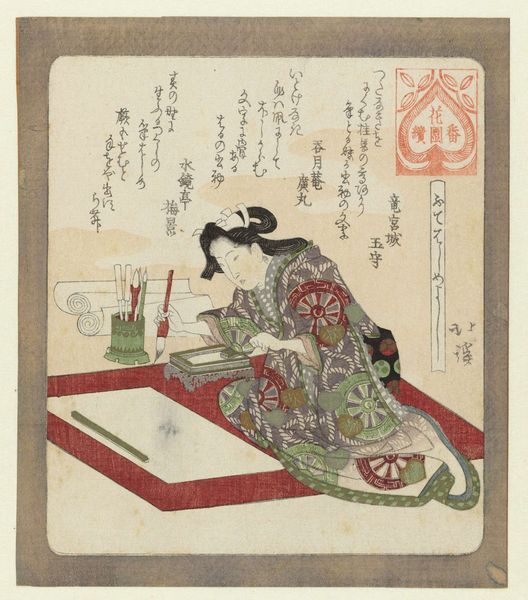
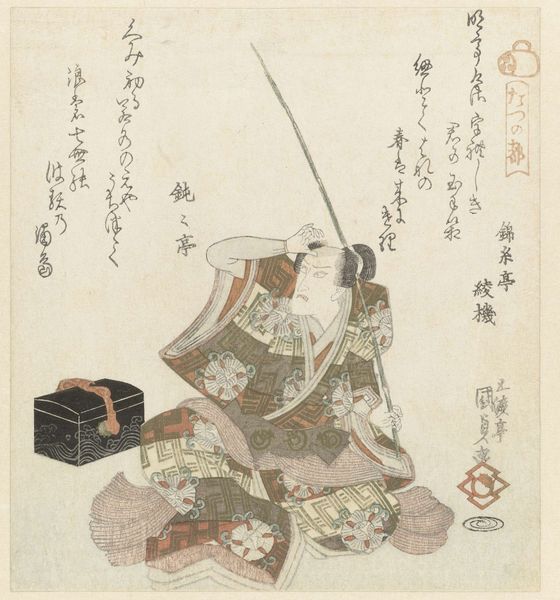
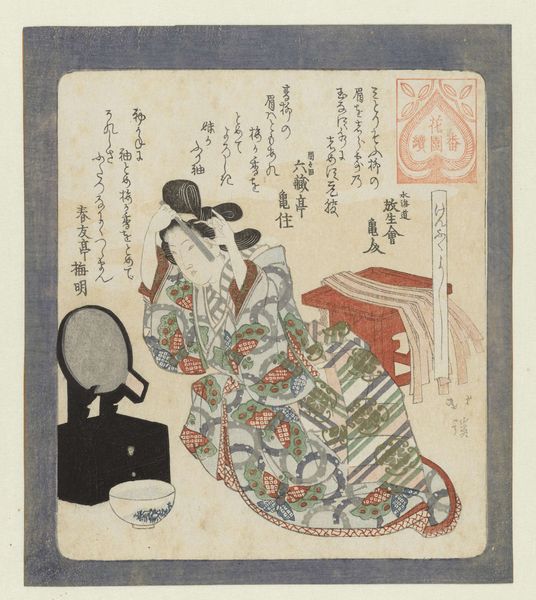
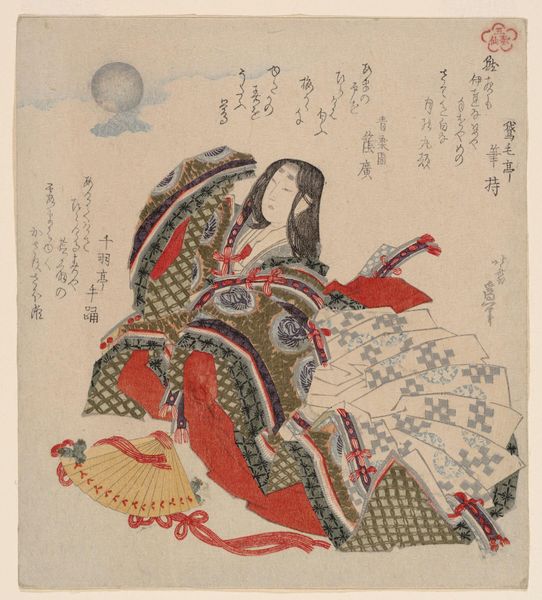
This Japanese woodblock print depicts a seated woman, likely made by Totoya Hokkei in the early 19th century. Note the prominent presence of geometric patterns on her kimono, particularly the repeated squares resembling a checkerboard. This motif, seen throughout history, can be traced back to ancient cultures, symbolizing various concepts like duality, order, or even the game of life. In Japanese culture, these patterns have been associated with prosperity, longevity, and good fortune. We observe its cyclical return in different forms. Think of the chessboard in medieval art symbolizing the game of life and death, or the checkered patterns in heraldry denoting noble lineage. The checkerboard becomes more than just a visual element; it is a vessel carrying layers of meaning. It surfaces, transformed, in diverse cultural expressions, reminding us of the intricate pathways through which symbols traverse time, and the enduring influence of collective memory.
Comments
No comments
Be the first to comment and join the conversation on the ultimate creative platform.
 Collect
 React
React Comment
More like this