1750 - 1751
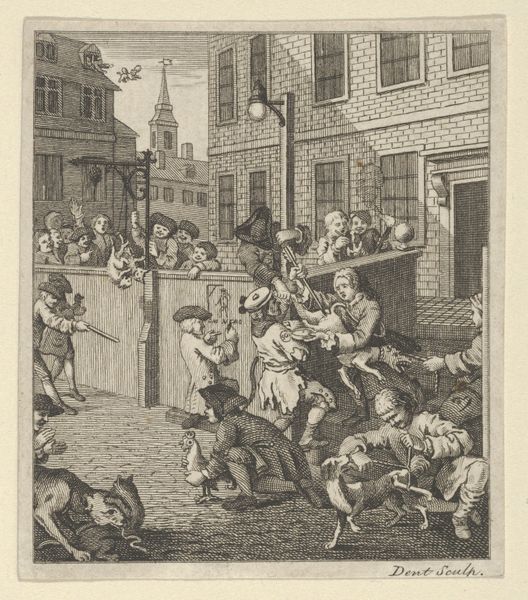
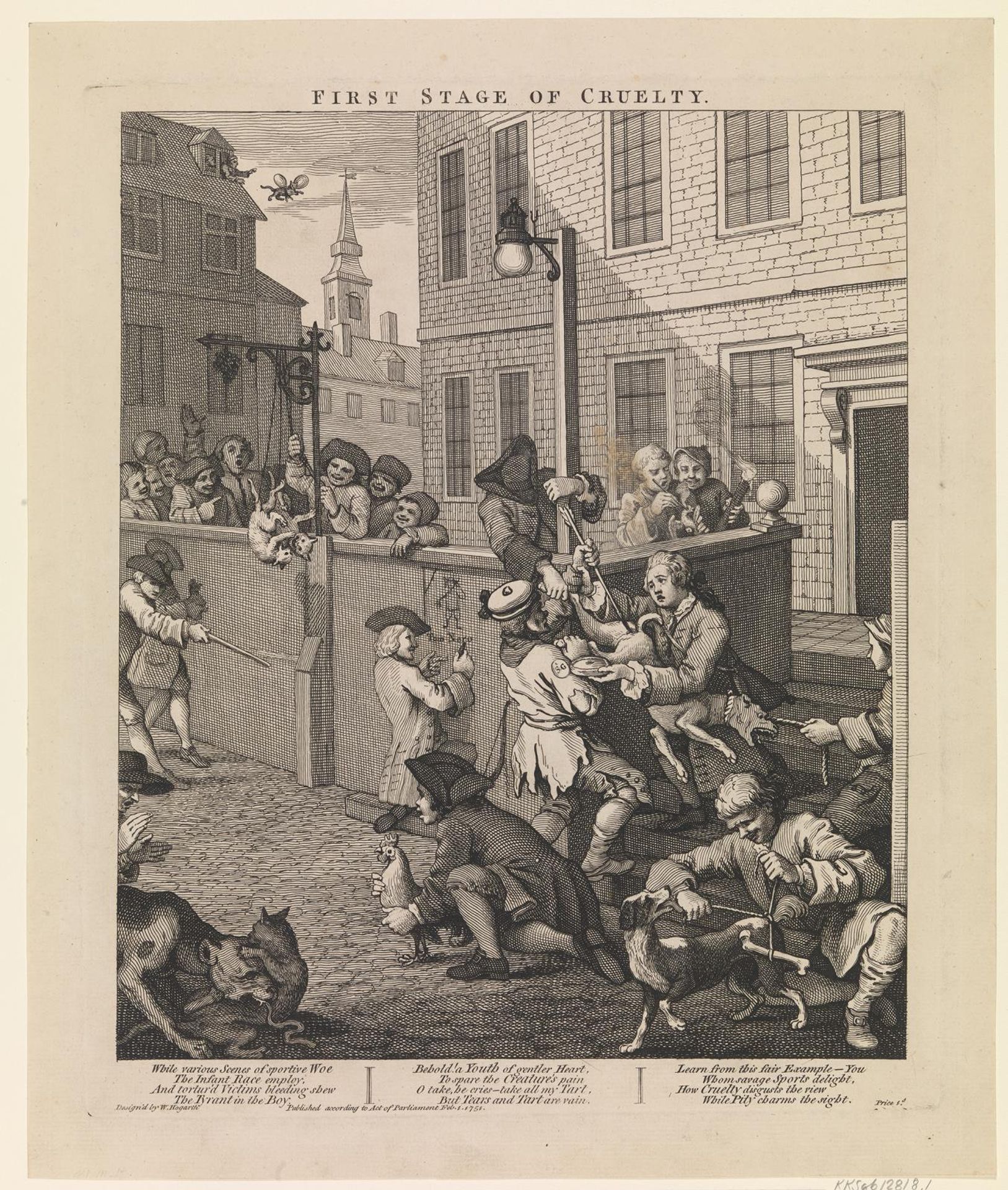
First Stage of Cruelty


Listen to curator's interpretation
Curatorial notes
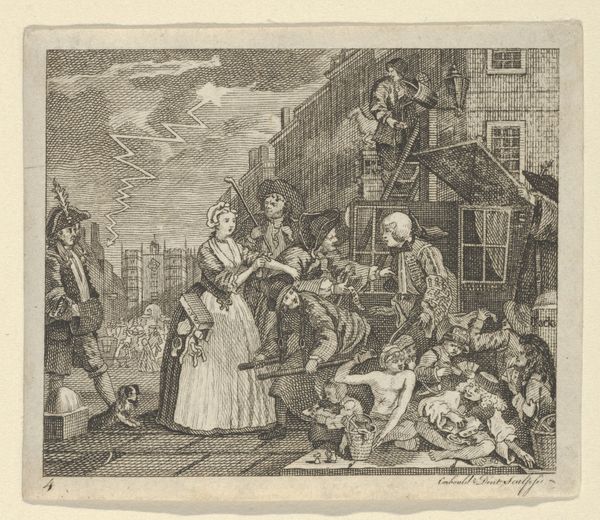
Curator: "First Stage of Cruelty" by William Hogarth. Created sometime between 1750 and 1751, this print, done as etching, presents quite a stark scene, wouldn't you say? Editor: Yes, it’s… intensely disturbing. All this pent-up cruelty just exploding outwards. The composition feels very crowded, claustrophobic almost, enhancing that feeling. You get the sense that the composition itself is enacting the horror. Curator: Absolutely. Hogarth's aiming for a gut reaction here. Think about the London he lived in—poverty, gin-soaked streets, widespread indifference to suffering. He believed art should serve a social purpose, to awaken people. "First Stage of Cruelty" is part of a series called "The Four Stages of Cruelty," each print escalating in violence. This one sets the stage. Editor: He definitely doesn't pull any punches. These boys are involved in torturing animals and tormenting the weak. Even that little dog, snapping a bone. Is this about breaking social norms? About challenging perceptions of morality, not just making us squirm? Curator: Exactly! The image aims to highlight social critique through narrative. Hogarth was deeply invested in didacticism, creating art to both entertain and instruct. Each character represents a facet of society failing in compassion and decency. Editor: I get the message loud and clear, and I do feel his heart—and also recognize the debate about sentimentalizing morality. What strikes me, though, beyond all the moral lessons is the technique of print-making, all these delicate lines making something that feels both of a world but elevated from the squalor in Hogarth's world at that time. Curator: An interesting contrast, isn't it? The refinement of the etching itself juxtaposed with the coarse subject matter. The choice of print makes the images accessible too – copies could be distributed and discussed widely in society, sparking dialogues just like this one, hopefully promoting the "cure". Editor: This reminds me that our current media environments are awash in comparable stuff—violence and depravity. Is this a kind of hall-of-mirrors situation where we get stuck endlessly reflecting on suffering instead of, as he intended, moving beyond? Curator: Possibly, but Hogarth’s skill, artistry and the way in which "First Stage of Cruelty" invites a level of questioning, that alone is commendable and separates it from gratuitous representation of the kind we might encounter online every day. Editor: Absolutely. He makes us look, really look, at what's ugly. A discomforting image with lasting relevance. Curator: It is a powerful statement, then and now, hopefully offering an opportunity to contemplate how our own actions ripple outwards.