About this artwork
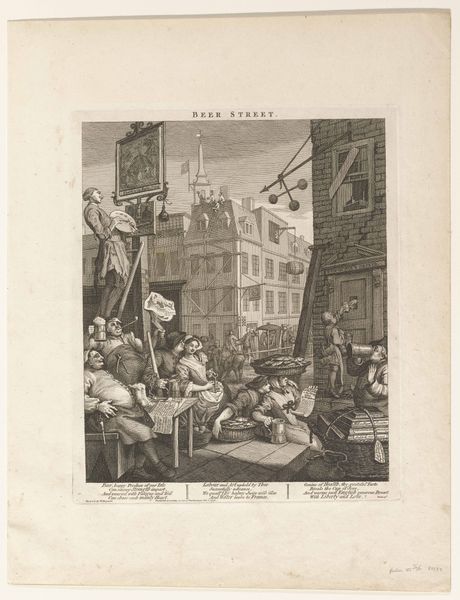
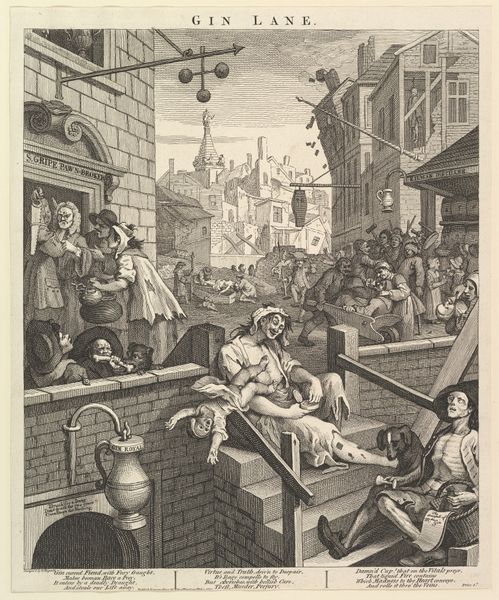
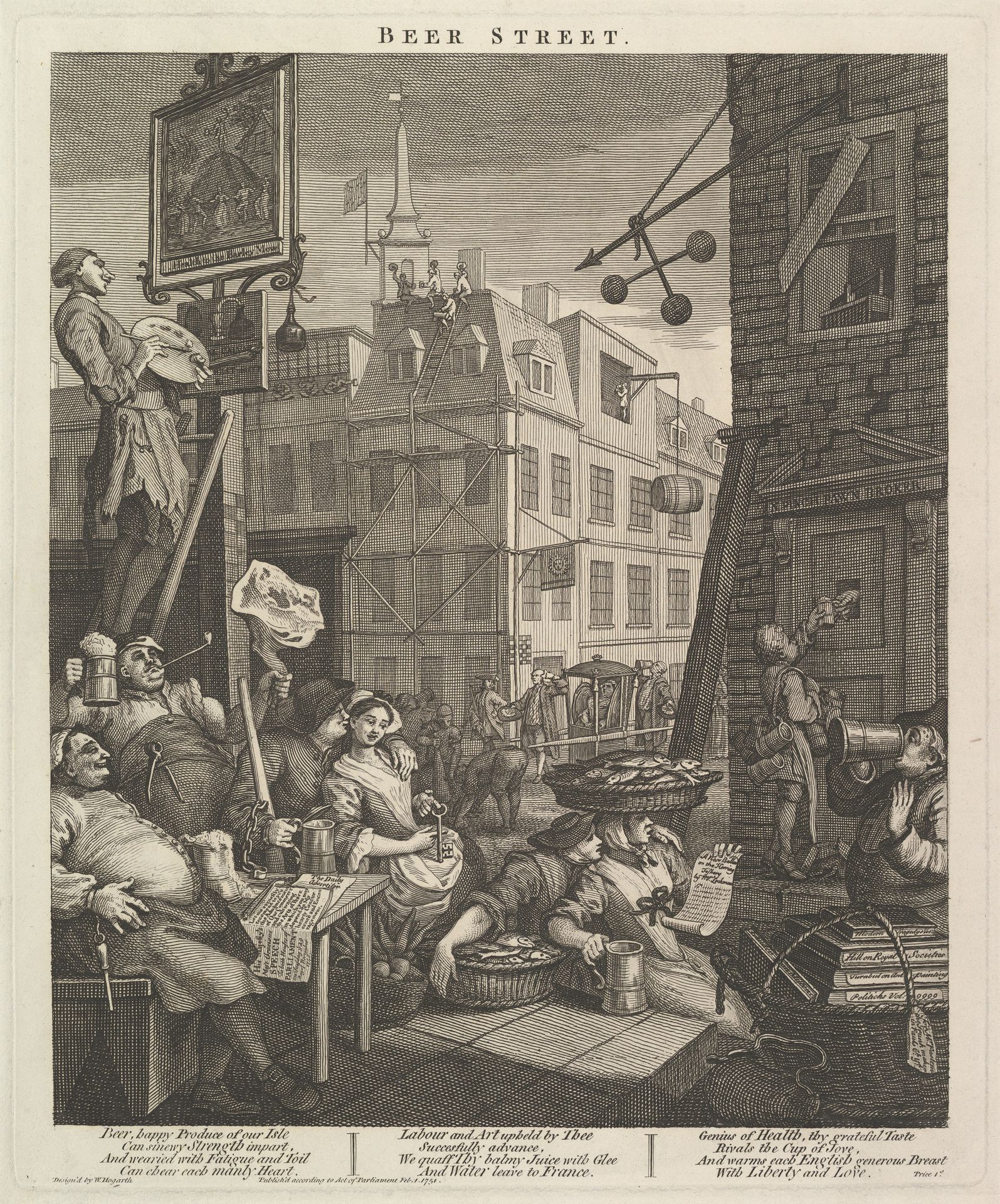
Here in the Metropolitan Museum of Art is William Hogarth's print, "Beer Street." Notice the symbolic richness of the scene: the figures reveling in beer's healthful embrace, their labor and art flourishing under its influence. It is a celebration of English industry and well-being, contrasted by the dangers of foreign spirits. The image is reminiscent of classical bacchanals, ancient rituals celebrating wine and fertility. Yet, here, it’s transmuted into a distinctly English context, with beer taking the place of wine. Consider the motif of the overflowing mug, a symbol of plenty and communal joy. It appears throughout history in various forms, from the cornucopia of Roman art to the communal drinking vessels of medieval feasts. Hogarth infuses it with patriotic fervor, associating it with the vigor and prosperity of England. The collective memory of such symbols and rituals, passed down through generations, taps into our subconscious, evoking feelings of belonging and national pride. Hogarth masterfully manipulates these associations, engaging viewers on an emotional level and inviting them to participate in his vision of a thriving, beer-fueled England. Like the return of the repressed, this cultural memory reappears, renewed and repurposed.
Beer Street 1751


Artwork details
- Medium
- drawing, print, ink, engraving
- Dimensions
- plate: 15 3/8 x 12 13/16 in. (39 x 32.5 cm) sheet: 16 9/16 x 13 9/16 in. (42 x 34.4 cm)
- Location
- Metropolitan Museum of Art, New York, NY
- Copyright
- Public Domain
Tags
drawing
baroque
ink
men
sketchbook drawing
cityscape
genre-painting
engraving
Comments
No comments
About this artwork
Here in the Metropolitan Museum of Art is William Hogarth's print, "Beer Street." Notice the symbolic richness of the scene: the figures reveling in beer's healthful embrace, their labor and art flourishing under its influence. It is a celebration of English industry and well-being, contrasted by the dangers of foreign spirits. The image is reminiscent of classical bacchanals, ancient rituals celebrating wine and fertility. Yet, here, it’s transmuted into a distinctly English context, with beer taking the place of wine. Consider the motif of the overflowing mug, a symbol of plenty and communal joy. It appears throughout history in various forms, from the cornucopia of Roman art to the communal drinking vessels of medieval feasts. Hogarth infuses it with patriotic fervor, associating it with the vigor and prosperity of England. The collective memory of such symbols and rituals, passed down through generations, taps into our subconscious, evoking feelings of belonging and national pride. Hogarth masterfully manipulates these associations, engaging viewers on an emotional level and inviting them to participate in his vision of a thriving, beer-fueled England. Like the return of the repressed, this cultural memory reappears, renewed and repurposed.
Comments
No comments