About this artwork
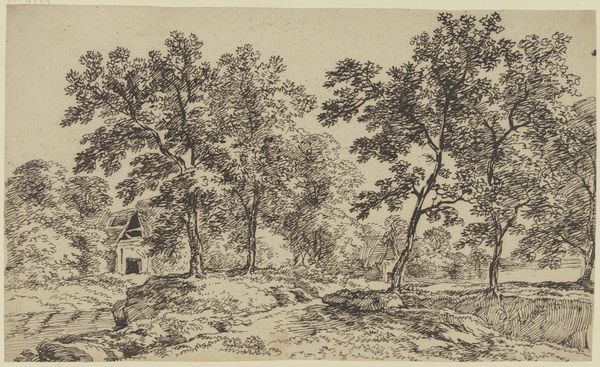
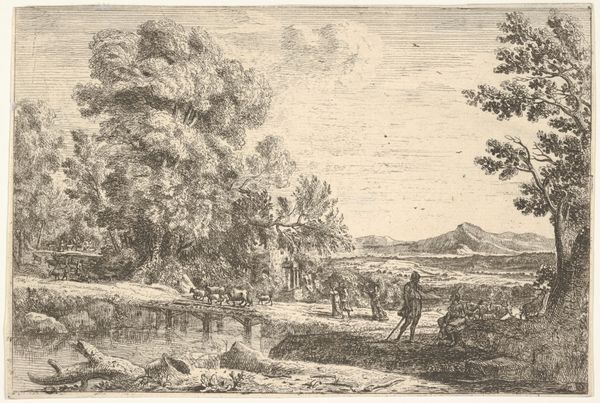
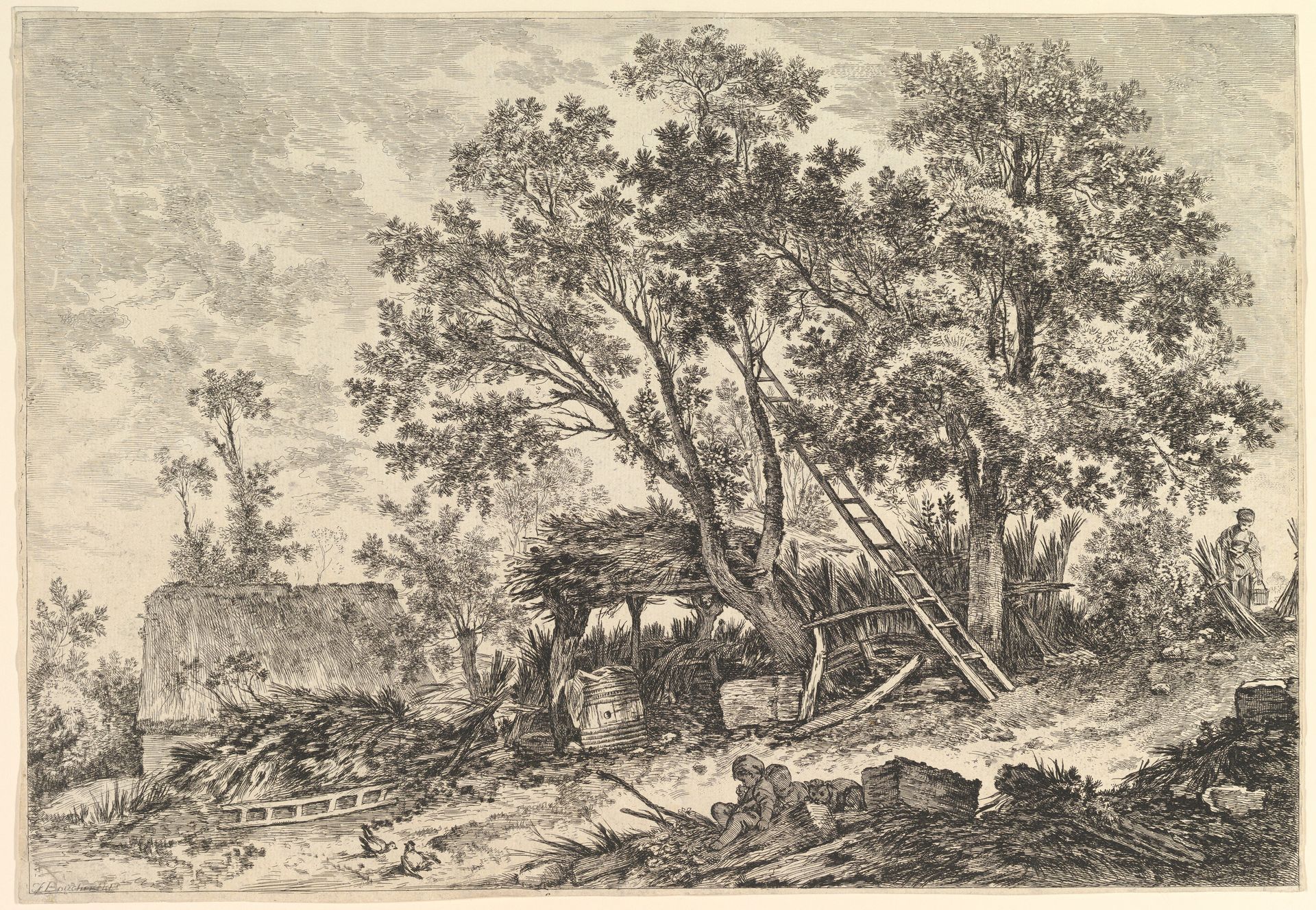
This is "IIe. Vue de Fronville", an etching made by William Wynne Ryland. Here, the ladder, casually leaning against a sturdy tree, represents a connection between the earthly and the lofty. The ladder motif is a deeply resonant symbol, echoing Jacob's Ladder from the Old Testament. It bridges the terrestrial world with the divine, suggesting a path of spiritual ascent, a way to move beyond the mundane. However, here in Fronville, the ladder is not reaching towards God. Instead, it’s employed as a humble tool in the landscape. Similarly, we see the 'axis mundi', the World Tree—an ancient symbol found in many cultures as a central point connecting heaven, earth, and the underworld— reduced to supporting farm storage. Ryland uses these symbols to evoke a sense of nostalgia for a simpler, pastoral existence, a deep longing to return to an idyllic past. By engaging these symbols, Ryland taps into our collective memory, stirring a primal yearning for connection with nature.
IIe. Vue de Fronville (2nd View of Fronville)
1747 - 1783

William Wynne Ryland
1732 - 1783
The Metropolitan Museum of Art
Metropolitan Museum of Art, New York, NYArtwork details
- Dimensions
- Sheet: 13 1/8 x 19 in. (33.4 x 48.2 cm)
- Location
- Metropolitan Museum of Art, New York, NY
- Copyright
- Public Domain
Comments
Share your thoughts
About this artwork
This is "IIe. Vue de Fronville", an etching made by William Wynne Ryland. Here, the ladder, casually leaning against a sturdy tree, represents a connection between the earthly and the lofty. The ladder motif is a deeply resonant symbol, echoing Jacob's Ladder from the Old Testament. It bridges the terrestrial world with the divine, suggesting a path of spiritual ascent, a way to move beyond the mundane. However, here in Fronville, the ladder is not reaching towards God. Instead, it’s employed as a humble tool in the landscape. Similarly, we see the 'axis mundi', the World Tree—an ancient symbol found in many cultures as a central point connecting heaven, earth, and the underworld— reduced to supporting farm storage. Ryland uses these symbols to evoke a sense of nostalgia for a simpler, pastoral existence, a deep longing to return to an idyllic past. By engaging these symbols, Ryland taps into our collective memory, stirring a primal yearning for connection with nature.
Comments
Share your thoughts