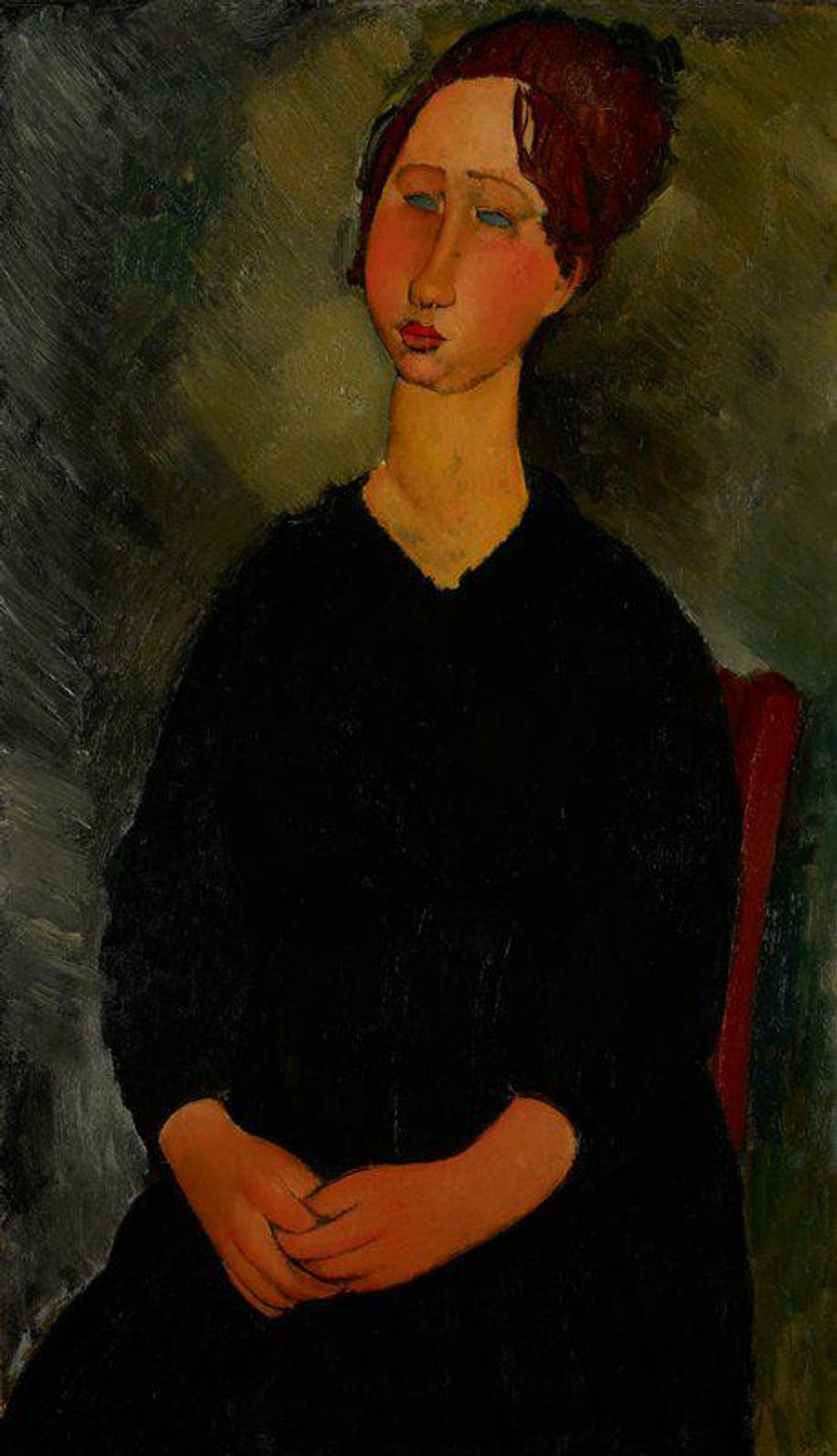
c. 1916
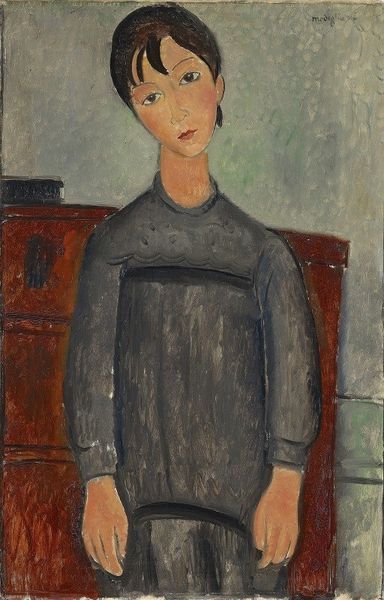
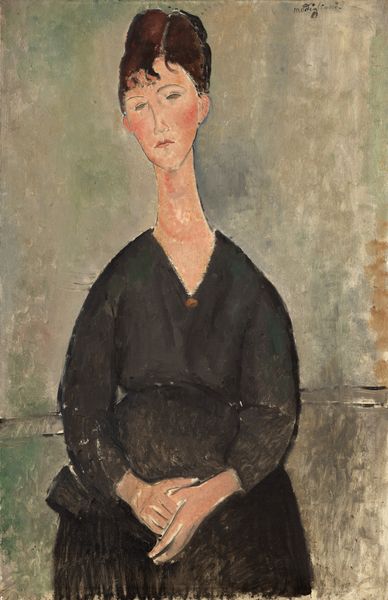
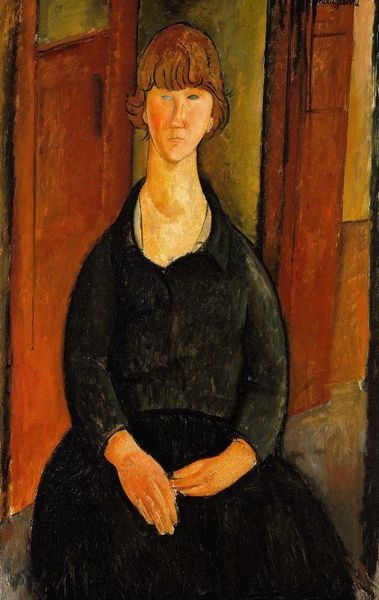
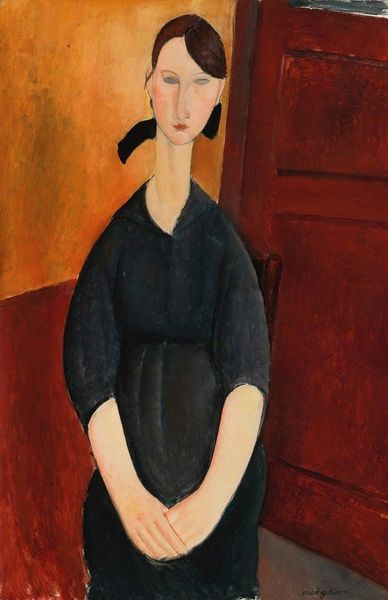
Little Servant Girl


Listen to curator's interpretation
Curatorial notes
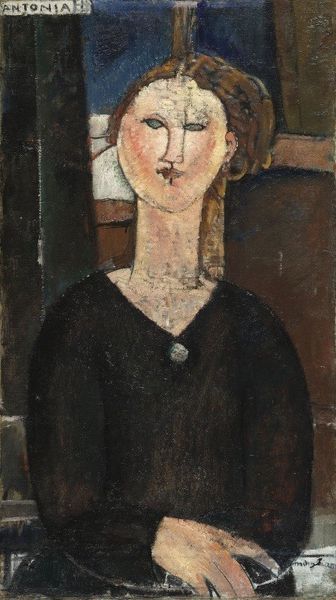
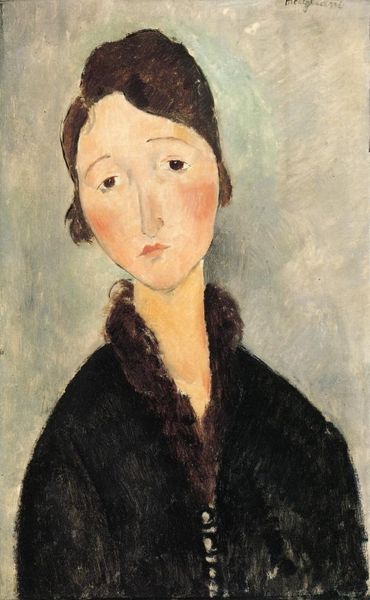
Editor: So, here we have Amedeo Modigliani’s “Little Servant Girl,” an oil on canvas painted around 1916. There’s something quite melancholic about her closed eyes and the weight of her hands. What stands out to you in this piece? Curator: The interplay between the simplification of form and the subtlety of the colour palette is quite compelling. Note how Modigliani employs elongated lines and flattened planes, a departure from traditional portraiture aiming for mimetic representation. It begs the question: is this distortion purely aesthetic, or does it convey something about the sitter's emotional state or social position? Editor: I see what you mean. The simplification almost feels like a mask, hiding her inner self. Do you think the dark clothing adds to that effect? Curator: Precisely. The stark contrast of the black dress against the warmer tones of her skin and the background creates a visual tension. Semiotically, black often represents mourning or somberness, further amplifying the painting's introspective mood. However, consider the textural brushstrokes; the materiality of the paint itself becomes a crucial element in understanding Modigliani's formal concerns. Editor: That’s a great point, I hadn’t considered the texture. It's almost like the roughness of the brushstrokes mirrors the subject's rough circumstances. Curator: Indeed. And reflect on the structural aspect—the repetition of vertical lines, from her elongated neck to the chair back. It unifies the composition but also contributes to the overall feeling of confinement. Is this servant girl trapped by societal constraints, visually echoed by the structure of the painting itself? Editor: This gives me so much to think about in how to analyze art on a deeper level. Thank you. Curator: My pleasure. Paying close attention to formal elements truly allows the artwork to speak for itself.