About this artwork
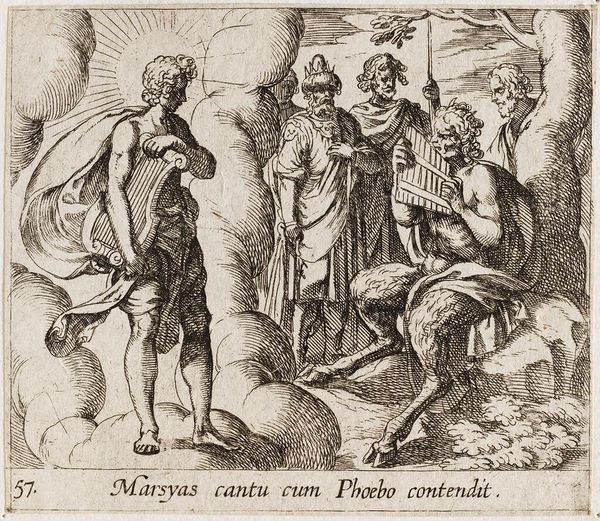
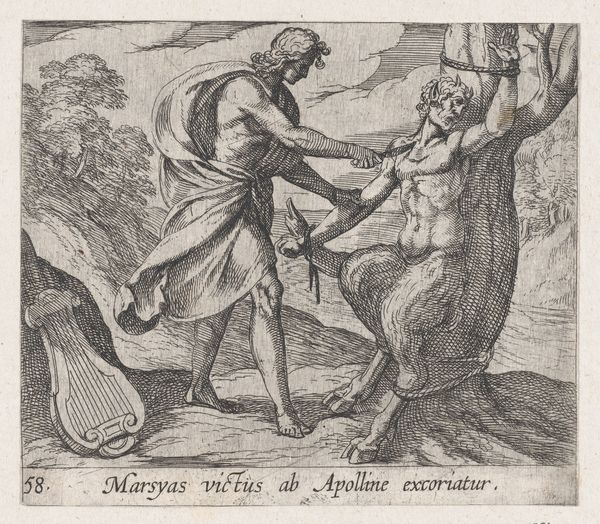
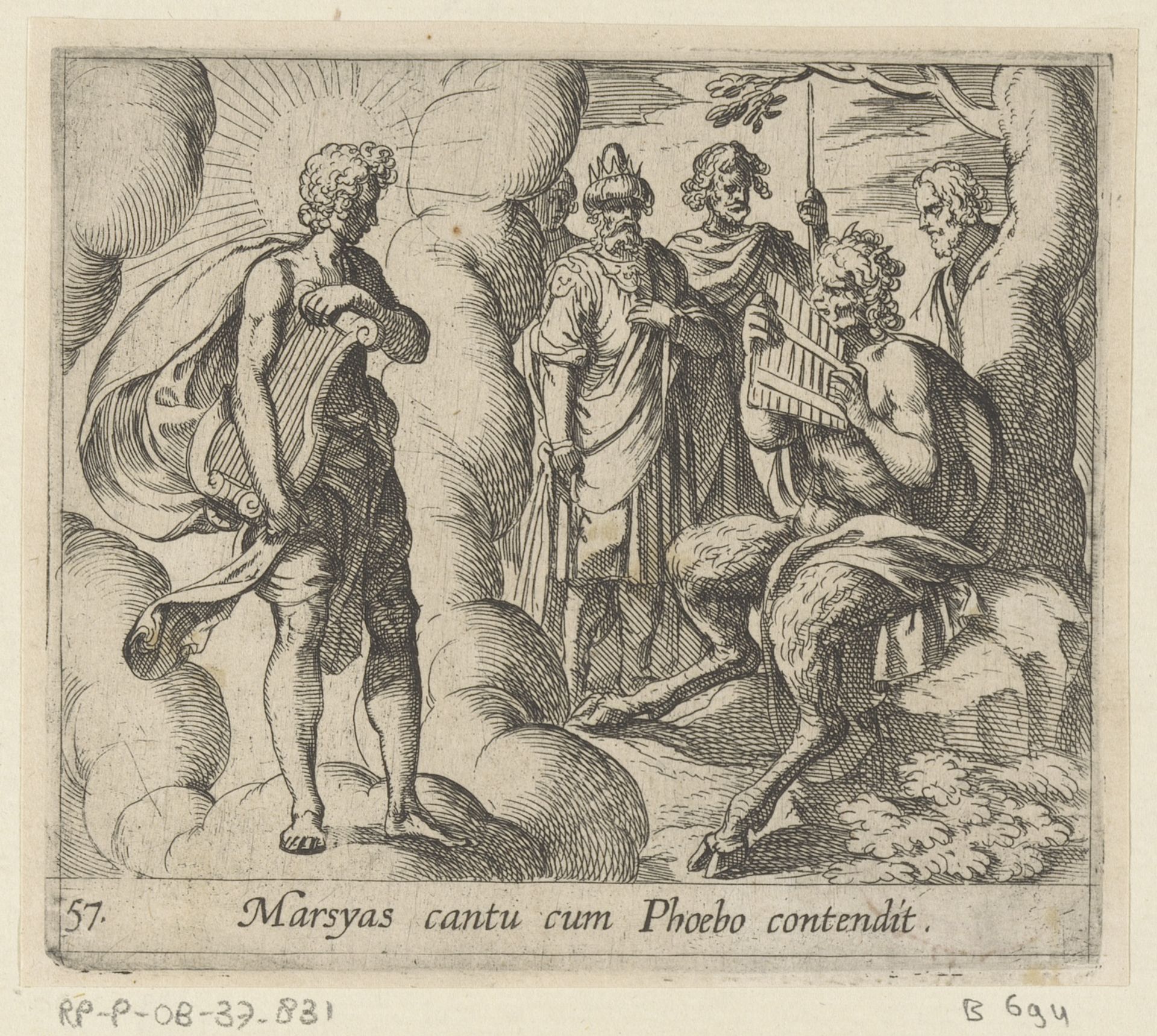
Antonio Tempesta etched this print of Marsyas playing his flute for Apollo sometime between 1575 and 1630. Here we see the satyr, Marsyas, challenging the god Apollo to a musical contest, a popular subject at the time. But this image isn't just about a mythological face-off. It reflects broader cultural tensions around artistic innovation and authority in late 16th-century Europe. Notice how Tempesta renders the scene. Apollo is depicted in classical garb, holding a scroll, symbolising reason and order. Marsyas, by contrast, is shown as a wild, almost ungainly figure, expressing raw emotion through his music. The story goes that Marsyas was flayed alive after losing the contest. The rise of academies and formal artistic training created a hierarchy of skill and taste. Prints such as these were an important medium for disseminating artistic ideas and moral lessons during the Reformation and Counter-Reformation. To understand the print better, we can turn to texts on mythology and artistic theory, as well as institutional records of artistic production in that period.

Artwork details
- Medium
- print, etching, engraving
- Dimensions
- height 104 mm, width 117 mm
- Location
- Rijksmuseum
- Copyright
- Rijks Museum: Open Domain
Tags
Comments
Share your thoughts
About this artwork
Antonio Tempesta etched this print of Marsyas playing his flute for Apollo sometime between 1575 and 1630. Here we see the satyr, Marsyas, challenging the god Apollo to a musical contest, a popular subject at the time. But this image isn't just about a mythological face-off. It reflects broader cultural tensions around artistic innovation and authority in late 16th-century Europe. Notice how Tempesta renders the scene. Apollo is depicted in classical garb, holding a scroll, symbolising reason and order. Marsyas, by contrast, is shown as a wild, almost ungainly figure, expressing raw emotion through his music. The story goes that Marsyas was flayed alive after losing the contest. The rise of academies and formal artistic training created a hierarchy of skill and taste. Prints such as these were an important medium for disseminating artistic ideas and moral lessons during the Reformation and Counter-Reformation. To understand the print better, we can turn to texts on mythology and artistic theory, as well as institutional records of artistic production in that period.
Comments
Share your thoughts