About this artwork
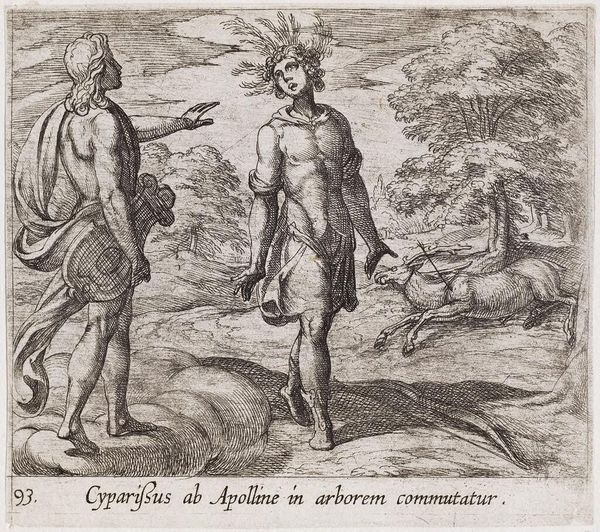
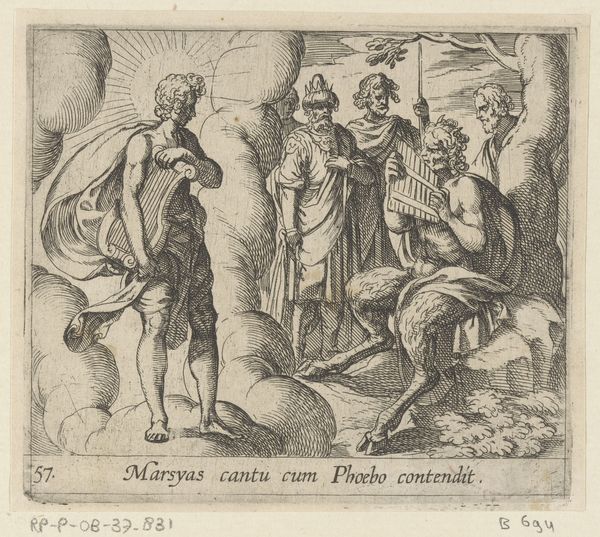
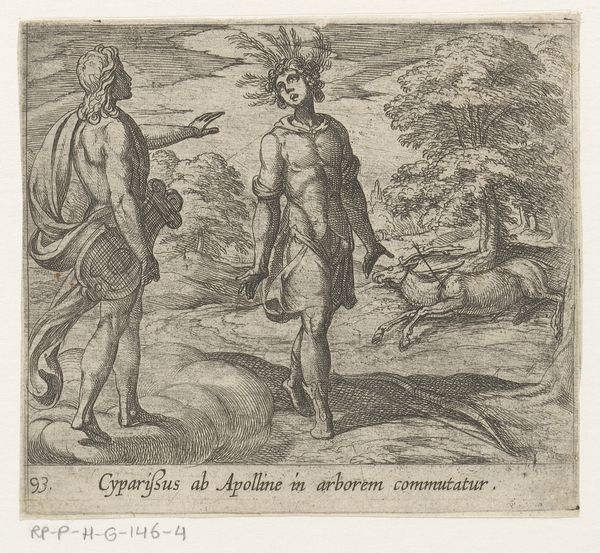
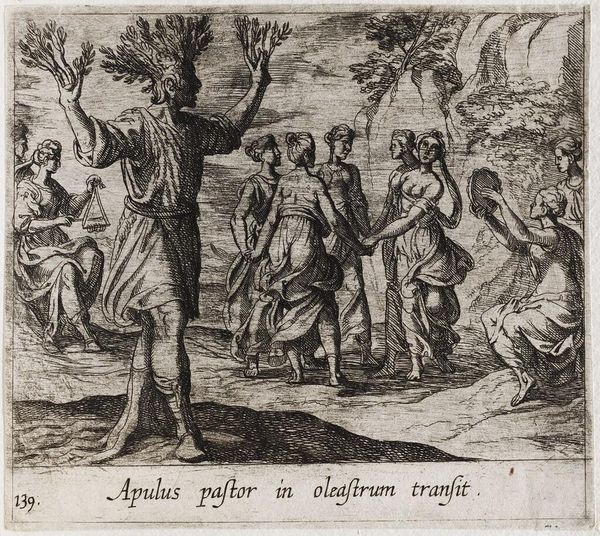
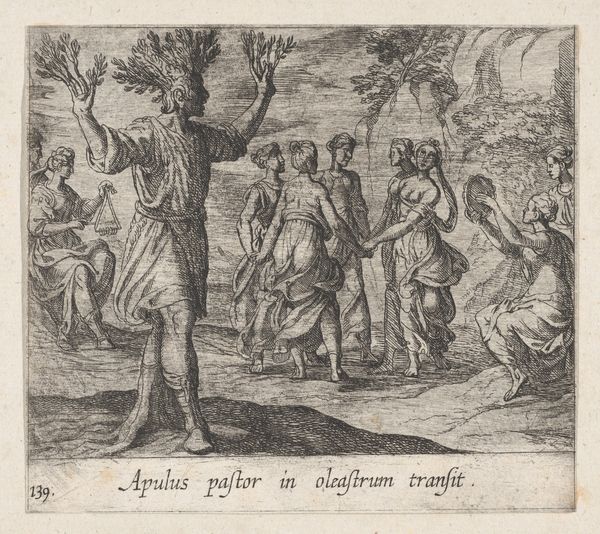
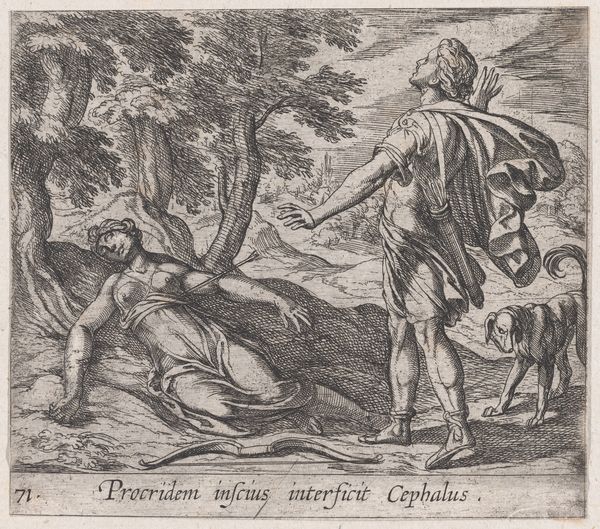
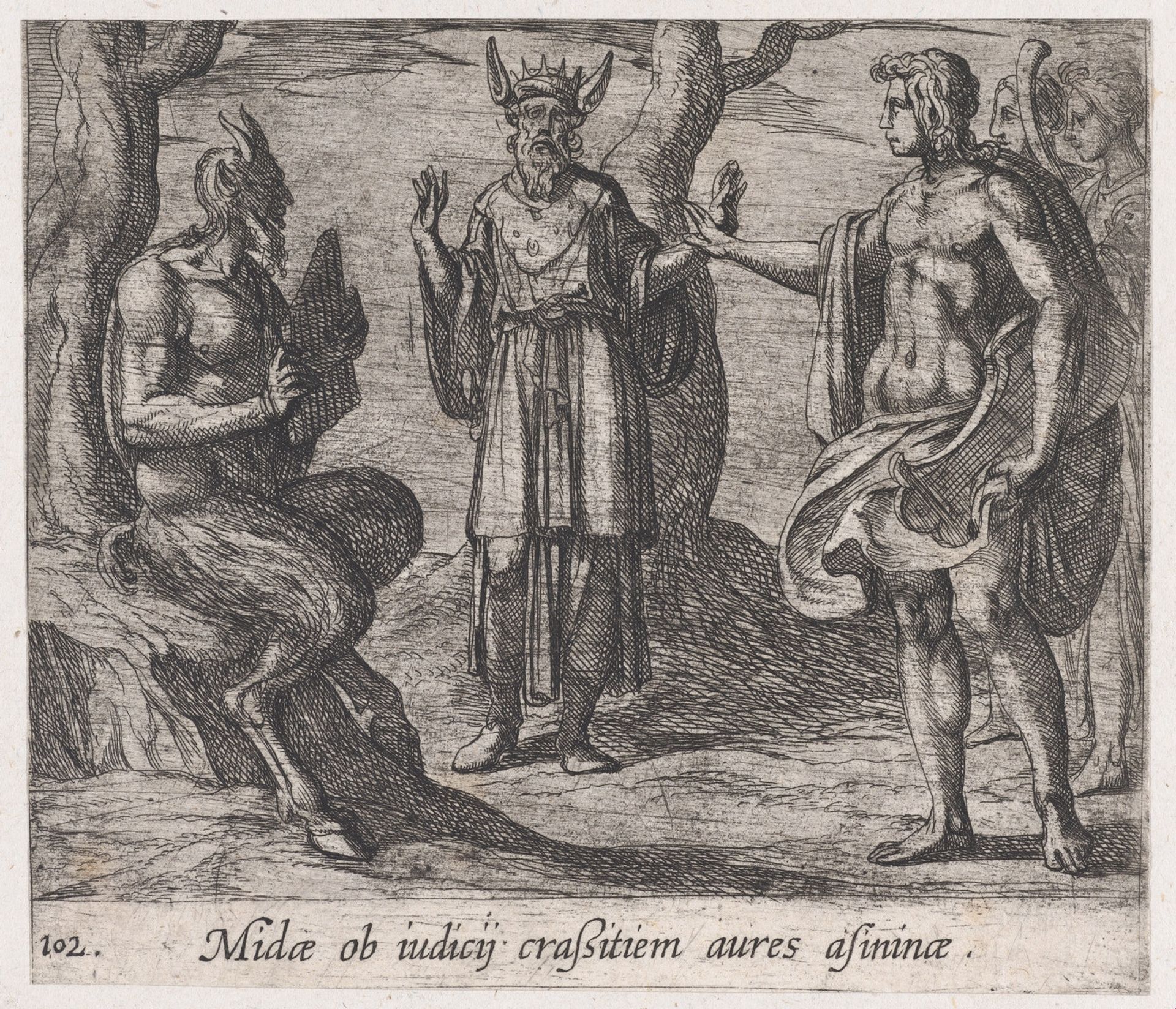
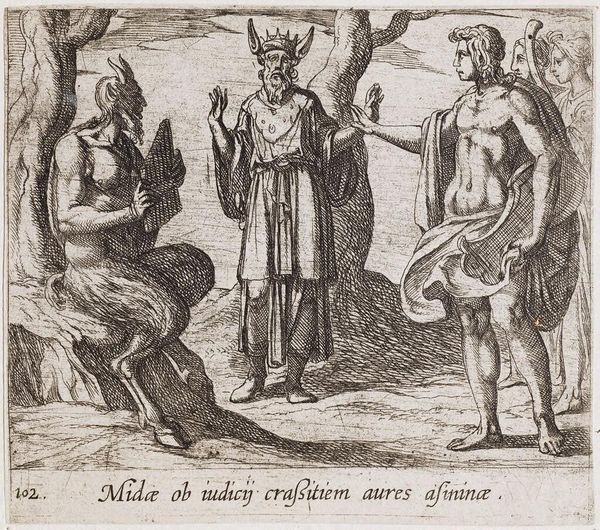
This etching, made by Antonio Tempesta around the turn of the 17th century, illustrates a scene from Ovid’s 'Metamorphoses' using the intaglio printmaking process. A copper plate would have been carefully incised with lines to create the image. The density and depth of these lines determined how much ink they would hold, thus creating the tonal range we see in the print. After inking, the plate was pressed firmly against paper, transferring the image. This was a skilled, labor-intensive process, demanding meticulous handwork. The final image, made of ink transferred to paper, stands in contrast to the high mythic subject: King Midas receiving his donkey ears. The material qualities of the etching—its fine lines, reproducible nature, and modest scale—gave classical myths a new kind of circulation. It democratized access to grand narratives, offering these stories to a wider audience beyond the elite circles of society. This underscores the important role that craft and accessible production methods play in disseminating culture and knowledge.
Plate 102: Midas with the Ears of an Ass (Midae ob iudicij craßustiem aures asininae), from Ovid's 'Metamorphoses'
1606
Artwork details
- Medium
- drawing, print, engraving
- Dimensions
- Sheet: 3 15/16 × 4 9/16 in. (10 × 11.6 cm)
- Location
- Metropolitan Museum of Art, New York, NY
- Copyright
- Public Domain
Tags
Comments
Share your thoughts
About this artwork
This etching, made by Antonio Tempesta around the turn of the 17th century, illustrates a scene from Ovid’s 'Metamorphoses' using the intaglio printmaking process. A copper plate would have been carefully incised with lines to create the image. The density and depth of these lines determined how much ink they would hold, thus creating the tonal range we see in the print. After inking, the plate was pressed firmly against paper, transferring the image. This was a skilled, labor-intensive process, demanding meticulous handwork. The final image, made of ink transferred to paper, stands in contrast to the high mythic subject: King Midas receiving his donkey ears. The material qualities of the etching—its fine lines, reproducible nature, and modest scale—gave classical myths a new kind of circulation. It democratized access to grand narratives, offering these stories to a wider audience beyond the elite circles of society. This underscores the important role that craft and accessible production methods play in disseminating culture and knowledge.
Comments
Share your thoughts