About this artwork
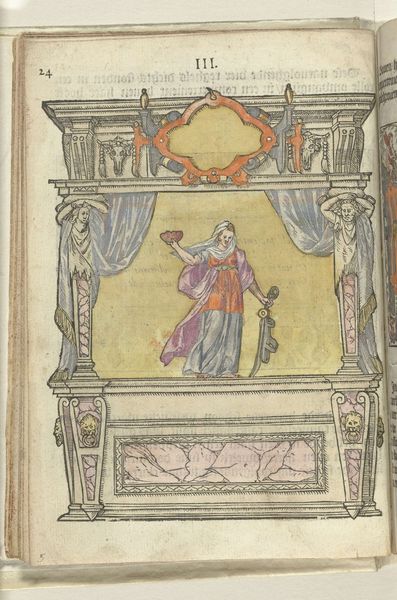
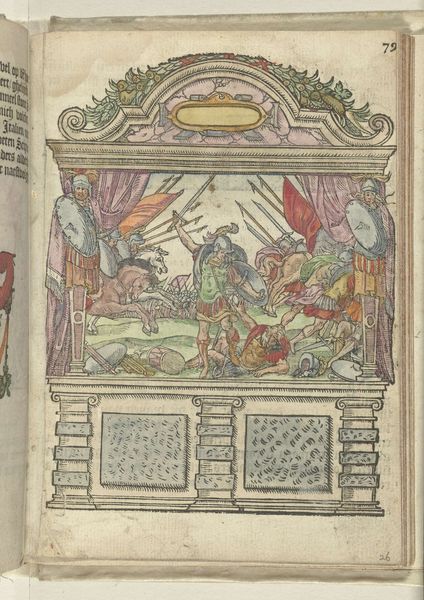
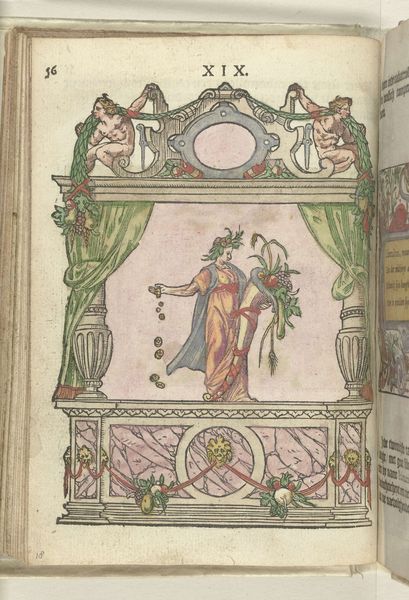
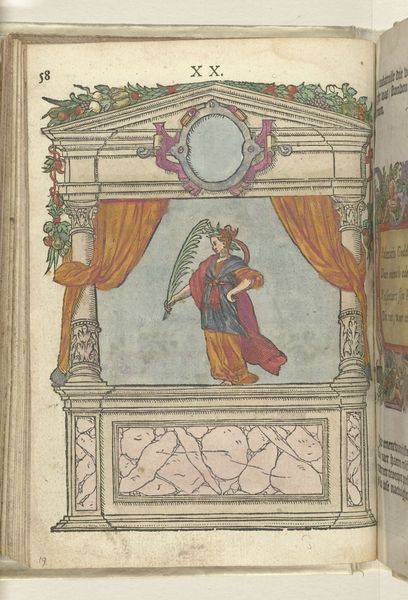
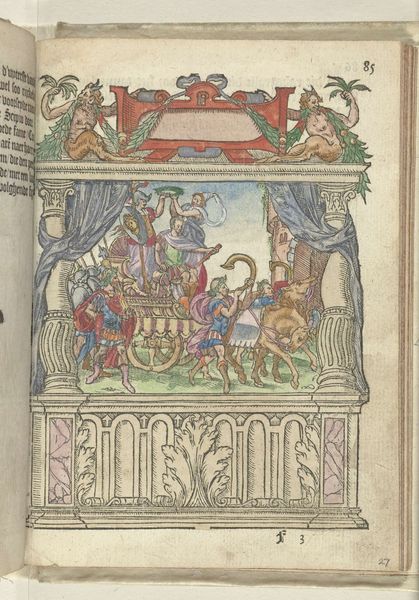
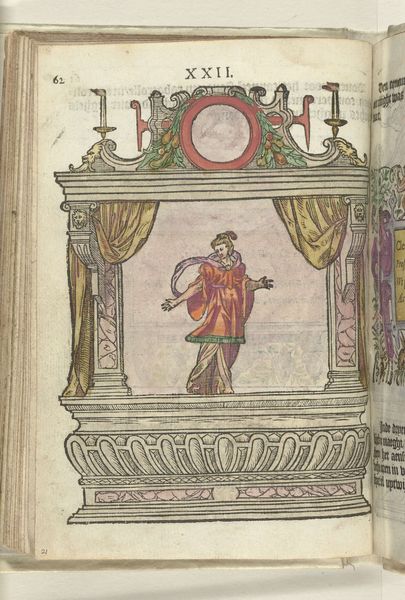
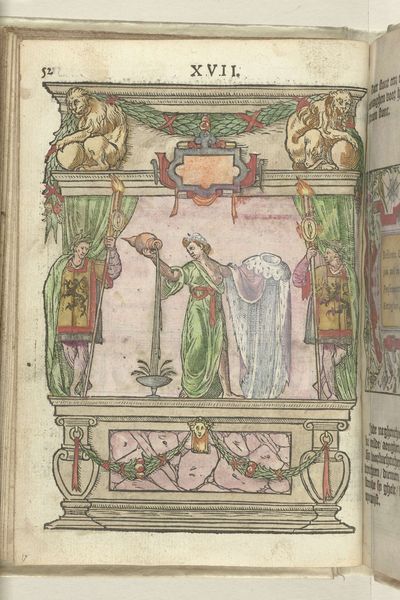
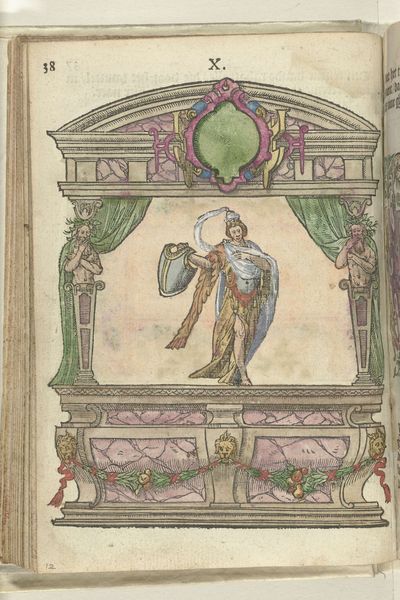
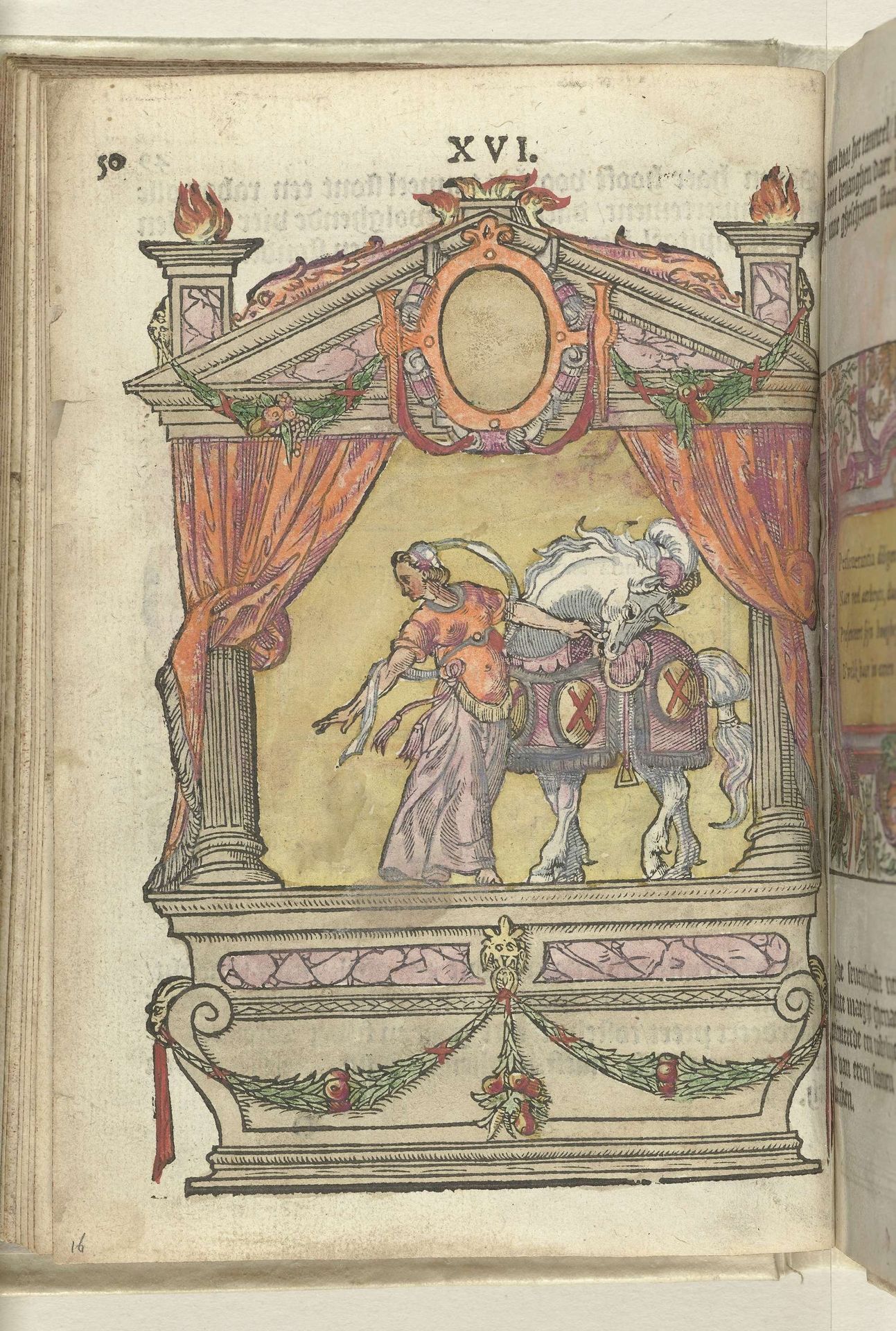
Here is the audio guide script about Toneel met personificatie van de Volharding (Perseverantia), 1578, by Antoni van Leest. This engraving, made in 1578, presents us with a tableau of symbolic figures set against a theatrically staged backdrop. The composition is neatly structured into horizontal layers, each contributing to the scene's allegorical depth. A female figure stands poised next to a horse, both positioned as if on a stage, framed by draped curtains and architectural motifs. The artist employs a delicate balance of line and space, using cross-hatching to define forms and create subtle tonal variations. The architectural framework above and below uses linear perspective to provide a sense of depth, while the figures themselves appear somewhat flattened, emphasizing their symbolic rather than realistic presence. The color adds a layer of complexity, differentiating textures and materials. In its historical context, this work reflects a broader artistic interest in emblems and allegories. These forms use visual metaphors to communicate moral or philosophical ideas. The "stage" acts as a space for reflection and interpretation, inviting us to consider the nature of perseverance itself. Like a play, its meaning is not fixed but unfolds through ongoing engagement.
Toneel met personificatie van de Volharding (Perseverantia), 1578
1578 - 1579

Artwork details
- Medium
- drawing, coloured-pencil, print, pen
- Dimensions
- height 155 mm, width 115 mm
- Copyright
- Rijks Museum: Open Domain
Tags
Comments
Share your thoughts
About this artwork
Here is the audio guide script about Toneel met personificatie van de Volharding (Perseverantia), 1578, by Antoni van Leest. This engraving, made in 1578, presents us with a tableau of symbolic figures set against a theatrically staged backdrop. The composition is neatly structured into horizontal layers, each contributing to the scene's allegorical depth. A female figure stands poised next to a horse, both positioned as if on a stage, framed by draped curtains and architectural motifs. The artist employs a delicate balance of line and space, using cross-hatching to define forms and create subtle tonal variations. The architectural framework above and below uses linear perspective to provide a sense of depth, while the figures themselves appear somewhat flattened, emphasizing their symbolic rather than realistic presence. The color adds a layer of complexity, differentiating textures and materials. In its historical context, this work reflects a broader artistic interest in emblems and allegories. These forms use visual metaphors to communicate moral or philosophical ideas. The "stage" acts as a space for reflection and interpretation, inviting us to consider the nature of perseverance itself. Like a play, its meaning is not fixed but unfolds through ongoing engagement.
Comments
Share your thoughts