About this artwork
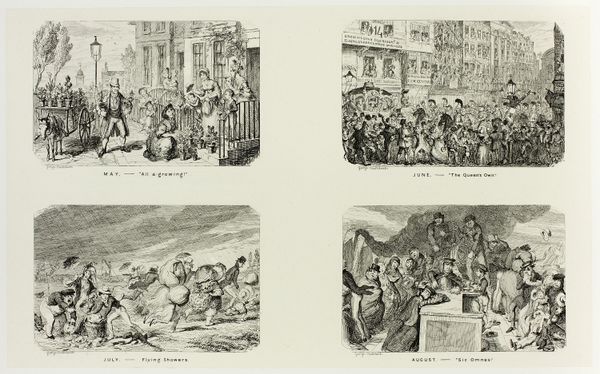
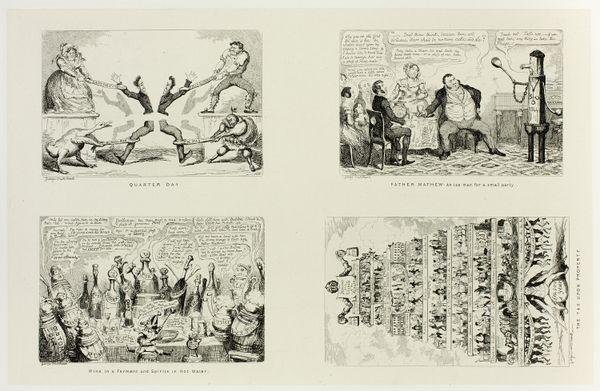
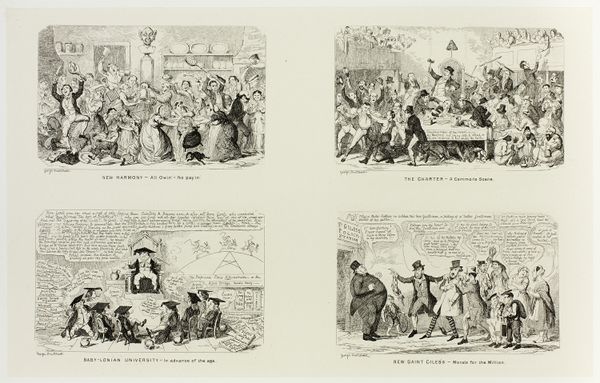
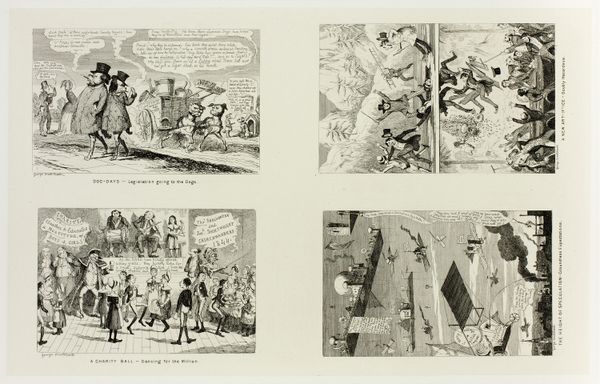
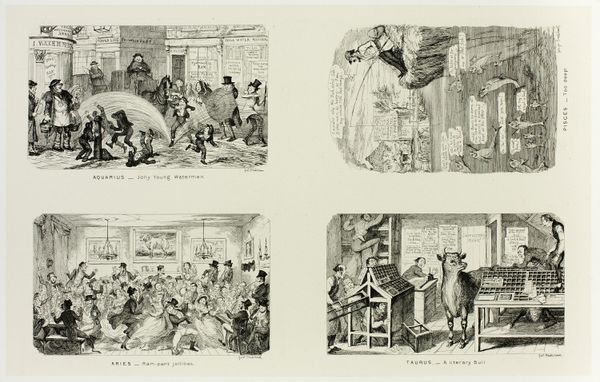
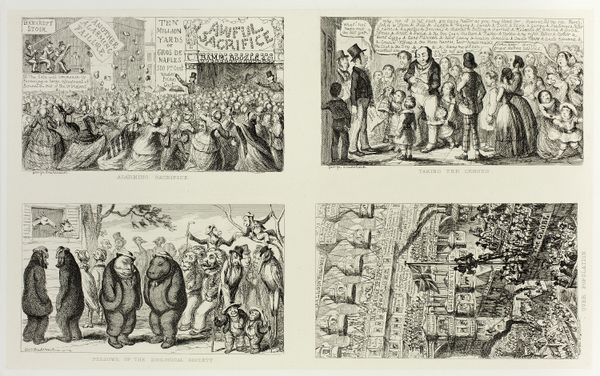
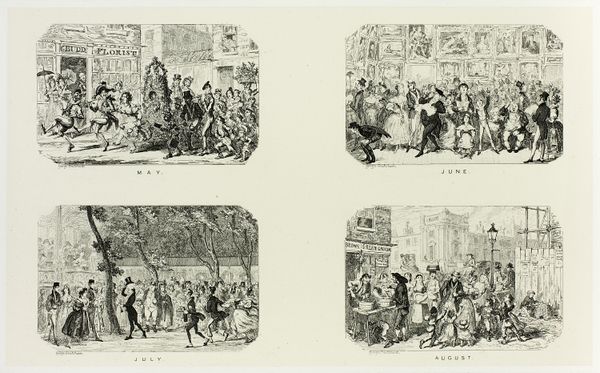
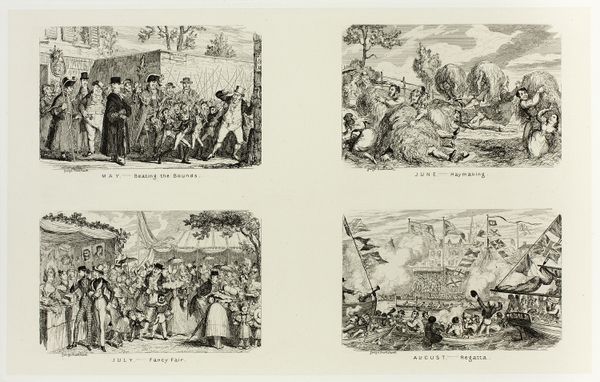
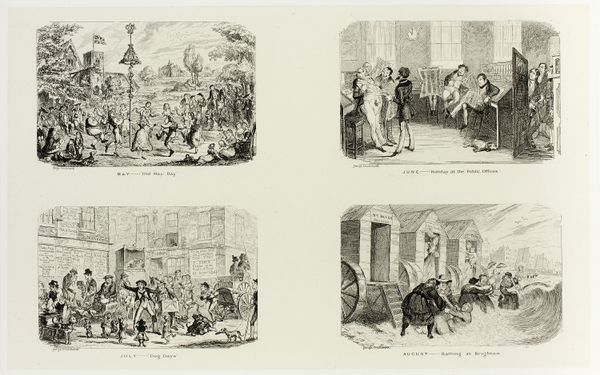
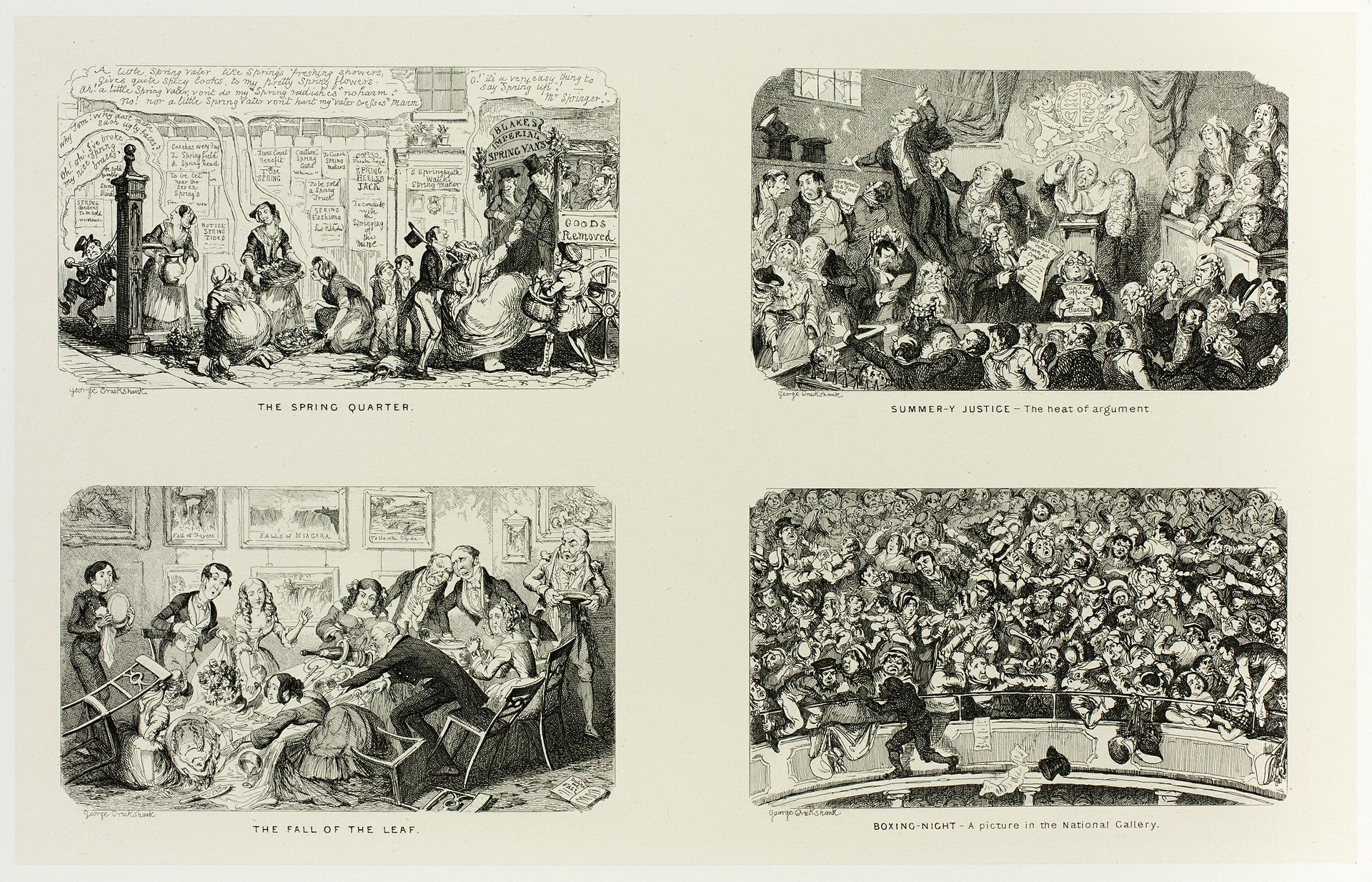
Editor: So this is “The Spring Quarter” by George Cruikshank, from around 1845 to 1880, a print created through etching. It depicts a bustling street scene. I’m struck by how detailed and busy it is, like a snapshot of a chaotic moment. What catches your eye when you look at it? Curator: Well, first, I see a deep dive into the symbolism of social mobility. Spring, traditionally a symbol of rebirth, is here presented as a quarter day, one of the days where debts are due and leases renewed, indicating that in Victorian London people move to new lodgings in Spring Quarter. It is as if social status, symbolised by the residence, undergoes cyclical renewal. Note how the characters interact; the transfer of money implies shifting relationships based on finances and obligation. Cruikshank has, via line and form, depicted visual representations of financial transactions within Victorian society. Don't you think? Editor: That's fascinating, I hadn’t considered the seasonal symbolism alongside social standing. It almost makes it seem like their identities are tied to these financial transactions. Curator: Precisely. Notice how the written inscriptions mimic an overgrown tree's shape. Even as the image captures the essence of seasonal and economic renewal, it may be suggesting how social class depends on an arbitrary set of financial criteria which can potentially suffocate under economic pressure. Editor: The more I look, the more I see. Thanks, I never would have picked up on those connections by myself! Curator: My pleasure. These glimpses into cultural memory offer profound insights when decoded, don't they? It prompts reflection on whether our social rhythms today also follow an invisible but equally compelling calendar.
The Spring Quarter from George Cruikshank's Steel Etchings to The Comic Almanacks: 1835-1853 (top left)
c. 1845 - 1880


Artwork details
- Medium
- drawing, print, etching, paper
- Dimensions
- 214 × 337 mm (primary support); 344 × 508 mm (secondary support)
- Location
- The Art Institute of Chicago
- Copyright
- Public Domain
Tags
Comments
Share your thoughts
About this artwork
Editor: So this is “The Spring Quarter” by George Cruikshank, from around 1845 to 1880, a print created through etching. It depicts a bustling street scene. I’m struck by how detailed and busy it is, like a snapshot of a chaotic moment. What catches your eye when you look at it? Curator: Well, first, I see a deep dive into the symbolism of social mobility. Spring, traditionally a symbol of rebirth, is here presented as a quarter day, one of the days where debts are due and leases renewed, indicating that in Victorian London people move to new lodgings in Spring Quarter. It is as if social status, symbolised by the residence, undergoes cyclical renewal. Note how the characters interact; the transfer of money implies shifting relationships based on finances and obligation. Cruikshank has, via line and form, depicted visual representations of financial transactions within Victorian society. Don't you think? Editor: That's fascinating, I hadn’t considered the seasonal symbolism alongside social standing. It almost makes it seem like their identities are tied to these financial transactions. Curator: Precisely. Notice how the written inscriptions mimic an overgrown tree's shape. Even as the image captures the essence of seasonal and economic renewal, it may be suggesting how social class depends on an arbitrary set of financial criteria which can potentially suffocate under economic pressure. Editor: The more I look, the more I see. Thanks, I never would have picked up on those connections by myself! Curator: My pleasure. These glimpses into cultural memory offer profound insights when decoded, don't they? It prompts reflection on whether our social rhythms today also follow an invisible but equally compelling calendar.
Comments
Share your thoughts