1825
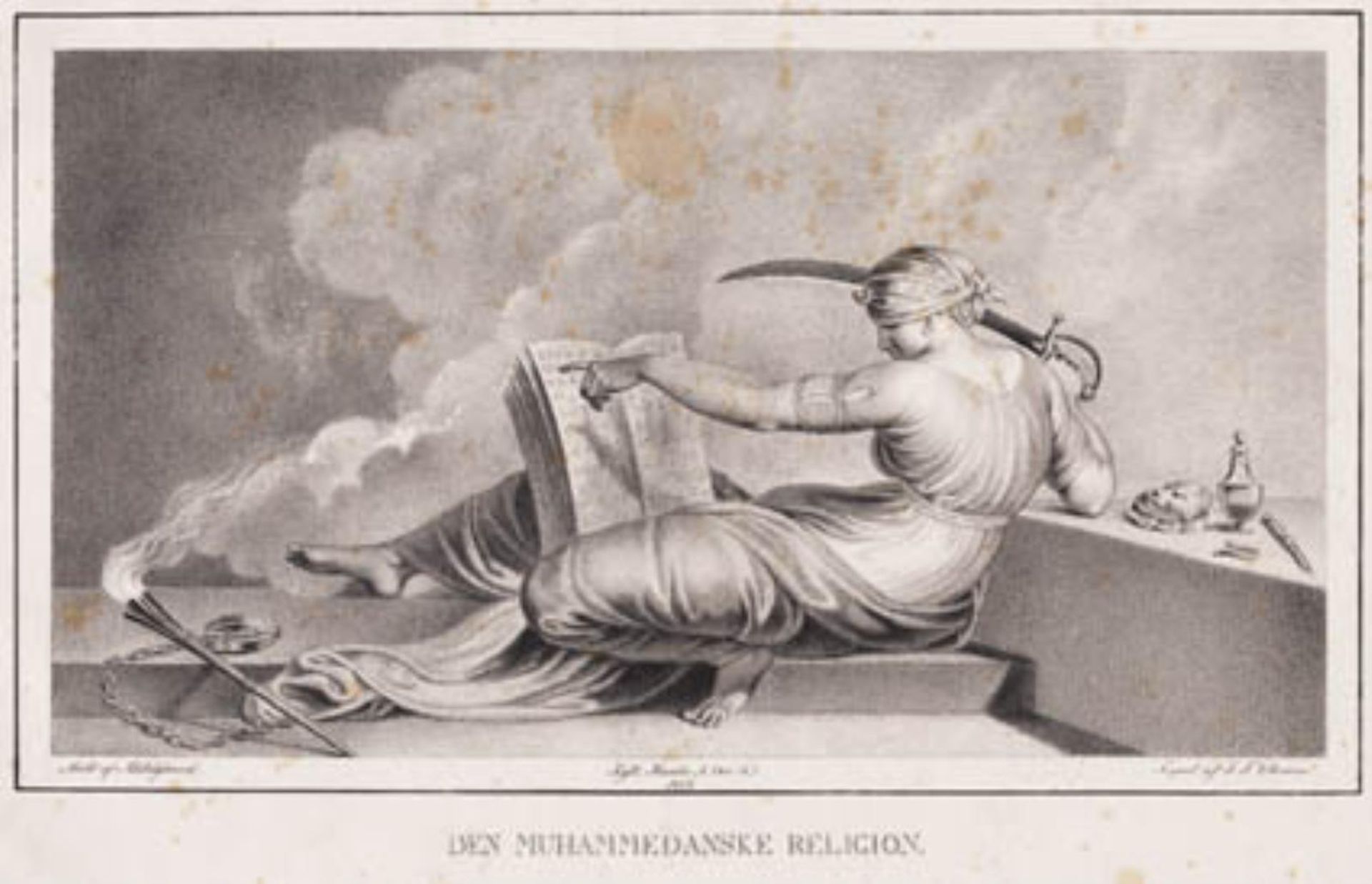
Den muhamedanske Religion


Listen to curator's interpretation
Curatorial notes
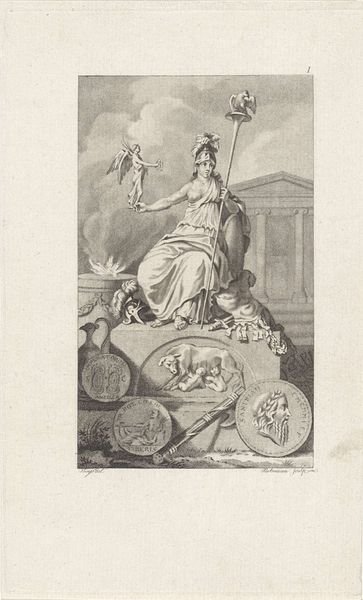
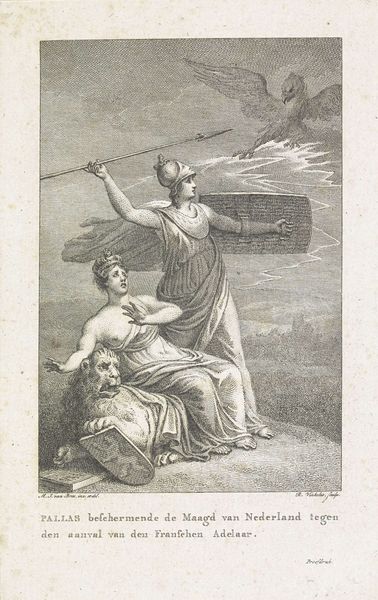
Curator: This lithograph by J.F. Clemens, created around 1825, is titled "Den muhamedanske Religion," which translates to "The Muhammadan Religion." Editor: The composition is striking. A figure, draped in classical robes, sits before what appears to be an open tome, a sword brandished ominously over her head. It is stark and strangely compelling. Curator: The image adopts the allegorical conventions very common at the time, blending Neoclassical elements within a broader Romanticist style. It’s fascinating to consider how such imagery served to represent, or perhaps misrepresent, Islam for a European audience. Editor: Let's look at that more closely. Notice the stark contrasts in tone, achieved through Clemens' deft handling of line and shading, emphasizing a sense of drama and imposing scale, especially when one sees the small etching on the front of the artwork. How do you view this composition? Curator: We can understand the lithograph as a document reflecting prevalent European attitudes towards Islam. Representations like these were tools for shaping public perceptions within complex colonial and political power dynamics. The symbols – the sword, the blindfold – these perpetuate common tropes that warrant closer examination. Editor: Absolutely. Focusing on the forms themselves, there's an undeniably unsettling contrast between the refined classical figure and the rather violent imagery she embodies. Note the balance of these elements with careful distribution across the printed surface. There's something deeply troubling about the composition and I wonder whether this relates directly to the period's romantic taste for drama, regardless of cultural implications. Curator: Exactly. Recognizing the social and political currents swirling around its creation, allows us to examine the choices the artist makes and ask why they chose these particular allegorical forms. That kind of social context reveals much. Editor: Looking closely at the pure aesthetic language – the distribution of darkness and light, the carefully constructed contrapposto pose of the figure – provides its own unique insights, speaking beyond any potential contemporary motivations. Curator: True, that tension creates layers of meaning that really linger. Editor: Indeed, both methods leave us with much to contemplate in what is much more than a historic document.