1640
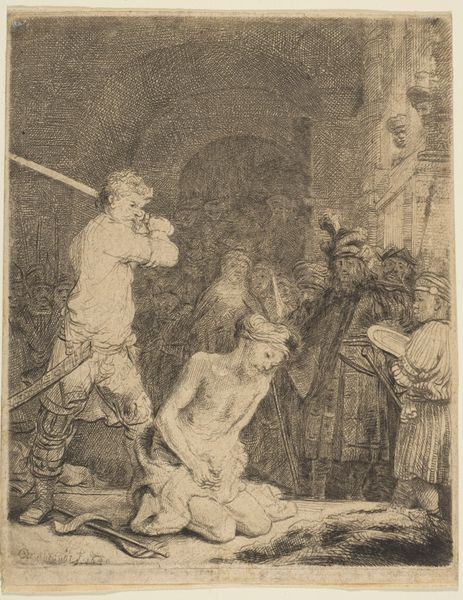
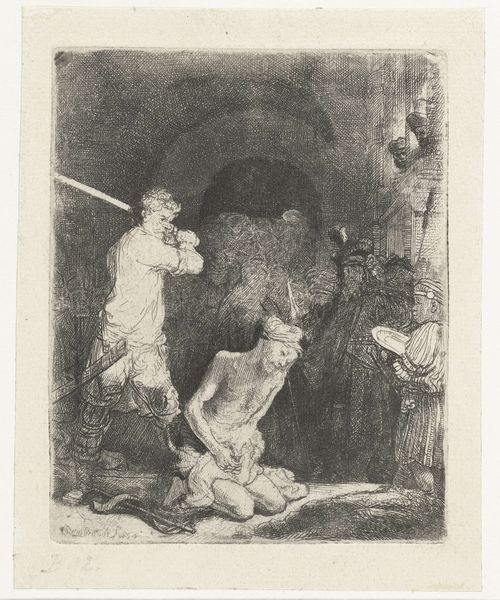
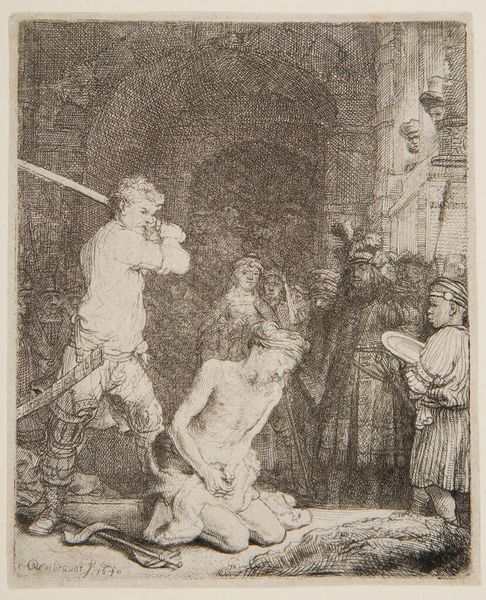
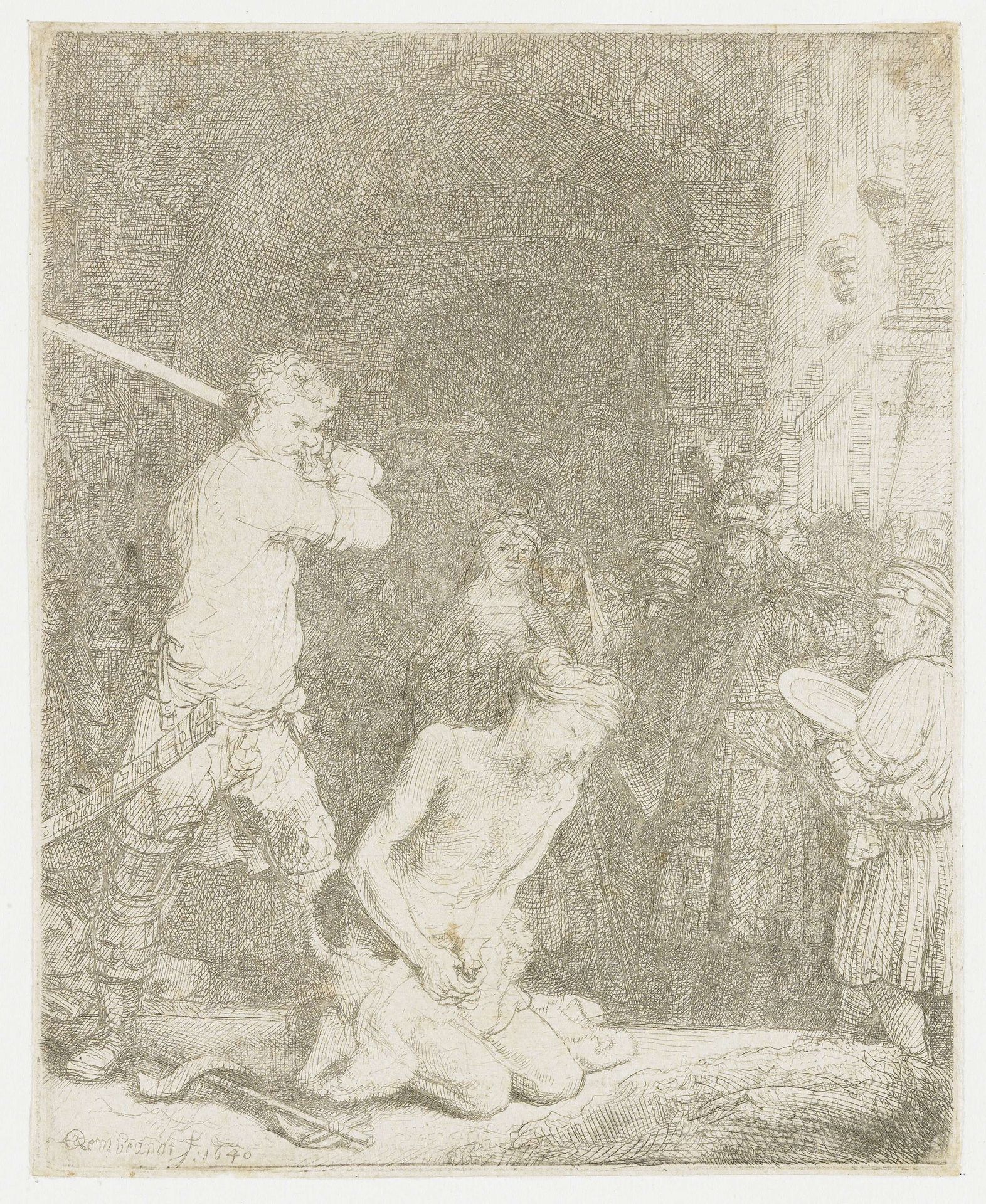
The beheading of St John the Baptist

Rembrandt van Rijn
1606 - 1669Location
RijksmuseumListen to curator's interpretation
Curatorial notes
Rembrandt van Rijn made this etching of the beheading of St John the Baptist some time in the 17th century. The image powerfully conveys the moment of execution. But it also resonates with the religious and political climate of the Dutch Golden Age. The Dutch Republic was a Protestant nation that had won its independence from Catholic Spain. Biblical stories, particularly those emphasizing sacrifice and piety, were very popular with the Dutch public. Prints such as this one, which were relatively inexpensive, found a ready market among middle-class households. Rembrandt was deeply engaged with the institutions of art in his time. He was a successful art dealer, and taught many students. Religious images such as this one would have been central to that trade. To understand this print fully, we need to consider the social history of the Dutch Republic, as well as the biography of Rembrandt himself. This image gains meaning from its institutional context.