About this artwork
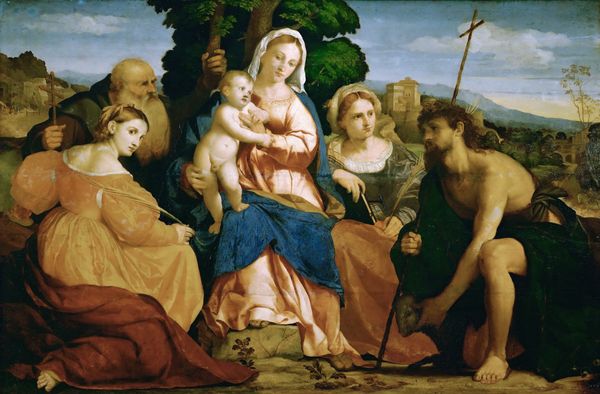
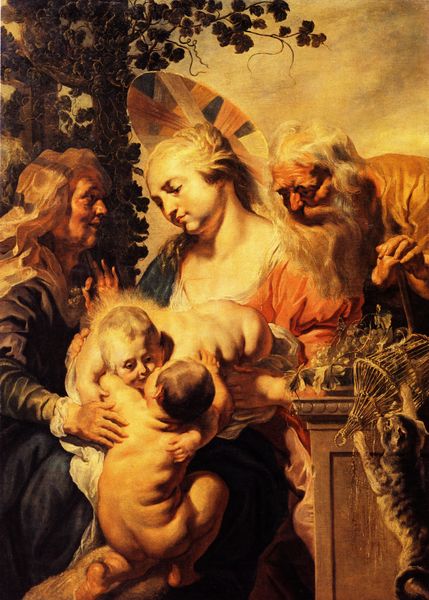
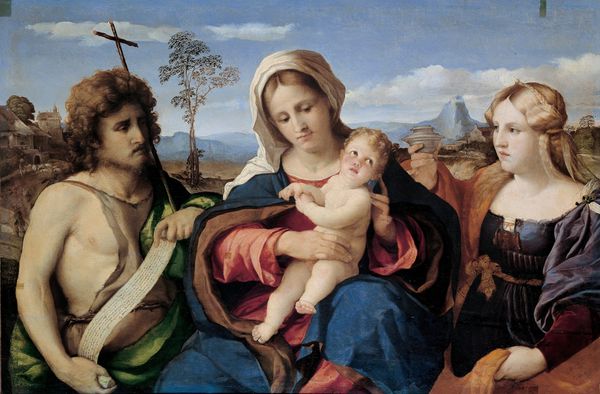
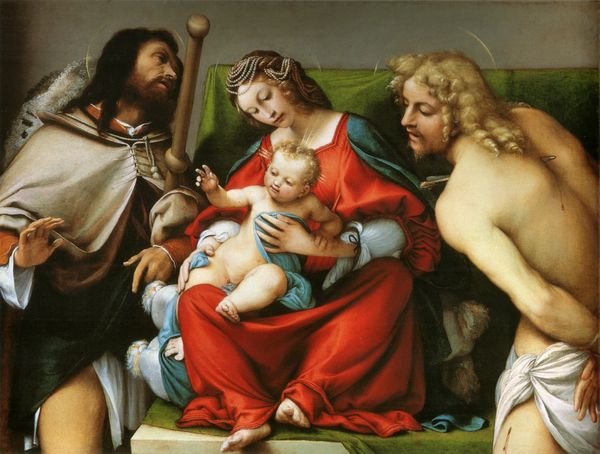
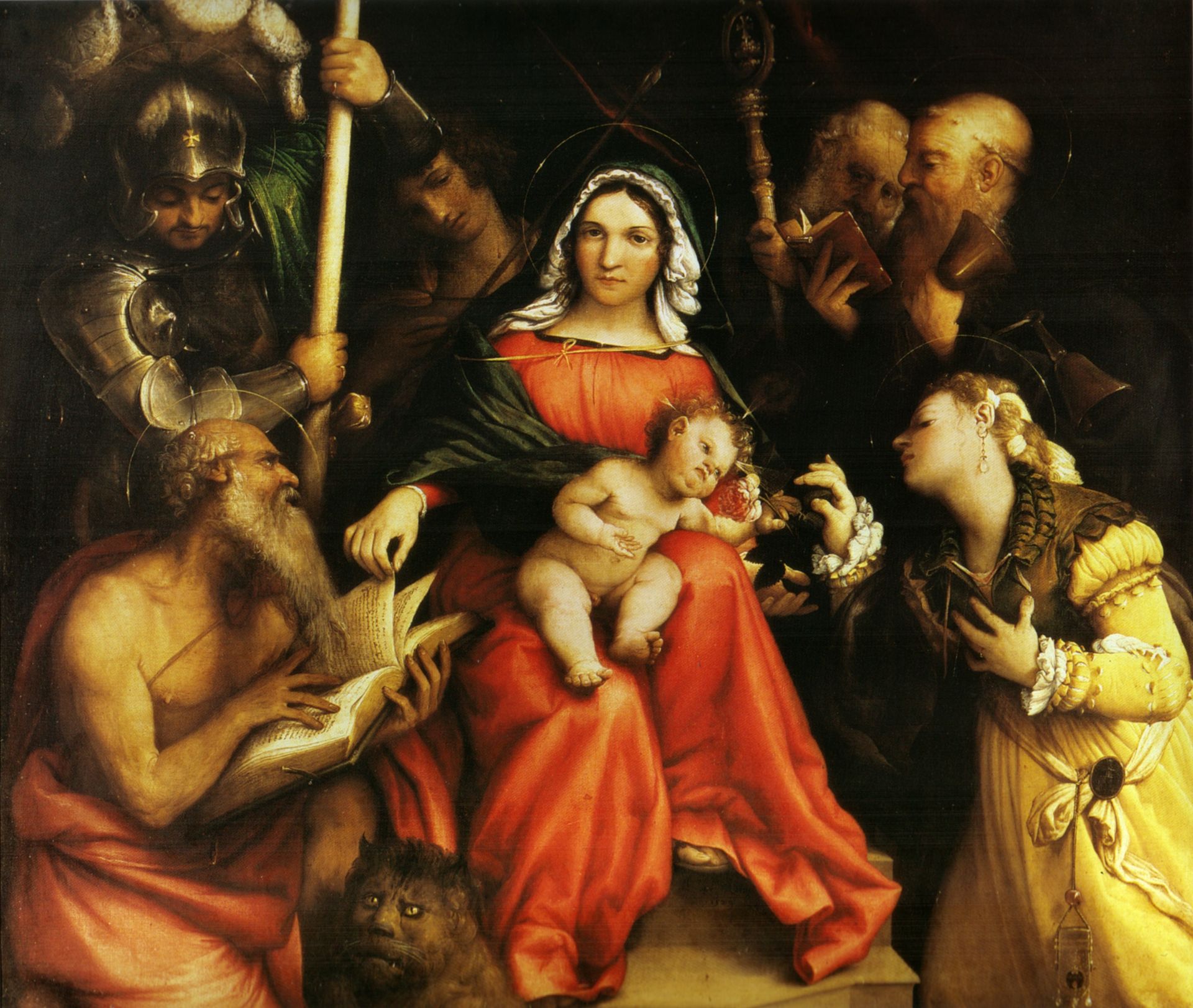
Lorenzo Lotto painted the Mystic marriage of Saint Catherine of Alexandria and Saint Catherine of Siena on canvas sometime in the early 16th century. As with most paintings of this period, the support is linen canvas, stretched over a wooden frame. What’s remarkable is the way that Lotto handles the oil paint itself. The figures are modeled using subtle gradations of light and shadow, a skillful technique. However, look closer, and you'll see that there's a real contrast between the smooth finish of the figures and the granular texture of the paint in areas like Saint Catherine of Siena's dress. The artist is really making the viewer conscious of the materiality of his medium, and of the work involved in coaxing the image from it. Though clearly skilled, Lotto isn’t interested in illusionism for its own sake. This gives his paintings a down-to-earth quality that stands apart from the more idealized work being made at the time. It reminds us that art making is, among other things, a form of labor.
Mystic marriage of Saint Catherine of Alexandria and Saint Catherine of Siena 1524

Lorenzo Lotto
1480 - 1556Location
National Gallery of Ancient Art (GNAA), Rome, ItalyArtwork details
- Medium
- painting, oil-paint
- Dimensions
- 115 x 98 cm
- Location
- National Gallery of Ancient Art (GNAA), Rome, Italy
- Copyright
- Public domain
Tags
portrait
high-renaissance
allegory
painting
oil-paint
figuration
oil painting
christianity
men
genre-painting
history-painting
italian-renaissance
portrait art
Comments
No comments
About this artwork
Lorenzo Lotto painted the Mystic marriage of Saint Catherine of Alexandria and Saint Catherine of Siena on canvas sometime in the early 16th century. As with most paintings of this period, the support is linen canvas, stretched over a wooden frame. What’s remarkable is the way that Lotto handles the oil paint itself. The figures are modeled using subtle gradations of light and shadow, a skillful technique. However, look closer, and you'll see that there's a real contrast between the smooth finish of the figures and the granular texture of the paint in areas like Saint Catherine of Siena's dress. The artist is really making the viewer conscious of the materiality of his medium, and of the work involved in coaxing the image from it. Though clearly skilled, Lotto isn’t interested in illusionism for its own sake. This gives his paintings a down-to-earth quality that stands apart from the more idealized work being made at the time. It reminds us that art making is, among other things, a form of labor.
Comments
No comments