print, woodcut, wood-engraving, engraving
narrative-art
figuration
woodcut
united-states
history-painting
academic-art
wood-engraving
engraving
monochrome
Dimensions: 7 15/16 x 4 13/16 in. (20.16 x 12.22 cm) (image)12 1/8 x 9 1/2 in. (30.8 x 24.13 cm) (sheet)
Copyright: No Copyright - United States
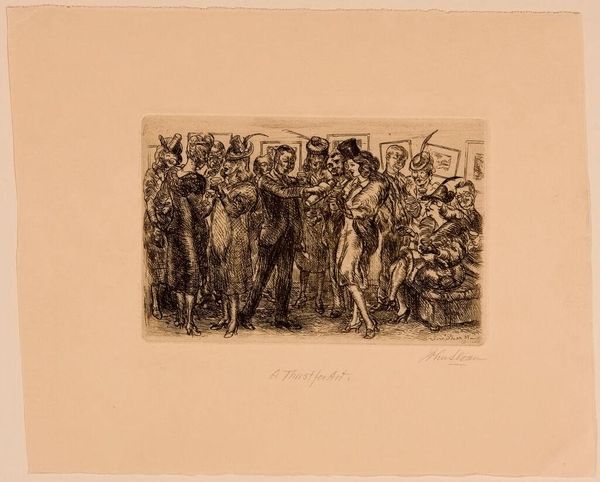
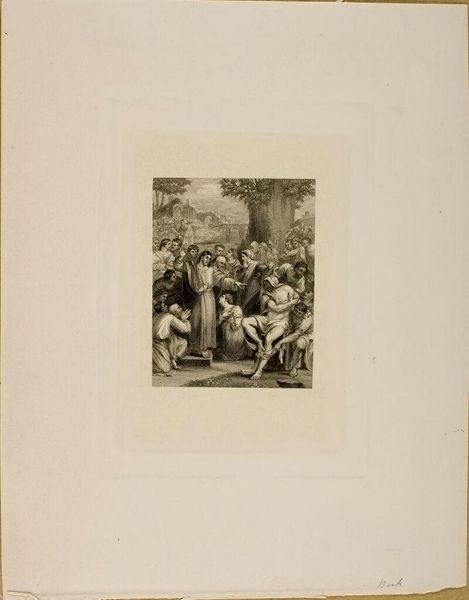
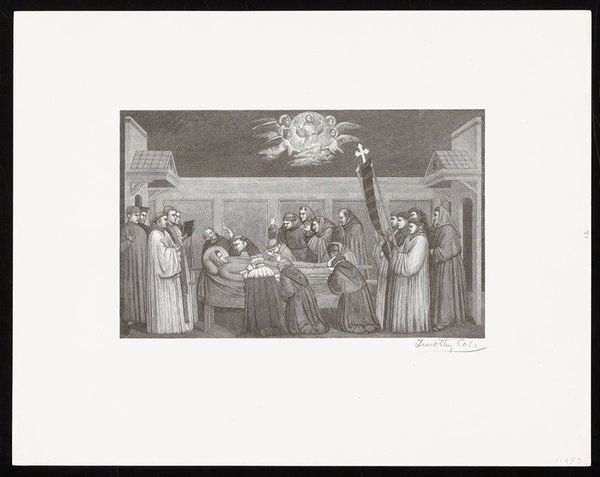
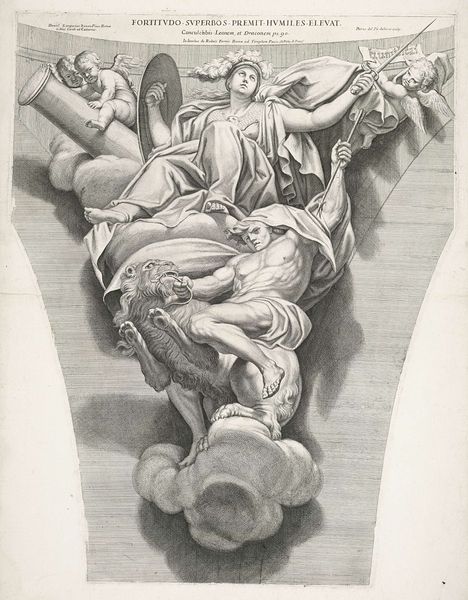
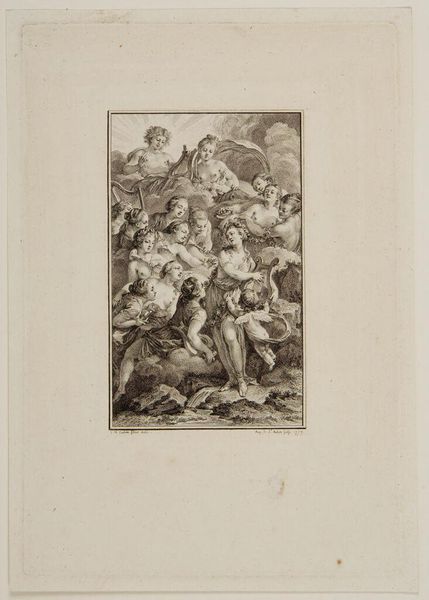
Curator: Here we have Timothy Cole's "The Stripping of Christ," created in 1907. It is an engraving printed in monochrome. What are your immediate thoughts, looking at this piece? Editor: I'm struck by how it pulls me in—the crowding figures create this unsettling claustrophobia. The central figure almost seems illuminated by contrast, but within such darkness. It’s somber and heavy. Curator: Absolutely. Cole worked primarily as a reproductive engraver, meaning he recreated paintings as prints. He wasn't just copying though, he was interpreting. Here, we can view it through the lens of power structures and vulnerability. Notice how Christ is surrounded, stripped not just of his garments but also his agency. Consider the context of 1907— progressive era anxieties, growing industrialization, immigration... Editor: That's an important point. The stripping itself is a potent symbol, devoid of material possessions—what is left for the viewer to latch onto? The artist offers a potent metaphor. Clothes, culturally signify status, morality and identity, thus underscoring feelings of helplessness in such violation. Curator: Precisely, and note Cole's meticulousness, likely drawing from Academic Art tradition; each face, each fold, meticulously rendered. It evokes questions around tradition versus modern, spiritual authority versus earthly corruption during its time. Is Cole positioning Christ as a critique of contemporary societal woes? Editor: And what about the gaze? The people are not engaging with one another, their collective expression adds to an air of unified cruelty or at best – ambivalence. Symbols often reflect deep-seated anxieties. It's clear that a narrative about justice and power dynamics takes prominence. Curator: This piece resonates beyond just religious iconography. Cole compels us to consider timeless and pervasive themes of persecution, human dignity and how it continually resonates today. Editor: Indeed. Whether intended or not, Cole created a work where potent visuals can incite conversation on social status. Curator: I'll remember this striking print the next time I hear about contemporary struggles with these very issues. Editor: And for me, I see here a chilling reminder of how symbolism persists. Visuals shape history, emotions, and even social perception through time.
Comments
No comments
Be the first to comment and join the conversation on the ultimate creative platform.
 React
React Comment