About this artwork
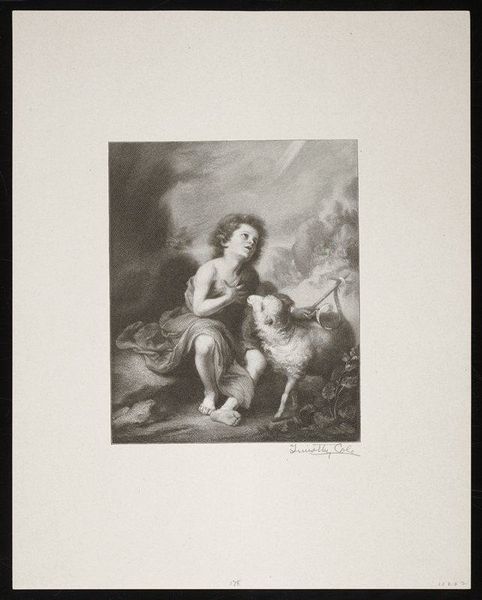
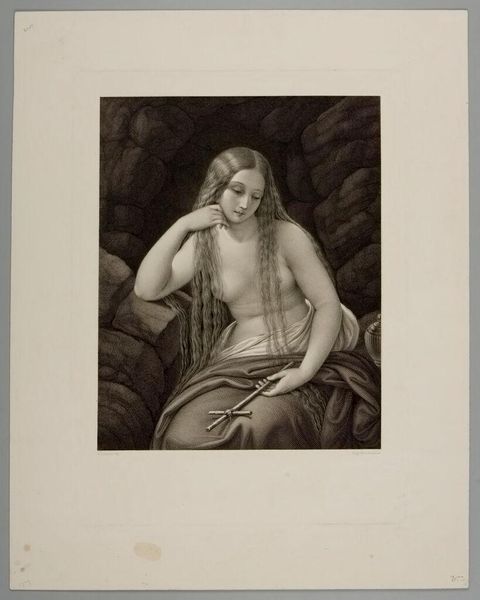
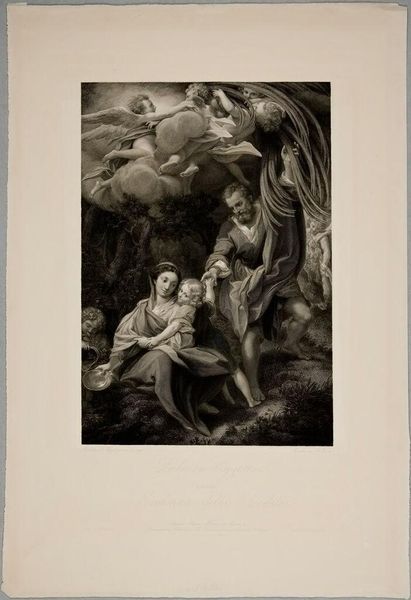
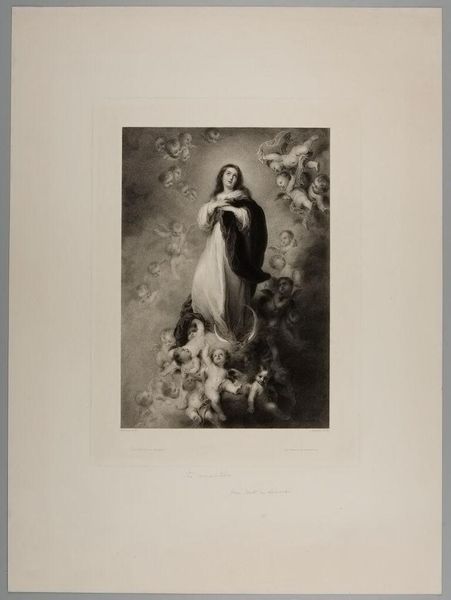
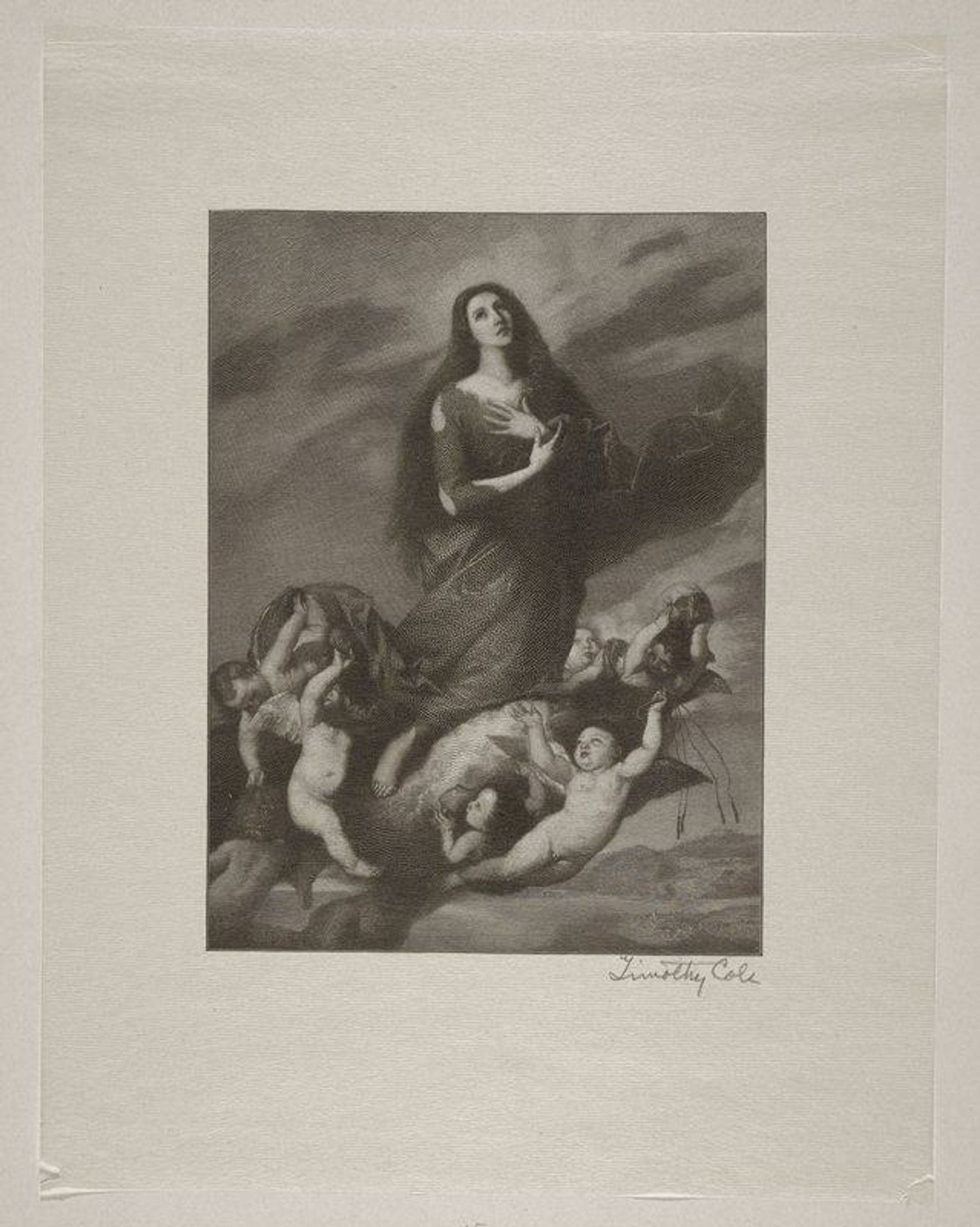
Curator: Here we have Timothy Cole’s wood engraving, Assumption of Mary Magdalene, completed in 1907. Editor: What a dramatically lit piece! The ascending figure amidst swirling clouds and cherubic forms projects a palpable sense of spiritual ecstasy. It’s almost operatic in its grandeur. Curator: Indeed. Cole, a prominent figure in American printmaking, painstakingly recreates the texture and tone of paintings using the demanding medium of wood engraving. The sharp detail achieved through dense cross-hatching grants a tangible, almost sculptural presence to the composition. Editor: Looking at the cultural context, I’m struck by how this engraving fits into the academic art tradition. Cole was committed to reproducing paintings for a wider audience. Prints such as this one democratized access to high art, helping shape the art historical knowledge of people who couldn’t visit museums. Curator: Exactly. Examine the treatment of light here—note how it models Magdalene’s flowing robes and cascades over the figures surrounding her. This carefully rendered chiaroscuro is what imbues the scene with that sense of dynamism and heavenly rapture. There is a very calculated use of black and white in this medium. Editor: Thinking about Cole’s role as a reproductive engraver, it’s impossible to consider this work outside of its relationship to other works depicting Mary Magdalene in similar stances. Prints allowed those images to circulate in society in an affordable, and accessible format. Curator: A fascinating point! We see an excellent combination of precise artistry and broader accessibility that really is core to much printmaking of this era. Editor: And what it represents is that in a time without easy access to photography in art books or the internet, people were introduced to artworks by European masters through reproductive engraving. It shows the public role of this work, far beyond it’s strict form. Curator: The formal decisions here were directly influenced by the media, and how knowledge was transferred in the art world, so to really consider either in isolation leaves so much unsaid! Editor: Exactly. Art doesn't exist in a bubble!
Assumption of Mary Magdalene
1907


Artwork details
- Medium
- print, woodcut, wood-engraving, engraving
- Dimensions
- 7 x 5 5/16 in. (17.78 x 13.49 cm) (image)11 1/16 x 8 1/2 in. (28.1 x 21.59 cm) (sheet)
- Location
- Minneapolis Institute of Art
- Copyright
- No Copyright - United States
Tags
Comments
Share your thoughts
About this artwork
Curator: Here we have Timothy Cole’s wood engraving, Assumption of Mary Magdalene, completed in 1907. Editor: What a dramatically lit piece! The ascending figure amidst swirling clouds and cherubic forms projects a palpable sense of spiritual ecstasy. It’s almost operatic in its grandeur. Curator: Indeed. Cole, a prominent figure in American printmaking, painstakingly recreates the texture and tone of paintings using the demanding medium of wood engraving. The sharp detail achieved through dense cross-hatching grants a tangible, almost sculptural presence to the composition. Editor: Looking at the cultural context, I’m struck by how this engraving fits into the academic art tradition. Cole was committed to reproducing paintings for a wider audience. Prints such as this one democratized access to high art, helping shape the art historical knowledge of people who couldn’t visit museums. Curator: Exactly. Examine the treatment of light here—note how it models Magdalene’s flowing robes and cascades over the figures surrounding her. This carefully rendered chiaroscuro is what imbues the scene with that sense of dynamism and heavenly rapture. There is a very calculated use of black and white in this medium. Editor: Thinking about Cole’s role as a reproductive engraver, it’s impossible to consider this work outside of its relationship to other works depicting Mary Magdalene in similar stances. Prints allowed those images to circulate in society in an affordable, and accessible format. Curator: A fascinating point! We see an excellent combination of precise artistry and broader accessibility that really is core to much printmaking of this era. Editor: And what it represents is that in a time without easy access to photography in art books or the internet, people were introduced to artworks by European masters through reproductive engraving. It shows the public role of this work, far beyond it’s strict form. Curator: The formal decisions here were directly influenced by the media, and how knowledge was transferred in the art world, so to really consider either in isolation leaves so much unsaid! Editor: Exactly. Art doesn't exist in a bubble!
Comments
Share your thoughts