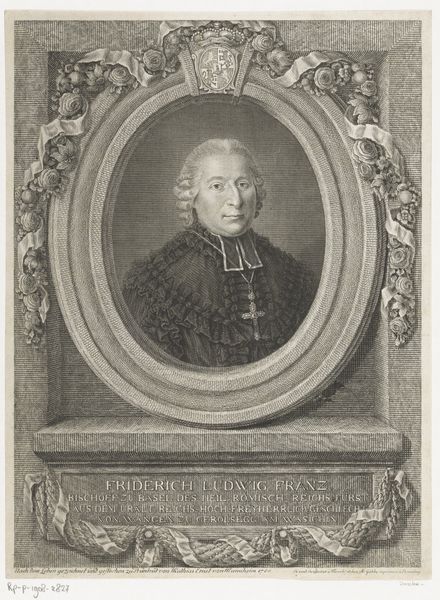
print, engraving
#
portrait
#
neoclacissism
# print
#
history-painting
#
engraving
Dimensions: height 290 mm, width 201 mm
Copyright: Rijks Museum: Open Domain
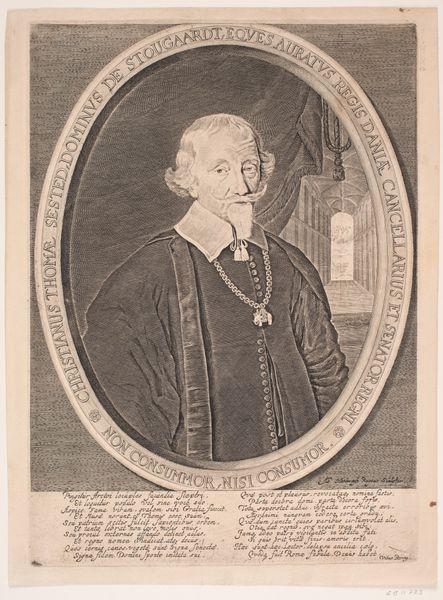
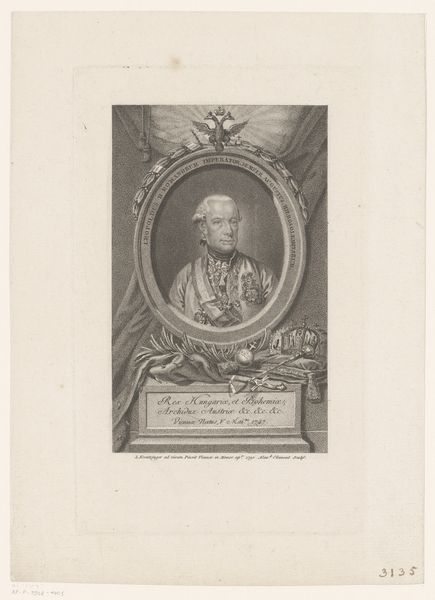
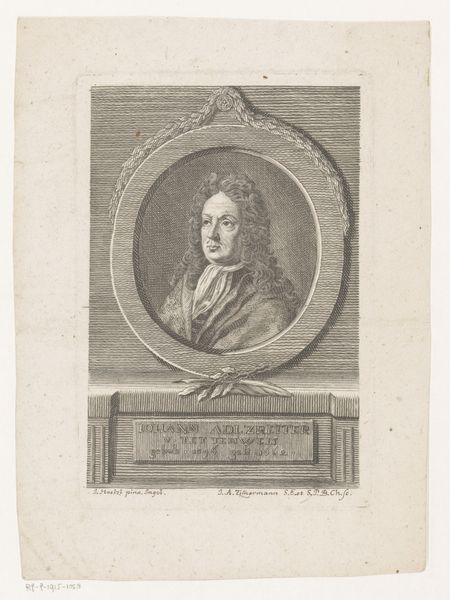
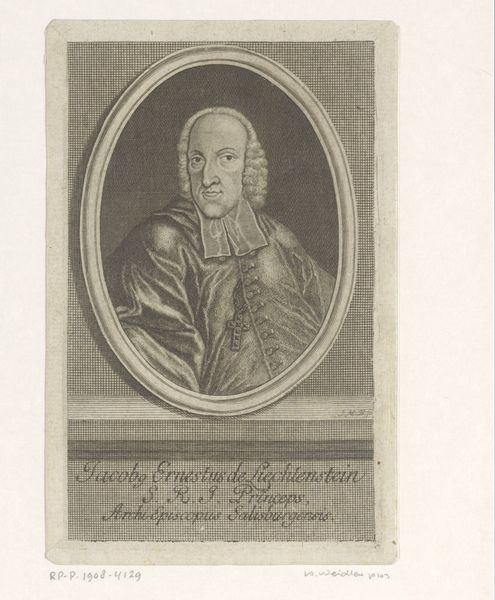
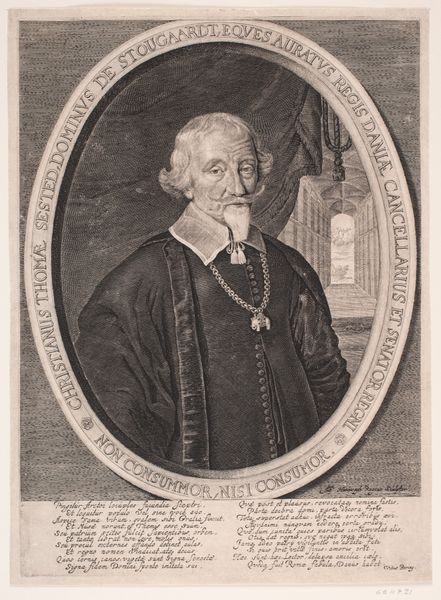
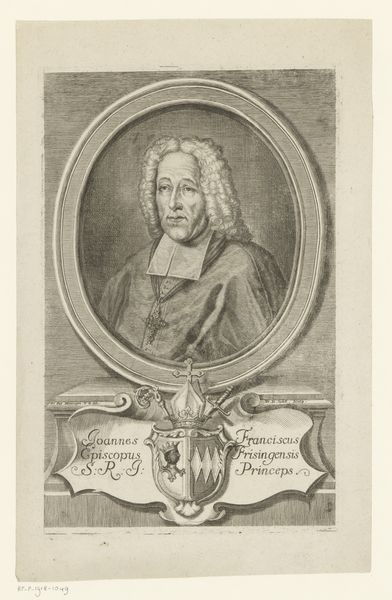
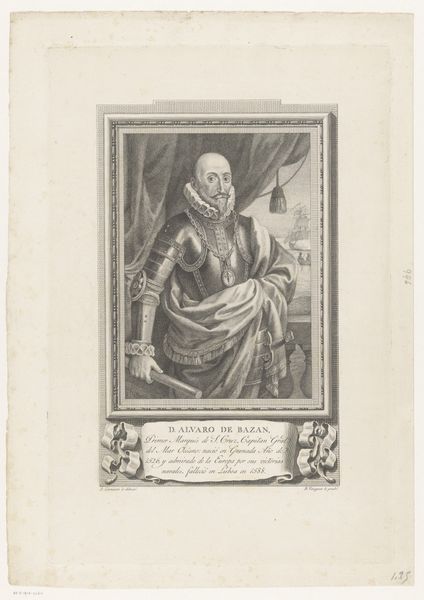
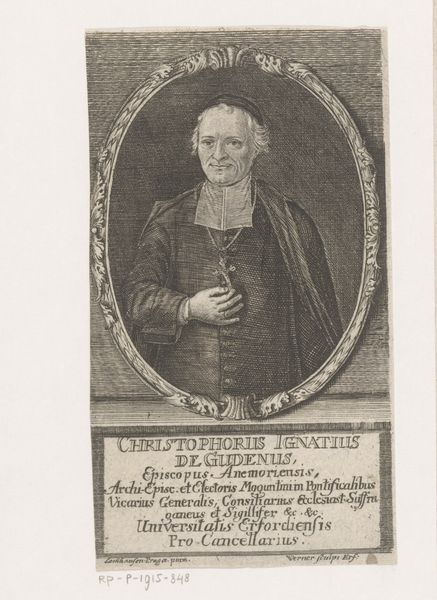
Curator: My initial feeling looking at this portrait is a certain… gravity. The way the light catches the gentleman's face suggests someone burdened with responsibility. Editor: That's a fascinating read, let me tell you a bit more about the context. What we have here is an engraving titled "Portret van Ludwig Friedrich von Beulwitz," created in 1792 by Paul Wolfgang Schwarz. This print captures Ludwig Friedrich von Beulwitz, and it definitely places him within a very specific socio-political sphere. Curator: The oval frame adorned with what looks like a laurel wreath also gives off a particular aura. The laurel, of course, symbolizes triumph and honor. It seems to me, the artist is intentionally building layers of symbols around the image of the person. It reinforces the sitter’s importance and possibly connects him with idealized ideas of the Classical era. Editor: Absolutely. It’s essential to consider that it falls within the Neoclassical movement, drawing upon those artistic and intellectual trends in 18th-century Europe. We should also consider class, and its function in promoting societal elites. This kind of image was definitely not available to everyday folks. Curator: Precisely, notice the elaborate garments— the detail, and his official regalia all indicate high status. But it’s more than just the depiction of power; the texture achieved through the engraving technique almost suggests a sense of lasting legacy. These types of prints are themselves important cultural markers that have become objects of historical interest. Editor: I wonder about the choices that position Ludwig Friedrich. The portrait becomes a site to negotiate identity within this historical moment. Are we meant to critically assess who has historically occupied spaces of power and privilege, and who has been systematically excluded? Curator: The symbolic value endures precisely because it allows the viewer to place him in his place and time. This engraving invites reflection, if not direct dialogue, with figures from our past who remain influential. It's a looking glass for past-and-present analysis. Editor: And as a tool for sparking critical dialogue about power and representation—it reminds us to think deeply about history.
Comments
No comments
Be the first to comment and join the conversation on the ultimate creative platform.
 Collect
 React
React Comment
More like this