About this artwork
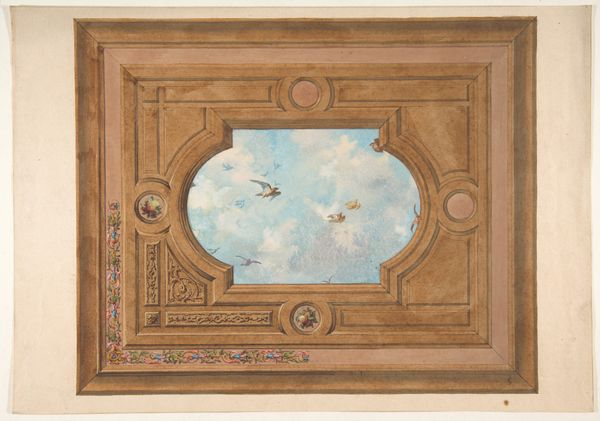
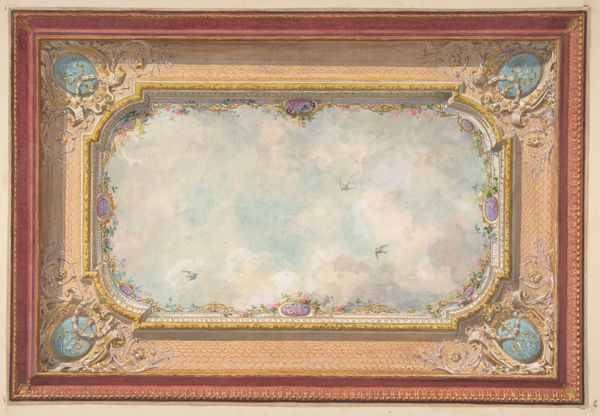
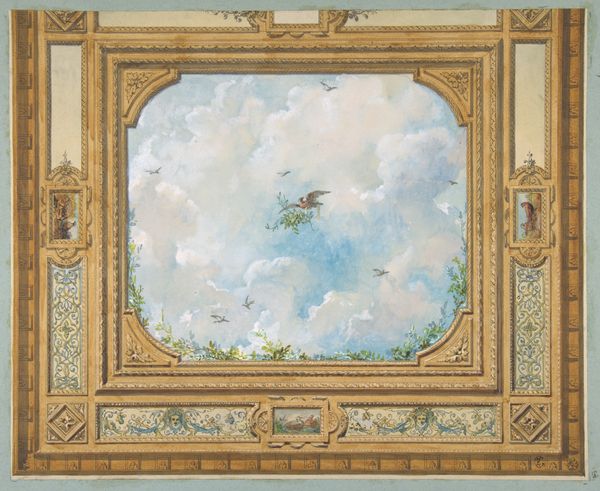
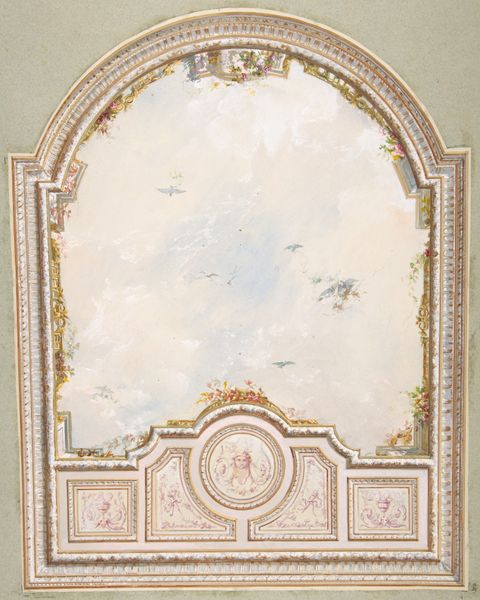
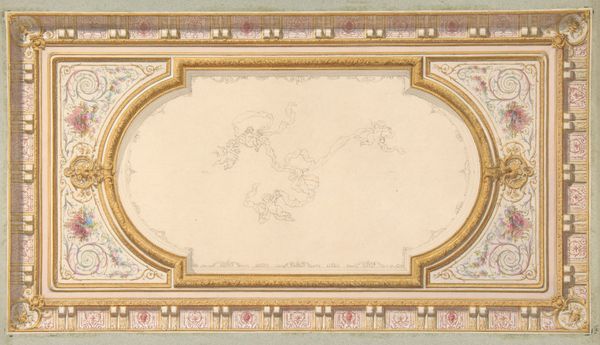
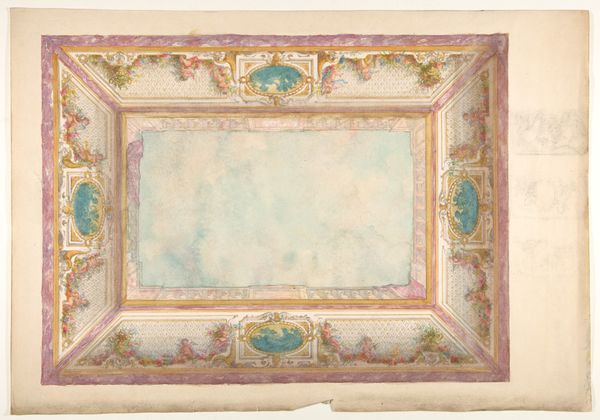
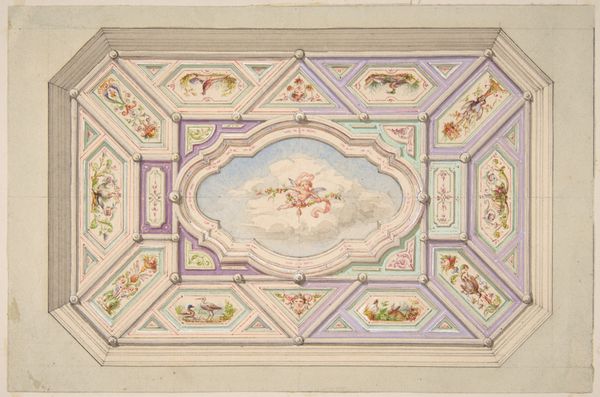
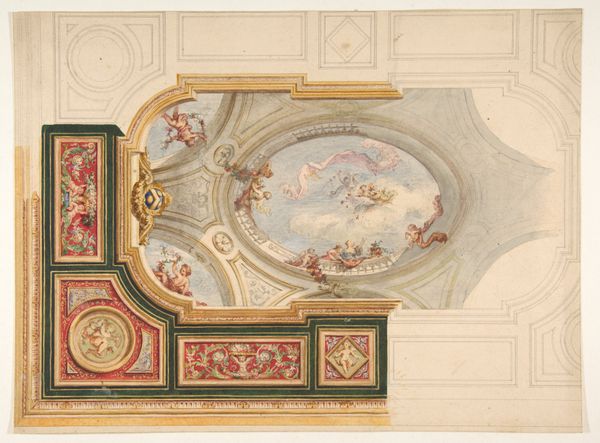
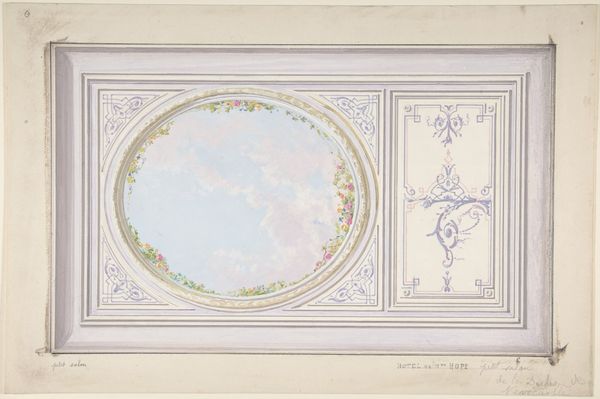
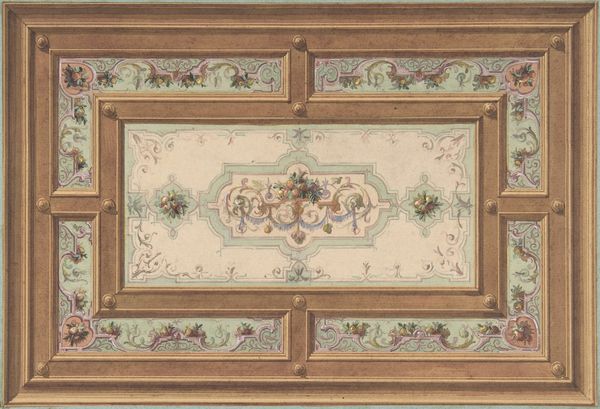
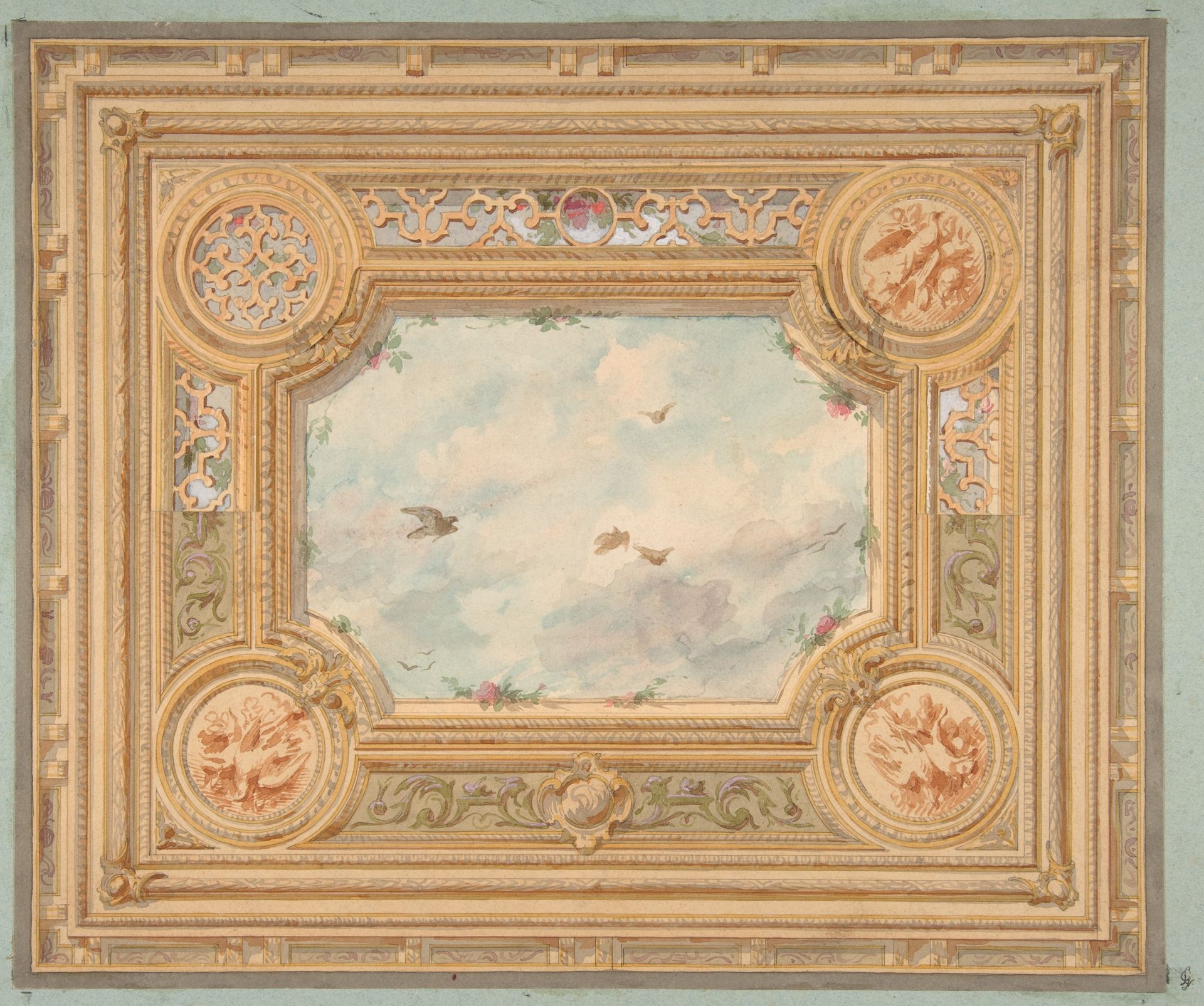
Jules-Edmond-Charles Lachaise made this watercolor design for a ceiling with four medallions. Lachaise’s design evokes a sense of aristocratic elegance. The sky motif at the center and decorative elements borrow heavily from earlier French styles such as Rococo and Neoclassicism, yet it also brings a new sensibility to these motifs. France in the late 19th and early 20th centuries was a society undergoing rapid change. The aristocracy had lost much of its power, but its cultural influence remained strong. Artists and designers like Lachaise often looked to the past for inspiration, reinterpreting historical styles to create something new and relevant for their time. This design can be seen as a reflection of the ongoing negotiation between tradition and modernity. To understand the social context of this work, historians might examine interior design publications, architectural treatises, and other visual materials. By situating artworks within their cultural and institutional context, we can better appreciate their meanings and purposes.
Design for a ceiling with four medallions and sky motif in center
1850 - 1900

Jules-Edmond-Charles Lachaise
1897
The Metropolitan Museum of Art
Metropolitan Museum of Art, New York, NYArtwork details
- Medium
- drawing, painting, print, watercolor
- Dimensions
- Overall: 13 7/16 x 19 1/2 in. (34.2 x 49.5 cm)
- Location
- Metropolitan Museum of Art, New York, NY
- Copyright
- Public Domain
Tags
Comments
Share your thoughts
About this artwork
Jules-Edmond-Charles Lachaise made this watercolor design for a ceiling with four medallions. Lachaise’s design evokes a sense of aristocratic elegance. The sky motif at the center and decorative elements borrow heavily from earlier French styles such as Rococo and Neoclassicism, yet it also brings a new sensibility to these motifs. France in the late 19th and early 20th centuries was a society undergoing rapid change. The aristocracy had lost much of its power, but its cultural influence remained strong. Artists and designers like Lachaise often looked to the past for inspiration, reinterpreting historical styles to create something new and relevant for their time. This design can be seen as a reflection of the ongoing negotiation between tradition and modernity. To understand the social context of this work, historians might examine interior design publications, architectural treatises, and other visual materials. By situating artworks within their cultural and institutional context, we can better appreciate their meanings and purposes.
Comments
Share your thoughts