About this artwork
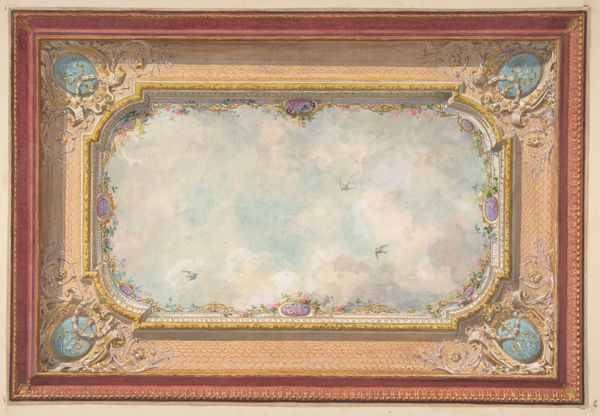
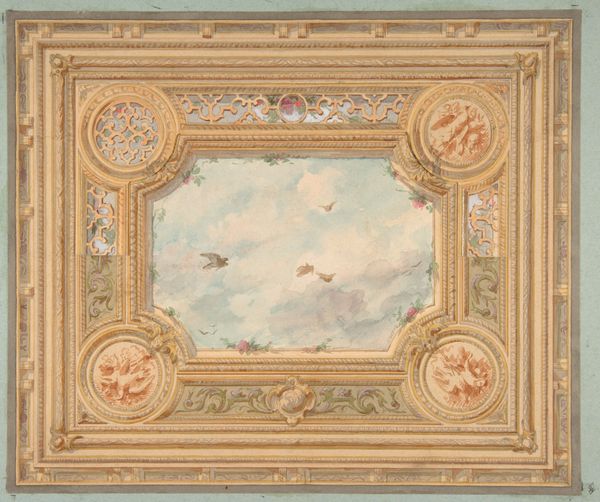
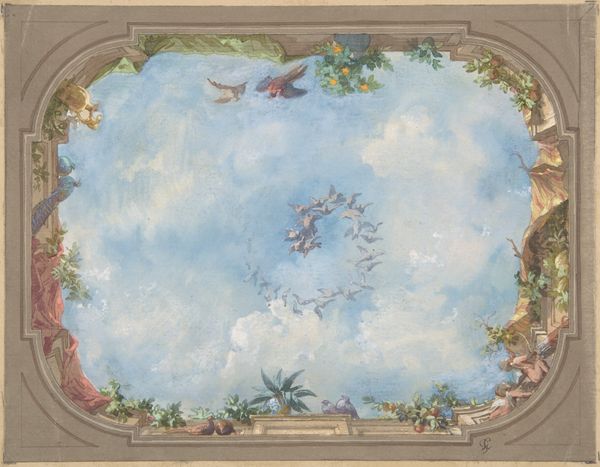
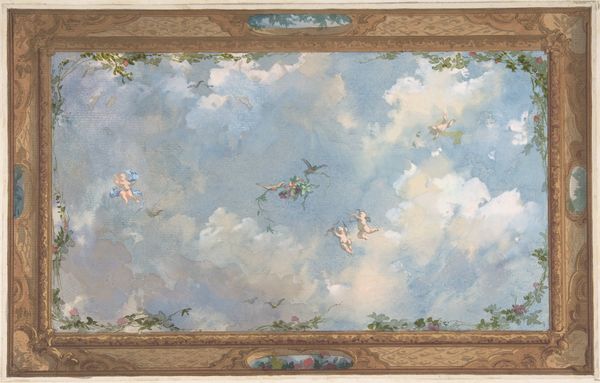
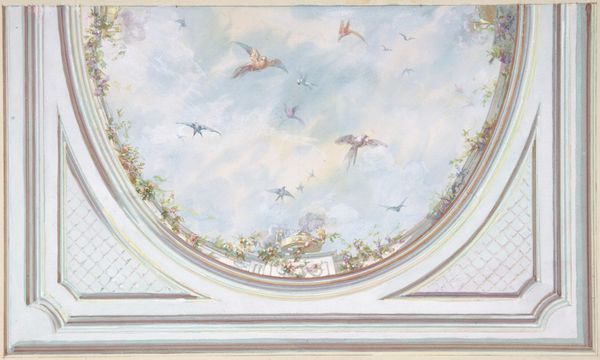
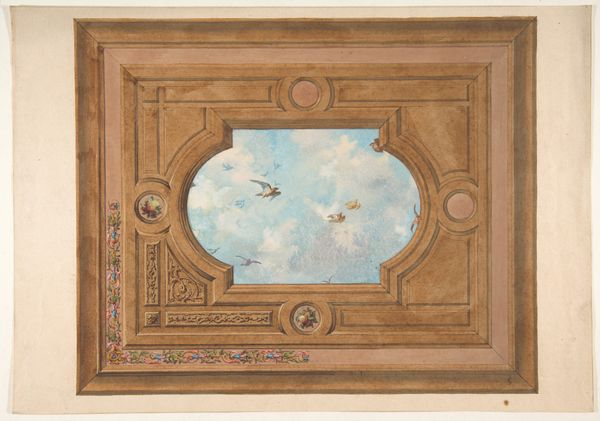
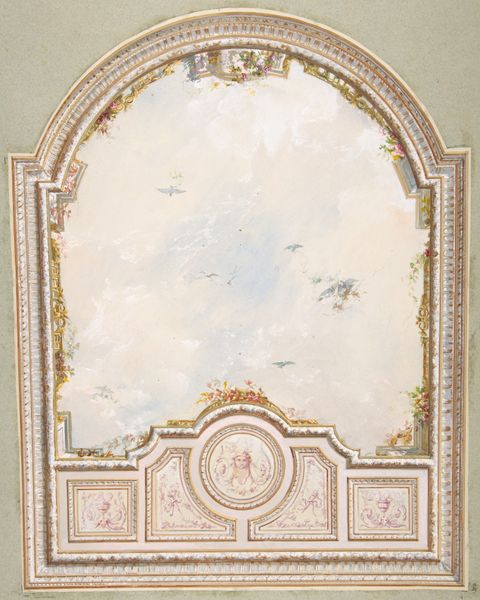
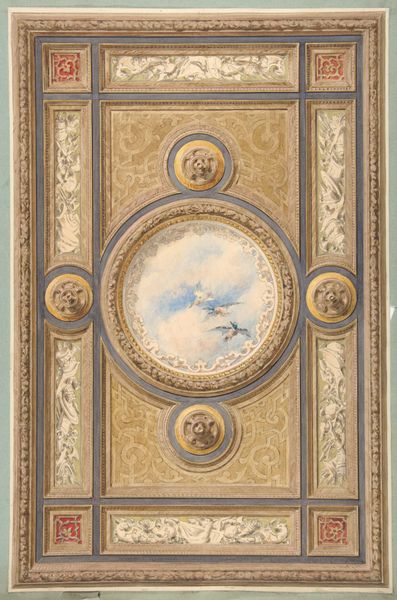
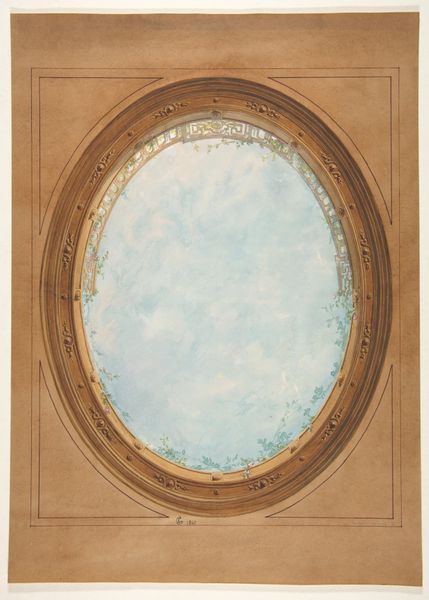
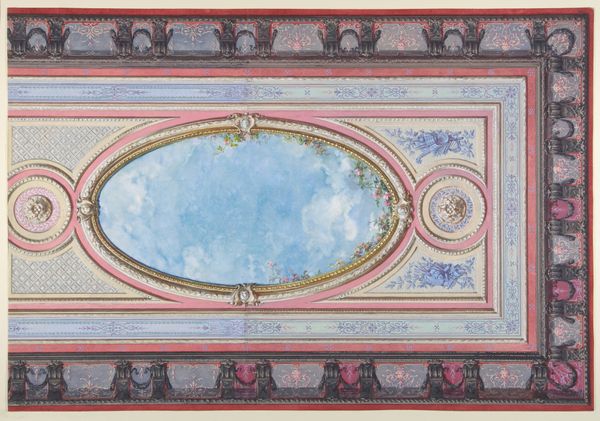
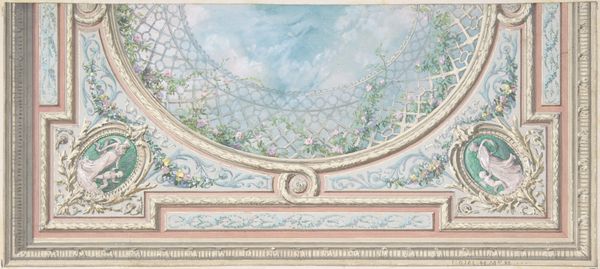
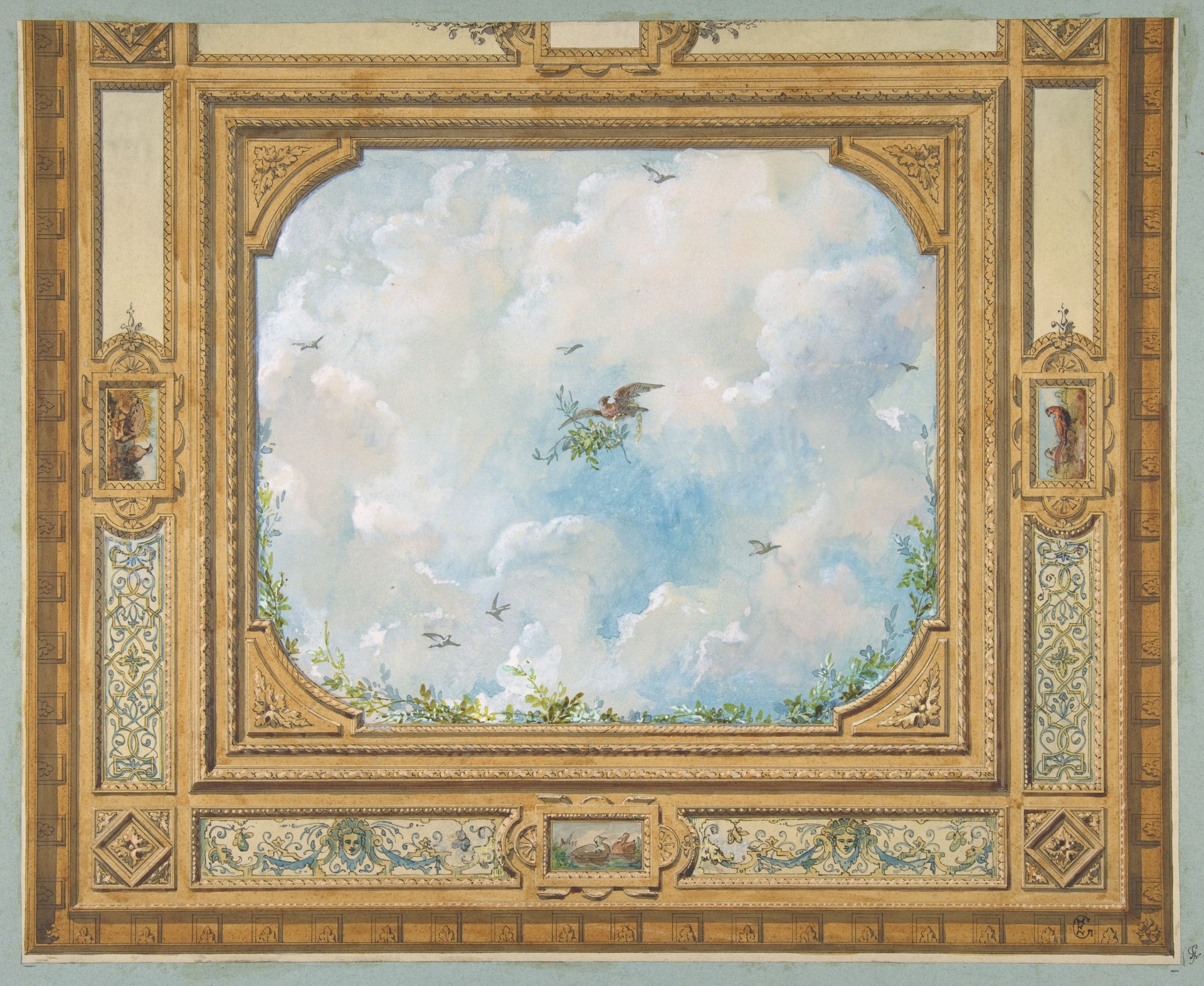
This is a design for a ceiling decorated with clouds and birds by Jules-Edmond-Charles Lachaise. We can see that it was made using watercolor, graphite, and احتمالات opaque watercolor. The washes of watercolor create a feeling of lightness and airiness, fitting for a ceiling design. Lachaise has skillfully used graphite to add definition to the architectural framework. Opaque watercolor gives density to the ornamental detailing around the clouds and birds. The design incorporates elements of trompe-l'oeil, where the artist creates an illusion of three-dimensionality on a flat surface. The work reflects a moment of transition, where traditional craft skills met the requirements of industrial production. The skilled hand of the artist is evident in the precise execution and the careful rendering of detail, and would have required hours of labor and a trained professional. Ultimately, this design reminds us that even seemingly decorative arts like this are the result of skilled artistic labor, and that all making involves an investment of time, effort and materials.
Design for a ceiling decorated with clouds and birds
1830 - 1897

Jules-Edmond-Charles Lachaise
1897
The Metropolitan Museum of Art
Metropolitan Museum of Art, New York, NYArtwork details
- Dimensions
- Overall: 13 3/8 x 19 1/2 in. (33.9 x 49.5 cm) image: 11 1/4 x 13 11/16 in. (28.5 x 34.8 cm)
- Location
- Metropolitan Museum of Art, New York, NY
- Copyright
- Public Domain
Comments
Share your thoughts
About this artwork
This is a design for a ceiling decorated with clouds and birds by Jules-Edmond-Charles Lachaise. We can see that it was made using watercolor, graphite, and احتمالات opaque watercolor. The washes of watercolor create a feeling of lightness and airiness, fitting for a ceiling design. Lachaise has skillfully used graphite to add definition to the architectural framework. Opaque watercolor gives density to the ornamental detailing around the clouds and birds. The design incorporates elements of trompe-l'oeil, where the artist creates an illusion of three-dimensionality on a flat surface. The work reflects a moment of transition, where traditional craft skills met the requirements of industrial production. The skilled hand of the artist is evident in the precise execution and the careful rendering of detail, and would have required hours of labor and a trained professional. Ultimately, this design reminds us that even seemingly decorative arts like this are the result of skilled artistic labor, and that all making involves an investment of time, effort and materials.
Comments
Share your thoughts