1843 - 1844
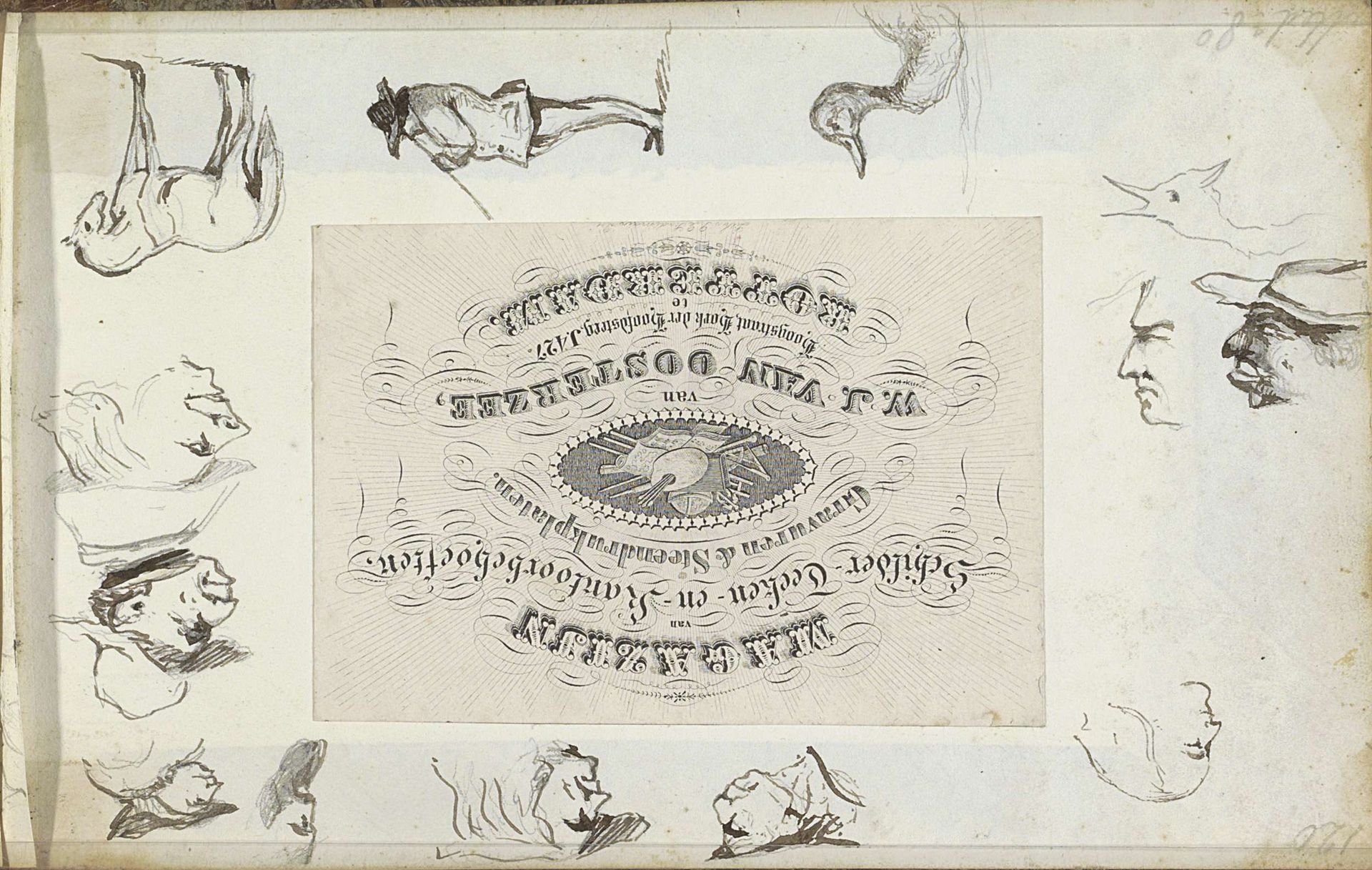
Studieblad, onder andere met mannenkoppen, een paard en een eend

Johannes Tavenraat
1809 - 1881Location
RijksmuseumListen to curator's interpretation
Curatorial notes
Here we have a page of studies by Johannes Tavenraat, from the nineteenth century. A seemingly casual arrangement, yet observe how the animal motifs—the horse and the duck—echo across cultures, resonating with ancient mythologies. The horse, a symbol of power and freedom, has galloped through human imagination since the Paleolithic era. We see it in the cave paintings of Lascaux and later, harnessed to Apollo's chariot, a solar emblem, racing across the sky. The duck, seemingly benign, carries its own freight of symbolism, often associated with water and the subconscious. It appears in Egyptian art as a funerary offering, a guide to the afterlife. Consider the persistence of these images. How they surface in dreams, folklore, and art, transcending time, shifting in meaning yet retaining a primal connection to our collective memory. This visual language, passed down through generations, taps into the depths of our shared human experience.