1680s
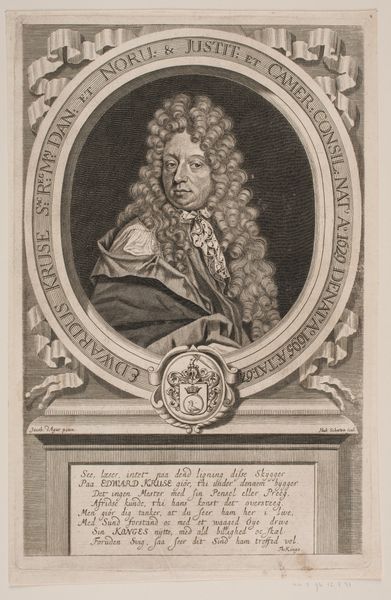
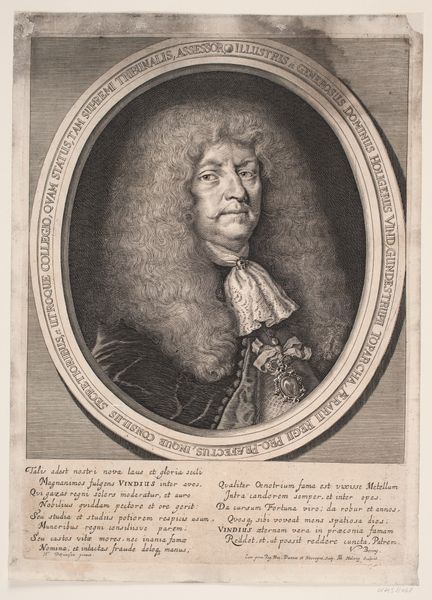
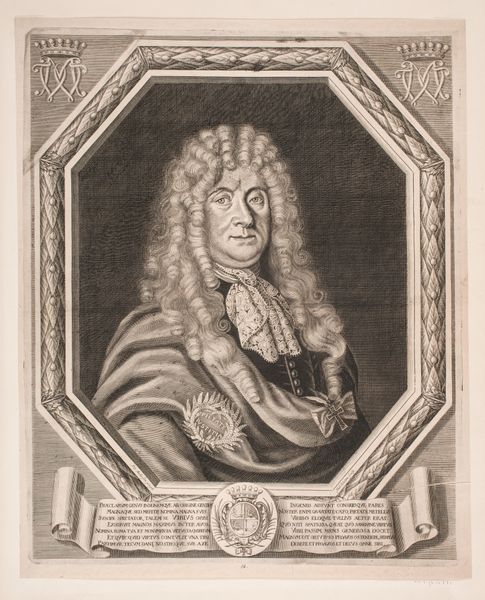
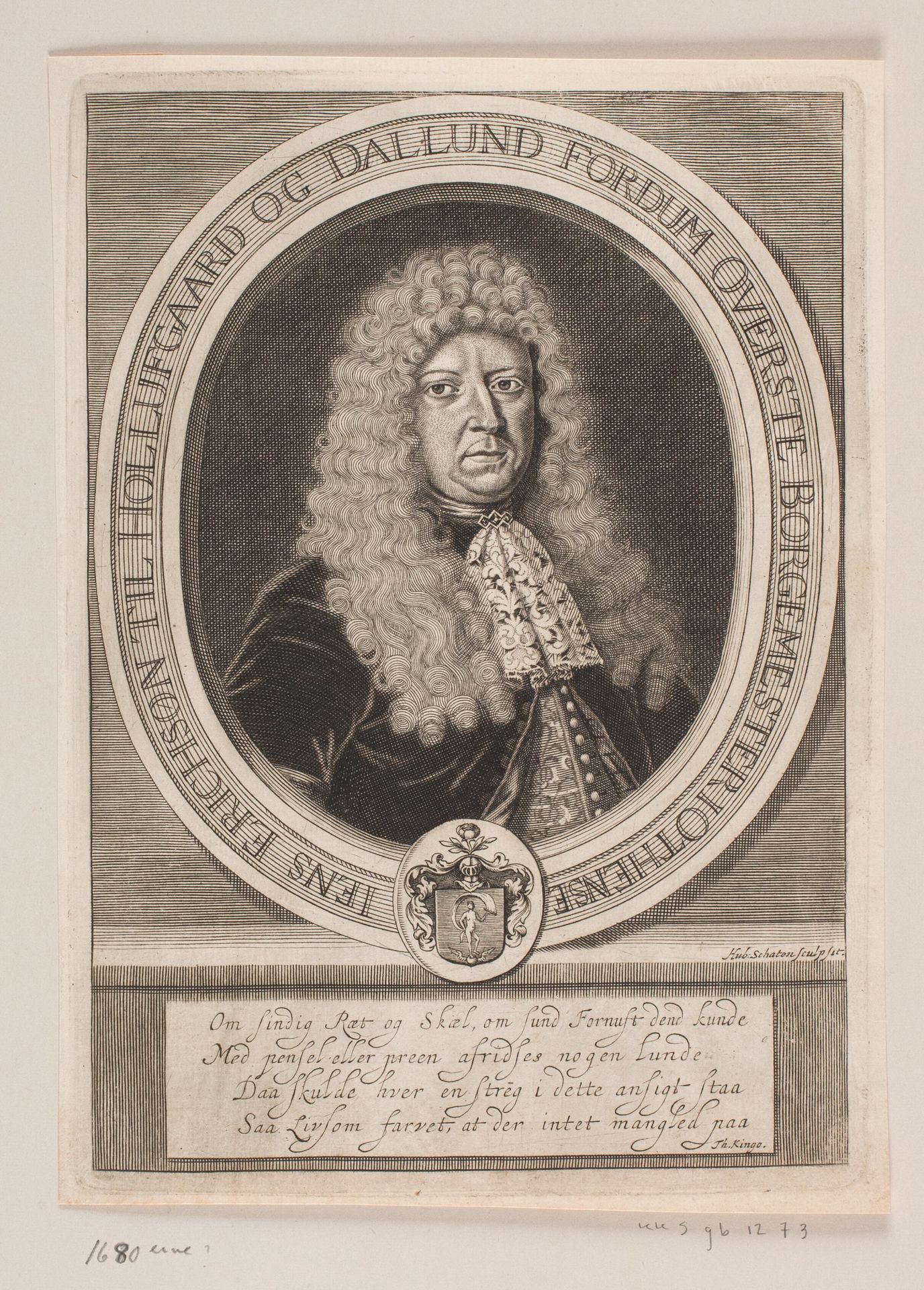
Borgmester Jens Eriksen


Listen to curator's interpretation
Curatorial notes
Curator: This engraving, "Borgmester Jens Eriksen" from the 1680s, presents a really fascinating study in power and representation. Editor: Yes, the detail is incredible for a print! It’s so formal, though. He looks...important, obviously, with that wig and collar. What do you see in this piece, beyond a historical portrait? Curator: I see a constructed image meant to solidify Eriksen’s position. Think about it: the baroque era was deeply invested in displays of authority. What does his ornate collar suggest to you in terms of gender and identity of that period? Editor: Well, it’s elaborate, almost feminine by today’s standards. Curator: Precisely! Yet, it's juxtaposed with that stern, almost unyielding expression. It reflects the paradoxes of power – the need to appear both commanding and divinely appointed. Notice, also, the inscription beneath the portrait. What does it tell you about the artwork's intended audience and message? Editor: It looks like a description. The letters make it tough to read... It looks to describe something related to truth and how things appear. It almost acts as an early version of a caption. Curator: Exactly. It tells us this is carefully crafted to shape public perception. This wasn't simply about likeness; it was about crafting a narrative of authority in a time of social and political upheaval. How do you feel this connects to modern ideas about image and power? Editor: I never thought about portraiture being such a political statement. Curator: Precisely! That kind of awareness is key to understanding not just art history, but our contemporary image-saturated world as well. Editor: This makes me rethink everything I thought I knew about Baroque art. Thanks for offering that analysis, which allows me to view such art in an altered state.