About this artwork
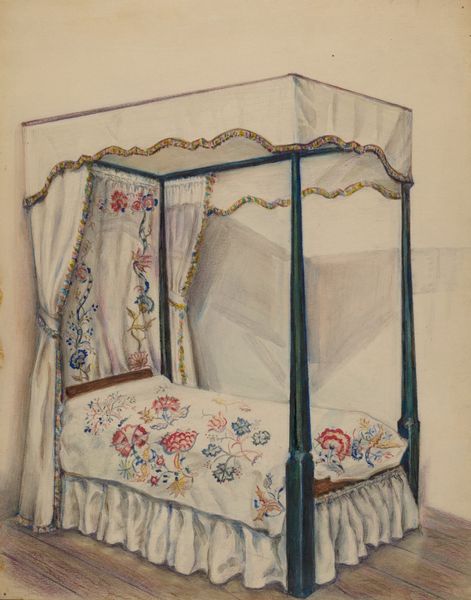
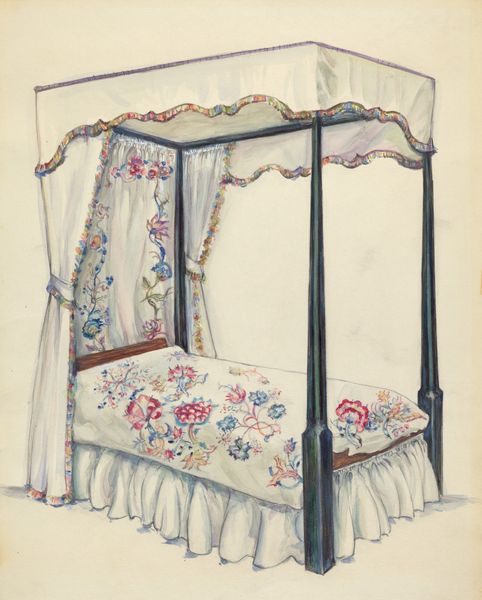
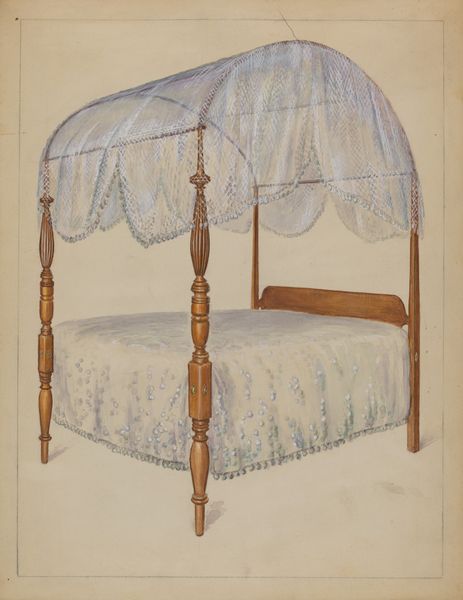
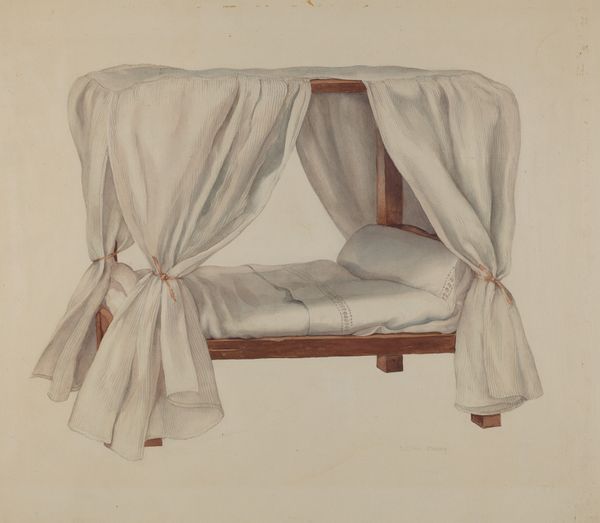
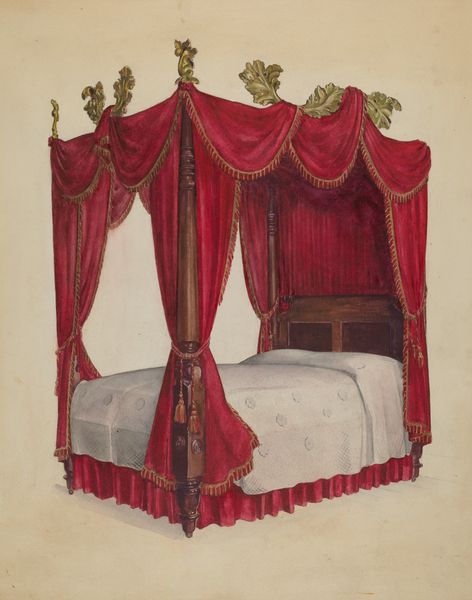
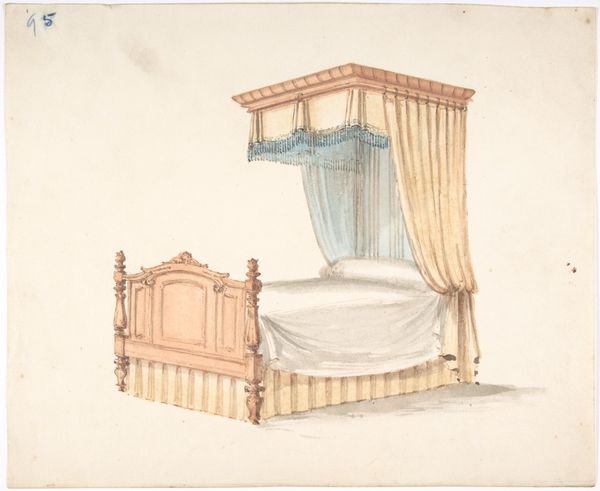
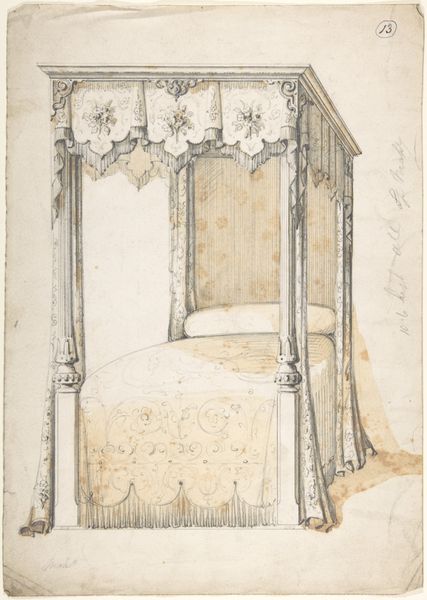
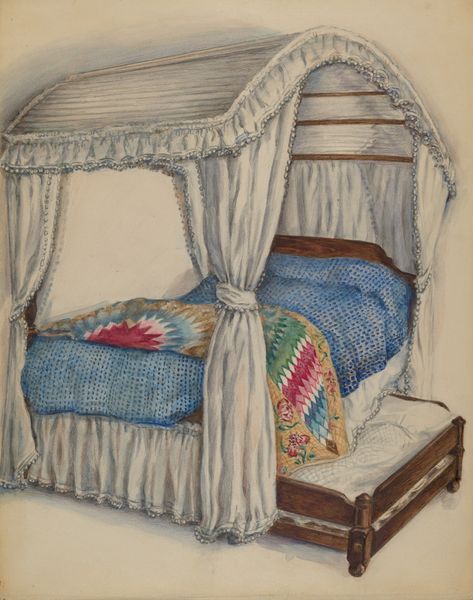
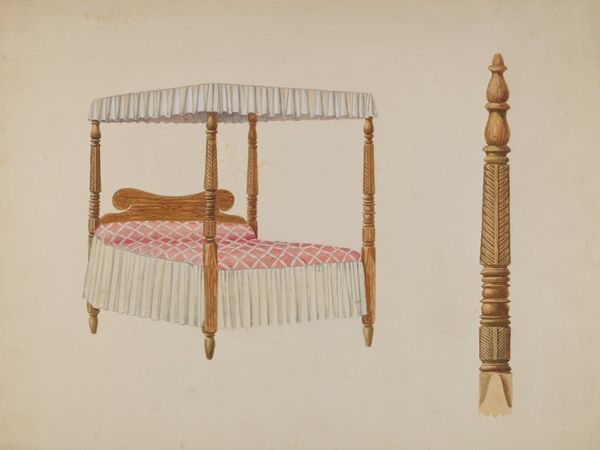
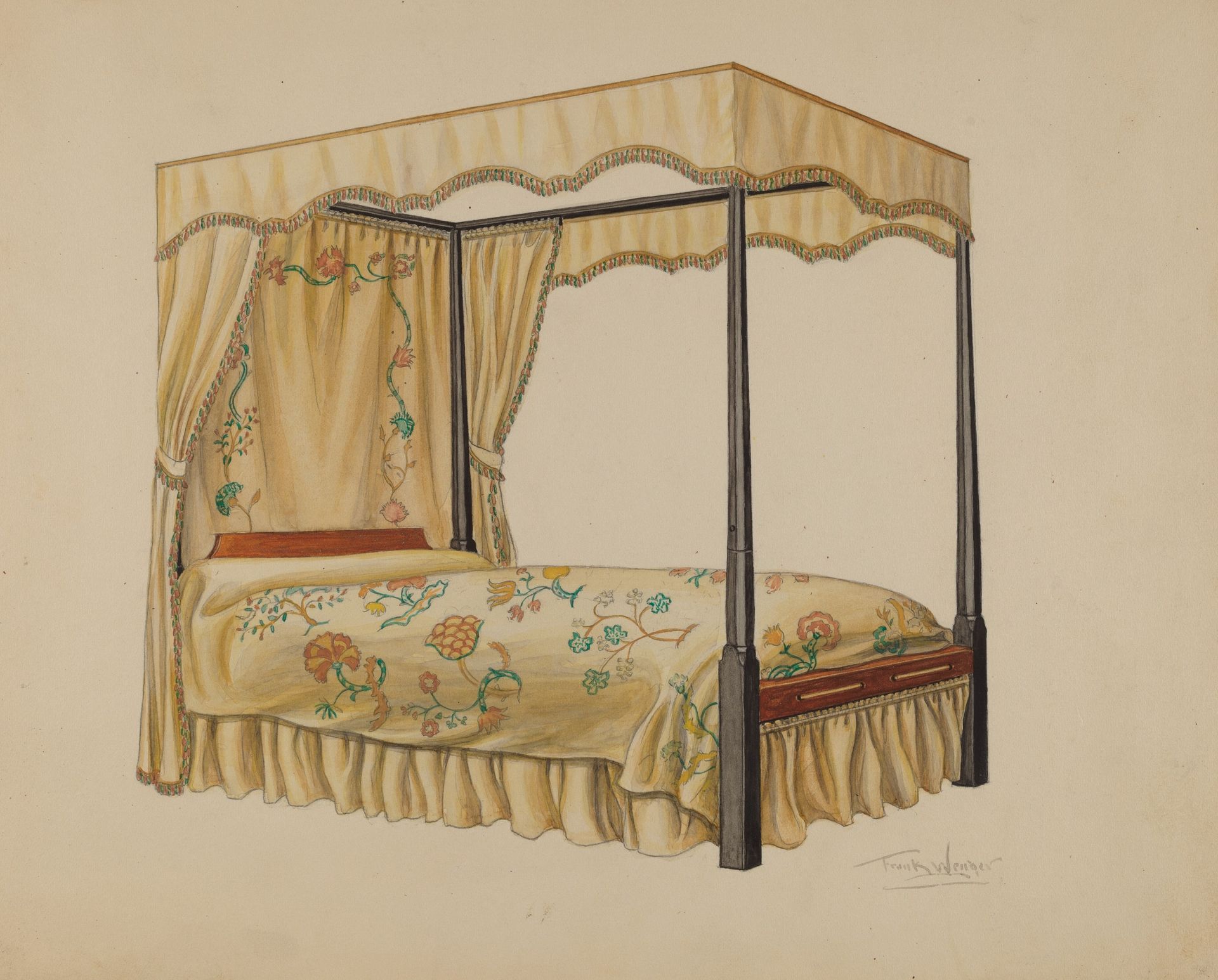
Frank Wenger made this watercolour of a bedstead, but the date of this work is unknown. Wenger was active in America in the late nineteenth and early twentieth century. The four-poster bed with its draped canopy evokes a sense of luxury and privacy. Historically, such beds were status symbols, found in the homes of the wealthy in Europe and America. The floral patterns on the fabric suggest a desire for comfort and a connection to nature, reflecting a broader cultural trend in interior design. We might ask, what does this focus on domestic comfort tell us about the society in which it was made? Was this an aspirational image, aimed at a growing middle class? Or a nostalgic one, harking back to an earlier era of elegance? Answering these questions involves delving into historical archives, design catalogs, and social histories to understand the cultural meanings embedded in this seemingly simple image of a bed.


Artwork details
- Medium
- drawing, watercolor
- Dimensions
- overall: 22.5 x 28.4 cm (8 7/8 x 11 3/16 in.) Original IAD Object: 43 1/2" wide x 74 1/2" long x 86 3/4 " high.
- Copyright
- National Gallery of Art: CC0 1.0
Tags
drawing
watercolor
watercolour illustration
academic-art
watercolor
Comments
Be the first to share your thoughts about this work.
About this artwork
Frank Wenger made this watercolour of a bedstead, but the date of this work is unknown. Wenger was active in America in the late nineteenth and early twentieth century. The four-poster bed with its draped canopy evokes a sense of luxury and privacy. Historically, such beds were status symbols, found in the homes of the wealthy in Europe and America. The floral patterns on the fabric suggest a desire for comfort and a connection to nature, reflecting a broader cultural trend in interior design. We might ask, what does this focus on domestic comfort tell us about the society in which it was made? Was this an aspirational image, aimed at a growing middle class? Or a nostalgic one, harking back to an earlier era of elegance? Answering these questions involves delving into historical archives, design catalogs, and social histories to understand the cultural meanings embedded in this seemingly simple image of a bed.
Comments
Be the first to share your thoughts about this work.