
Curatorial notes
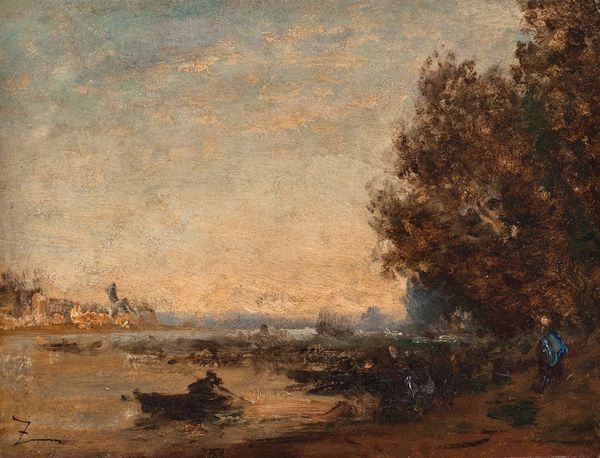
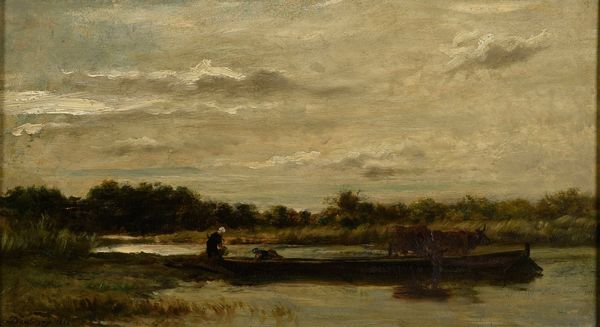
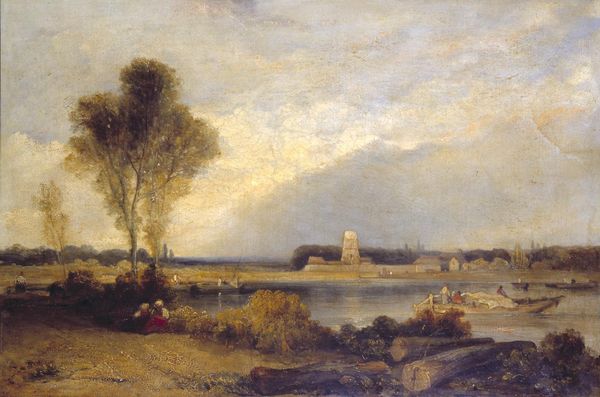
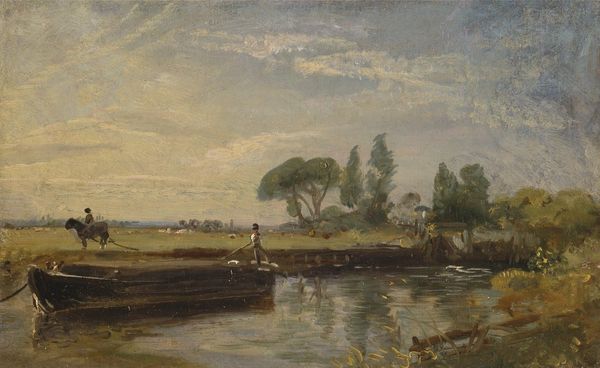
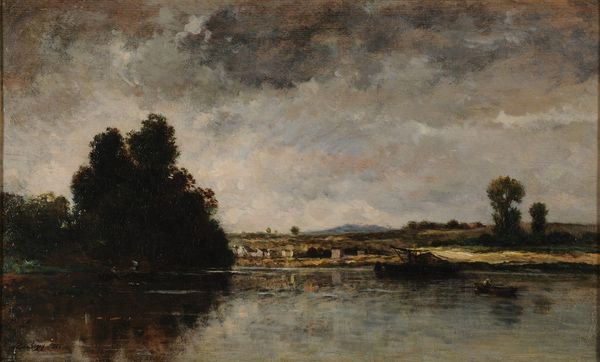
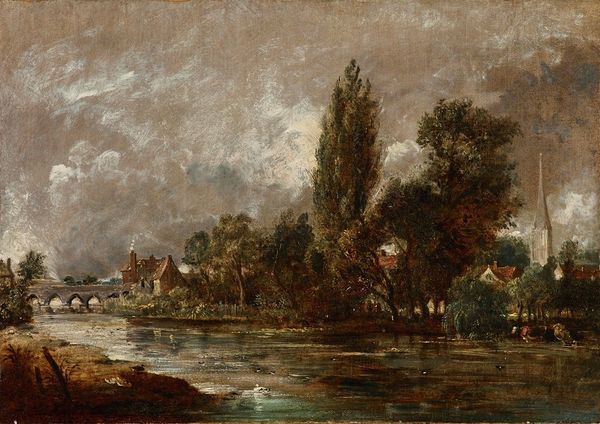
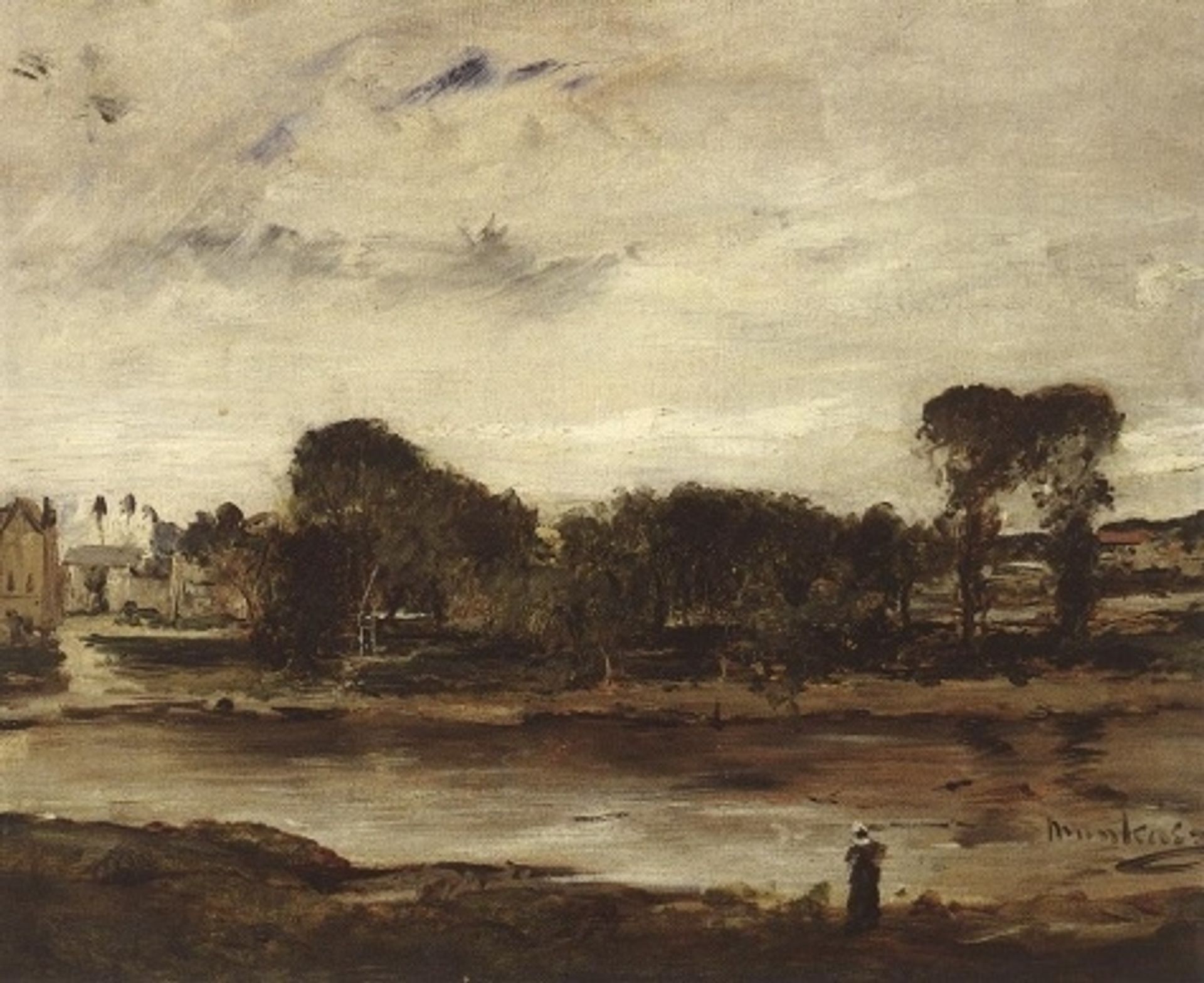
Curator: This is Mihaly Munkacsy's "Landscape with River," painted in 1880. It’s oil on canvas, typical of his plein-air landscapes, reflecting the Romantic and Impressionistic styles. Editor: Immediately, I'm struck by the melancholy it evokes. The muted tones and somewhat obscured details contribute to a feeling of solitude and perhaps even a commentary on the changing social landscape of the time. Curator: Munkacsy, while known for grand historical paintings, also explored more intimate scenes like this one. The material handling here—the visible brushstrokes, the texture of the oil paint—suggest a direct engagement with the landscape itself. It becomes an object made by him, the materiality significant, pushing back on classical definitions. Editor: Absolutely, and considering the historical context, these rural scenes were increasingly romanticized against the backdrop of rapid industrialization and urbanization. A lone figure on the riverbank becomes a symbol, perhaps, of a lost connection to nature. And Munkacsy painted at a historical juncture—new approaches to understanding social and individual identities were surfacing through discussions about modernity. Curator: Exactly. It also brings up questions of labour. What labour was involved for the average rural individual compared to his labour in rendering that. Editor: That's fascinating. The seemingly simple composition speaks volumes about class, the environment, and individual struggle within the era’s major sociopolitical shifts. Even Munkacsy's position as a Hungarian artist, making waves in Parisian circles, influences our understanding of this rural subject. Curator: I think there's something powerful in seeing how even a 'simple' landscape embodies so much. Thank you. Editor: It's a poignant reminder that landscapes, like portraits, tell complex stories about society and our place within it. Always much more there, than just the painting.